
|
受注:045-509-1970 |
技術サポート:tech@selleck.co.jp 平日9:00〜18:00 1営業日以内にご連絡を差し上げます |
生物学的記述
| Specificity | ABCA1 Antibody [D20K13] detects endogenous levels of total ABCA1 protein. |
|---|---|
| Background | ATP binding cassette transporter A1 (ABCA1) is a large membrane transporter of the ABC family that uses ATP hydrolysis to export cellular cholesterol and phospholipids to lipid poor apolipoproteins, especially apoA I, thereby initiating nascent HDL formation and driving the first, rate limiting step of reverse cholesterol transport from peripheral tissues to the liver. ABCA1 is a protein comprising two six helix transmembrane domains that create a lipid translocation pathway, two cytosolic nucleotide binding domains with Walker A/B and LSGGQ signature motifs for ATP binding and hydrolysis, and two large, glycosylated extracellular domains unique to the ABCA subfamily that form a hydrophobic surface or tunnel for apoA I docking and lipid loading, with additional regulatory features such as a PEST sequence controlling proteolytic turnover and palmitoylated cysteines important for plasma membrane targeting. Cholesterol loading activates LXR/RXR, which upregulates ABCA1; at the plasma membrane and endosomes, ABCA1 undergoes ATP driven conformational cycling to mobilize phospholipids and free cholesterol from the inner leaflet and intracellular pools to the cell surface, where apoA I binding both stabilizes ABCA1 and captures these lipids to form discoidal nascent HDL, while concomitantly disrupting cholesterol rich lipid rafts and triggering JAK2/STAT3 and other signaling pathways that dampen inflammation and promote further efflux in macrophages. Through these transport and signaling functions, ABCA1 is essential for preventing foam cell formation and atherosclerosis and also contributes to β cell function, insulin secretion, and brain apoE lipidation and amyloid β handling; loss of function mutations in ABCA1 cause Tangier disease and familial HDL deficiency with near absent HDL and cholesterol ester accumulation, whereas more subtle defects in ABCA1 expression or activity increase cardiovascular and metabolic risk and may modulate susceptibility to late onset Alzheimer’s disease. |
使用情報
| Application | WB, IHC, FCM | Dilution |
|
||||||
|---|---|---|---|---|---|---|---|---|---|
| Reactivity | Mouse, Human | ||||||||
| Source | Mouse Monoclonal Antibody | MW | 254 kDa | ||||||
| Storage Buffer | PBS, pH 7.2+50% Glycerol+0.05% BSA+0.01% NaN3 | Storage (from the date of receipt) |
-20°C (avoid freeze-thaw cycles), 2 years | ||||||
References
|
Application Data
WB
Validated by Selleck
-
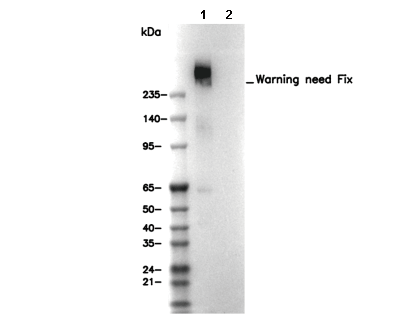 Lane 1: Mouse liver, Lane 2: Mouse liver (KO)