
|
受注:045-509-1970 |
技術サポート:tech@selleck.co.jp 平日9:00〜18:00 1営業日以内にご連絡を差し上げます |
生物学的記述
| Specificity | ANKRD1 Antibody (Mouse mAb) [C18F2] detects endogenous levels of total ANKRD1 protein. |
|---|---|
| Background | ANKRD1 encodes cardiac ankyrin repeat protein (CARP), a stress-inducible transcriptional coinhibitor that is a component of the titin-N2A mechanosensory signaling complex located at the I-band of the cardiac sarcomere, positioning CARP within the sarcomeric structure responsible for sensing mechanical stretch of the muscle fiber. In response to mechanical stretch, CARP translocates from this sarcomeric complex into the nucleus, where it represses transcription of sarcomeric genes, and CARP expression itself is induced by both cardiac hypertrophy and heart failure, establishing a stretch-activated feedback pathway in which increased mechanical load first raises CARP levels and then drives CARP-mediated repression of the genes encoding contractile sarcomeric proteins. Sequencing of ANKRD1 in patients with dilated cardiomyopathy identifies heterozygous missense mutations, and biochemical characterization of these mutant CARP proteins shows that specific substitutions disrupt CARP's binding to its sarcomeric partners: one mutation abolishes CARP binding to both Talin-1 and FHL2 while a second abolishes Talin-1 binding alone, and cells expressing these mutant CARP proteins show altered stretch-induced gene expression compared with wild-type CARP, despite the mutant proteins retaining normal intracellular localization, demonstrating that the mutations impair CARP's molecular interactions and downstream signaling output rather than displacing the protein from its normal position within the cell. Because these ANKRD1 mutations were identified in a defined percentage of dilated cardiomyopathy patients and produce a measurable defect in stretch-dependent gene regulation without disrupting CARP's subcellular targeting, they support a model in which inherited dysfunction of cardiac mechanotransduction, transmitted through this titin-associated stretch-sensing complex, contributes to the pathogenesis of a subset of dilated cardiomyopathy cases. This same stretch-sensing role positions CARP as a converging point in the broader mechanotransduction pathways that link mechanical overload to the transcriptional remodeling seen in cardiac hypertrophy and heart failure more generally, beyond the specific inherited mutations identified in cardiomyopathy patients. |
使用情報
| Application | WB, IF, ELISA | Dilution |
|
||||
|---|---|---|---|---|---|---|---|
| Reactivity | Human, Mouse, Rat, Pig, Rabbit | ||||||
| Source | Mouse Monoclonal Antibody | MW | 36 kDa | ||||
| Storage Buffer | PBS, pH 7.2+50% Glycerol+0.05% BSA+0.01% NaN3 | Storage (from the date of receipt) |
-20°C (avoid freeze-thaw cycles), 2 years | ||||
References
|
Application Data
WB
Validated by Selleck
-
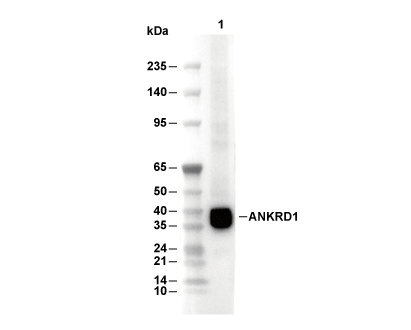 Lane 1: Mouse heart