
|
受注:045-509-1970 |
技術サポート:tech@selleck.co.jp 平日9:00〜18:00 1営業日以内にご連絡を差し上げます |
生物学的記述
| Specificity | ApoA1 Antibody [L13J2] detects endogenous levels of total ApoA1 protein. |
|---|---|
| Background | Apolipoprotein A-I (ApoA-I) is the primary structural and functional protein of high-density lipoprotein (HDL), synthesized mainly in the liver and intestine to mediate reverse cholesterol transport by facilitating ABCA1-dependent cholesterol efflux from peripheral tissues to the liver for excretion, thereby offering protection against atherosclerosis and cardiovascular disease. The mature 243-amino-acid ApoA-I polypeptide comprises 10 tandem repeats of amphipathic α-helices, with proline residues providing flexibility for lipid binding; its N-terminal region stabilizes the lipid-free form, the central domain (140–170) activates lecithin-cholesterol acyltransferase (LCAT) for cholesterol esterification and HDL maturation, and the C-terminal domain (181–243) enables high-affinity phospholipid binding for nascent HDL formation. ApoA-I serves as a cofactor for LCAT, interacts with ABCA1 and SR-BI receptors to promote lipid efflux, and exhibits strong anti-inflammatory and antioxidant actions by neutralizing lipopolysaccharides and inhibiting vascular adhesion molecule expression. Low ApoA-I levels are an independent risk predictor for coronary artery disease, while APOA1 mutations cause familial HDL deficiency syndromes or hereditary amyloidosis, leading to accelerated atherosclerosis or organ dysfunction from protein deposits, with additional links to Alzheimer’s disease and diabetes through impaired lipid homeostasis and chronic inflammation. |
使用情報
| Application | WB | Dilution |
|
||
|---|---|---|---|---|---|
| Reactivity | Human | ||||
| Source | Mouse Monoclonal Antibody | MW | 25 kDa | ||
| Storage Buffer | PBS, pH 7.2+50% Glycerol+0.05% BSA+0.01% NaN3 | Storage (from the date of receipt) |
-20°C (avoid freeze-thaw cycles), 2 years | ||
References
|
Application Data
WB
Validated by Selleck
-
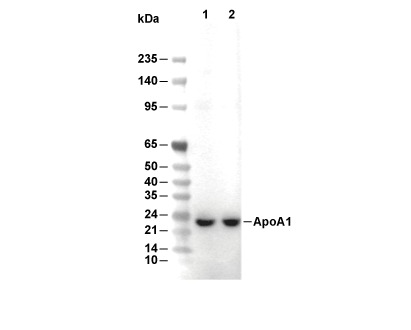 Lane 1: Human small intestine, Lane 2: Human plasma