
|
受注:045-509-1970 |
技術サポート:tech@selleck.co.jp 平日9:00〜18:00 1営業日以内にご連絡を差し上げます |
生物学的記述
| Specificity | ATF-6 (D4Z8V) Rabbit mAb detects endogenous levels of total ATF-6 protein. |
|---|---|
| Background | ATF-6 (Activating Transcription Factor 6) is a type II transmembrane glycoprotein belonging to the bZIP transcription factor family, residing in the endoplasmic reticulum (ER) membrane as a key sensor of the unfolded protein response (UPR). ATF6 features an N-terminal cytoplasmic domain with a basic leucine zipper (bZIP) DNA-binding motif and transcriptional activation regions facing the cytosol, a single transmembrane helix, and a C-terminal ER luminal domain that associates with BiP/GRP78 under homeostatic conditions. Upon ER stress from unfolded protein accumulation, BiP dissociates from ATF6, enabling its trafficking to the Golgi apparatus for sequential cleavage by site-1 protease (S1P) and site-2 protease (S2P), which liberates the active N-terminal cytoplasmic fragment. This cleaved fragment translocates to the nucleus where it binds ER stress response elements (ERSE) to directly activate transcription of UPR target genes, including GRP78/BiP, GRP94, protein disulfide isomerase (PDI), XBP1, and CHOP, enhancing ER chaperone capacity, protein folding, ER-associated degradation (ERAD), and ER biogenesis to restore proteostasis and promote cell survival. Dysregulation of ATF6 contributes to diabetes through impaired insulin signaling, neurodegeneration via protein aggregation, and cancer progression. |
使用情報
| Application | WB, IP | Dilution |
|
||||
|---|---|---|---|---|---|---|---|
| Reactivity | Human, Mouse | ||||||
| Source | Rabbit Monoclonal Antibody | MW | 90-100 kDa | ||||
| Storage Buffer | PBS, pH 7.2+50% Glycerol+0.05% BSA+0.01% NaN3 | Storage (from the date of receipt) |
-20°C (avoid freeze-thaw cycles), 2 years | ||||
References
|
Application Data
WB
Validated by Selleck
-
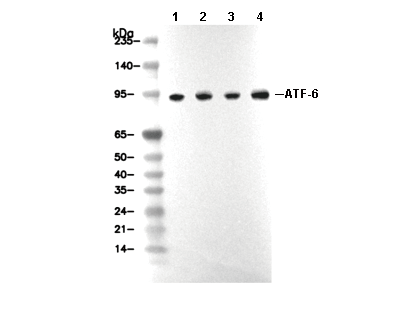 Lane 1: 293T, Lane 2: Hela, Lane 3: Jurkat, Lane 4: K562