
|
受注:045-509-1970 |
技術サポート:tech@selleck.co.jp 平日9:00〜18:00 1営業日以内にご連絡を差し上げます |
生物学的記述
| Specificity | CD147 Antibody [D10H20] detects endogenous levels of total CD147 protein. |
|---|---|
| Background | CD147, also known as basigin or EMMPRIN, functions as a type I transmembrane glycoprotein within the immunoglobulin superfamily, featuring two extracellular Ig-like domains, a transmembrane region, and a short cytoplasmic tail that supports homophilic and heterophilic interactions. Highly glycosylated isoforms predominate, with the predominant form driving most biological activities through dimerization and ligand binding. CD147 orchestrates matrix metalloproteinase (MMP) secretion from adjacent fibroblasts via homophilic interactions, elevating MMP-1, MMP-2, MMP-3, and MMP-9 levels to remodel extracellular matrix during tissue invasion and remodeling. It chaperones monocarboxylate transporters MCT1 and MCT4 to the plasma membrane, facilitating lactate efflux that sustains glycolysis under hypoxia, thereby fueling Warburg metabolism in proliferating cells. TGF-β stimulation upregulates CD147 transcriptionally via Slug binding to its promoter, which in turn amplifies TGF-β expression and triggers epithelial-mesenchymal transition through downregulation of E-cadherin, upregulation of N-cadherin and vimentin, and activation of PI3K/Akt/GSK3β/Snail/Slug cascades. Interactions with cyclophilins, integrins like α3β1 and α6β1, and caveolin-1 modulate signaling through ERK, NF-κB, and VEGF pathways, promoting angiogenesis, anoikis resistance, and chemoresistance via ABCG2 and P-glycoprotein stabilization. As an essential receptor for Plasmodium falciparum PfRh5 on erythrocytes, CD147 mediates parasite invasion by binding Rh5 during tight junction formation. CD147 also supports spermatogenesis, retinal nutrient transport, leukocyte adhesion via α4 integrin regulation, and trophoblast invasion through MMP and VEGF modulation. Overexpression marks progression in hepatocellular carcinoma, breast, lung, ovarian, and other cancers, correlating with poor prognosis, metastasis, and therapeutic resistance, while deficiency impairs tumor growth and invasion in models. |
使用情報
| Application | WB, IHC | Dilution |
|
||||
|---|---|---|---|---|---|---|---|
| Reactivity | Human | ||||||
| Source | Rabbit Monoclonal Antibody | MW | 38-58 kDa | ||||
| Storage Buffer | PBS, pH 7.2+50% Glycerol+0.05% BSA+0.01% NaN3 | Storage (from the date of receipt) |
-20°C (avoid freeze-thaw cycles), 2 years | ||||
References
|
Application Data
WB
Validated by Selleck
-
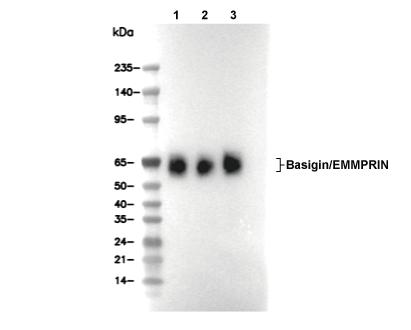 Lane 1: HepG2, Lane 2: DLD-1, Lane 3: NCI-H226