
|
受注:045-509-1970 |
技術サポート:tech@selleck.co.jp 平日9:00〜18:00 1営業日以内にご連絡を差し上げます |
化学情報
|
Synonyms | N/A | Storage (From the date of receipt) |
3 years -20°C powder 1 years -80°C in solvent |
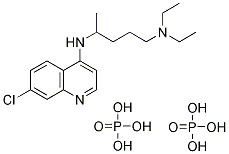
| 化学式 | C18H26ClN3.2H3O4P |
|||
| 分子量 | 515.86 | CAS No. | 50-63-5 | |
| Solubility (25°C)* | 体外 | Water | 100 mg/mL (193.85 mM) | |
| DMSO | Insoluble | |||
| Ethanol | Insoluble | |||
|
* <1 mg/ml means slightly soluble or insoluble. * Please note that Selleck tests the solubility of all compounds in-house, and the actual solubility may differ slightly from published values. This is normal and is due to slight batch-to-batch variations. |
||||
溶剤液(一定の濃度)を調合する
生物活性
| 製品説明 | Chloroquine diphosphateは、4-アミノキノリン系の抗マラリア薬および抗リウマチ薬であり、ATM活性化因子としても作用します。クロロキンは、Toll様受容体(TLRs)の阻害剤でもあります。 |
|---|---|
| in vitro | Chloroquine is a chemotherapeutic agent for the clinical treatment of malaria. Chloroquine is able to bind to DNA, and inhibit DNA replication and RNA synthesis which in turn results in cell death. The effect of Chloroquine may also be related to the formation of a toxic heme-Chloroquine complex. Chloroquine inhibits trophozoite hemoglobin degradation through increasing vacuolar pH and inhibiting the activity of vacuolar phospholipase, vacuolar proteases, and heme polymerase. Chloroquine possesses definite antirheumatic properties. Chloroquine has immuno-modulatory effects, suppressing the production/release of tumour necrosis factor and interleukin 6. Moreover, Chloroquine exerts direct antiviral effects, inhibiting pH-dependent steps of the replication of several viruses including members of the flaviviruses, retroviruses, and coronaviruses. Its best-studied effects are those against HIV replication. Chloroquine can accumulate inside the macrophage phagolysosome by ion trapping where it exerts potent antifungal activity against Histoplasma capsulatum and Cryptococcus neoformans by distinct mechanisms. Chloroquine inhibits growth of H. capsulatum by pH-dependent iron deprivation, whereas it is directly toxic to C. neoformans. |
| in vivo | Chloroquine has tumor‑inhibitory and tumor‑promoting effects in triple‑negative breast cancer. |
プロトコル(参考用のみ)
| 細胞アッセイ | 細胞株 | Monocytes |
|---|---|---|
| 濃度 | 20 μM | |
| 反応時間 | 1 h | |
| 実験の流れ | Cells were treated with indicated concentration of drug for 1 h. |
|
| 動物実験 | 動物モデル | Athymic nude/nu mice |
| 投薬量 | 80 mg/kg | |
| 投与方法 | i.p. |
参考
|
カスタマーフィードバック
-
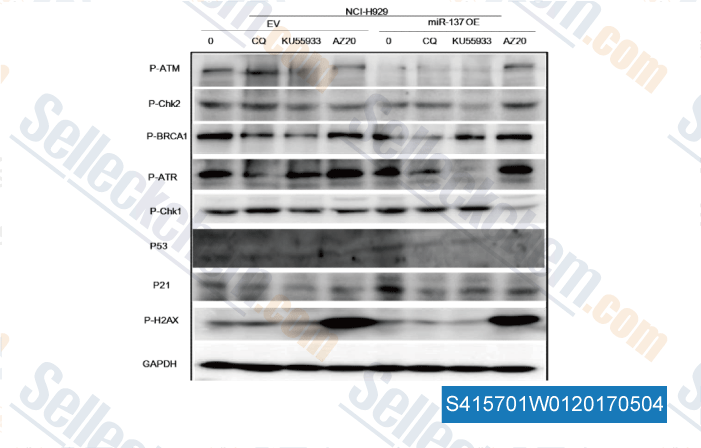
, , Leukemia, 2017, 31(5):1123-1135
-
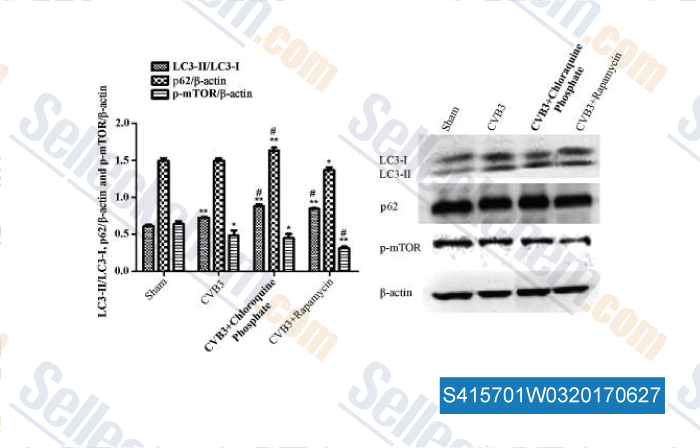
, , Int J Mol Med, 2017, 40(1):182-192
-
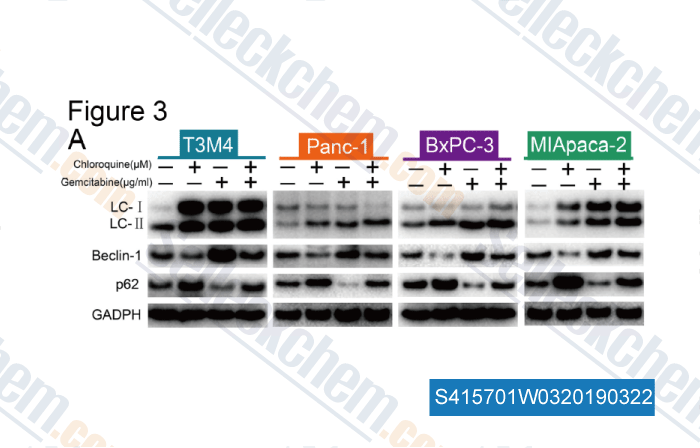
Data from [Data independently produced by , , Cancer Lett, 2018, 436:129-138]
Selleckの高級品が、幾つかの出版された研究調査結果(以下を含む)で使われた:
| Melatonin ameliorates zearalenone-induced ovarian damage in mice through antioxidative effects [ Front Vet Sci, 2025, 12:1587391] | PubMed: 40860911 |
| Noncanonical function of folate through folate receptor 1 during neural tube formation [ Nat Commun, 2024, 15(1):1642] | PubMed: 38388461 |
| Macroautophagy/autophagy promotes resistance to KRASG12D-targeted therapy through glutathione synthesis [ Cancer Lett, 2024, 604:217258] | PubMed: 39276914 |
| Shaoyao-Gancao Decoction, a famous Chinese medicine formula, protects against APAP-induced liver injury by promoting autophagy/mitophagy [ Phytomedicine, 2024, 135:156053] | PubMed: 39326138 |
| KIFC1 depends on TRIM37-mediated ubiquitination of PLK4 to promote centrosome amplification in endometrial cancer [ Cell Death Discov, 2024, 10(1):419] | PubMed: 39349439 |
| Inducing Receptor Degradation as a Novel Approach to Target CC Chemokine Receptor 2 (CCR2) [ Int J Mol Sci, 2024, 25(16)8984] | PubMed: 39201670 |
| Targeting autophagy as a therapeutic strategy in pediatric acute lymphoblastic leukemia [ Sci Rep, 2024, 14(1):4000] | PubMed: 38369625 |
| A high-throughput response to the SARS-CoV-2 pandemic [ SLAS Discov, 2024, 29(5):100160] | PubMed: 38761981 |
| Lysosomes mediate the mitochondrial UPR via mTORC1-dependent ATF4 phosphorylation [ Cell Discov, 2023, 9(1):92] | PubMed: 37679337 |
| Genome homeostasis defects drive enlarged cells into senescence [ Mol Cell, 2023, 10.1016/j.molcel.2023.10.018] | PubMed: 37977116 |
長期の保管のために-20°Cの下で製品を保ってください。
人間や獣医の診断であるか治療的な使用のためにでない。
各々の製品のための特定の保管と取扱い情報は、製品データシートの上で示されます。大部分のSelleck製品は、推薦された状況の下で安定です。製品は、推薦された保管温度と異なる温度で、時々出荷されます。長期の保管のために必要とされてそれと異なる温度で、多くの製品は、短期もので安定です。品質を維持するが、夜通しの積荷のために最も経済的な貯蔵状況を用いてあなたの送料を保存する状況の下に、製品が出荷されることを、我々は確実とします。製品の受領と同時に、製品データシートの上で貯蔵推薦に従ってください。