
|
受注:045-509-1970 |
技術サポート:tech@selleck.co.jp 平日9:00〜18:00 1営業日以内にご連絡を差し上げます |
生物学的記述
| Specificity | Collagen V Antibody [L8G6] detects endogenous levels of total Collagen V. |
|---|---|
| Background | Collagen V (COLV) is a minor fibrillar collagen that forms heterotrimeric molecules of two α1(V) and one α2(V) chains and acts as a dominant regulator of collagen I fibrillogenesis and extracellular matrix organization in tissues such as skin, tendon, cornea, and sclera. It co assembles with collagen I into heterotypic fibrils, where its partially processed N terminal domain protrudes from the fibril surface and constrains collagen I fibril diameter, packing, and lateral alignment, thereby governing the biomechanical properties and scattering characteristics of connective tissues. In the matrix, COLV interacts with additional collagens, proteoglycans such as decorin and biglycan, and structural proteins that fine tune fibril architecture and mechanical anisotropy, while also engaging cell surface integrins to modulate focal adhesion formation, cytoskeletal tension, and mechanotransduction in fibroblasts and other stromal cells. Collagen V also interfaces with TGF β signaling and Wnt/β catenin pathways, influencing progenitor proliferation, differentiation, and matrix remodeling during development and repair, and loss of function mutations in COL5A1 or COL5A2 disrupt collagen V–dependent fibrillogenesis, leading to classic Ehlers Danlos syndrome with skin hyperextensibility, abnormal scarring, and joint hypermobility. In fibrotic and pathological states, aberrantly elevated collagen V expression accompanies excessive deposition of fibrillar collagens and matrix stiffening in lung, kidney, skin, and adipose tissues, so that collagen V dependent matrix organization and mechanosignaling are ultimately dysregulated in both hereditary connective tissue diseases and acquired fibrotic disorders. |
使用情報
| Application | WB | Dilution |
|
||
|---|---|---|---|---|---|
| Reactivity | Mouse, Rat, Human | ||||
| Source | Rabbit Monoclonal Antibody | MW | 184 kDa | ||
| Storage Buffer | PBS, pH 7.2+50% Glycerol+0.05% BSA+0.01% NaN3 | Storage (from the date of receipt) |
-20°C (avoid freeze-thaw cycles), 2 years | ||
References
|
Application Data
WB
Validated by Selleck
-
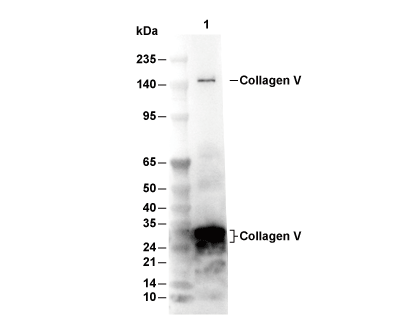 Lane 1: Rat articular cartilage