
|
受注:045-509-1970 |
技術サポート:tech@selleck.co.jp 平日9:00〜18:00 1営業日以内にご連絡を差し上げます |
生物学的記述
| Specificity | Human IgG3 Antibody [K16P8] detects endogenous levels of total Human IgG3. |
|---|---|
| Background | Human IgG3 is an immunoglobulin G subclass secreted by plasma B cells that serves as a potent effector antibody in humoral immune responses, especially during early-phase and high-avidity antiviral and antipathogen protection. Structurally, IgG3’s Fab region comprises two antigen-binding arms connected to a paired Fc domain via an unusually long hinge region, which grants increased flexibility and spatial reach. This enables IgG3 to bind antigen-dense surfaces, such as viral capsids or infected cell membranes, with higher functional avidity than other IgG subclasses. The Fc region of IgG3 interacts strongly with Fcγ receptors on neutrophils, monocytes, macrophages, and NK cells, thereby promoting phagocytosis, antibody-dependent cellular cytotoxicity, and inflammatory cell activation. IgG3 also binds C1q with high efficiency, triggering robust classical complement activation, opsonization, and lysis of antibody-coated targets. N-linked glycosylation at conserved sites in the CH2 domain preserves Fc conformation, which is essential for optimal FcγR and C1q engagement. Additionally, polymorphic and charge-heterogeneous features in the IgG3 hinge region influence self-association and solution behavior, affecting its developability as a therapeutic molecule. IgG3-dominant antibody responses are linked to protection against intracellular bacteria, parasites, and viruses, including HIV and malaria. Conversely, low or imbalanced IgG3 subclass profiles are associated with increased susceptibility to recurrent or severe infections. While the high-avidity, pro-inflammatory, and complement-activating capabilities of IgG3 are beneficial for pathogen clearance, they contribute to immune-complex-driven pathology when regulation of immune complexes and FcγR signaling is impaired. |
使用情報
| Application | WB | Dilution |
|
||
|---|---|---|---|---|---|
| Reactivity | Human | ||||
| Source | Rabbit Monoclonal Antibody | MW | 41 kDa | ||
| Storage Buffer | PBS, pH 7.2+50% Glycerol+0.05% BSA+0.01% NaN3 | Storage (from the date of receipt) |
-20°C (avoid freeze-thaw cycles), 2 years | ||
References
|
Application Data
WB
Validated by Selleck
-
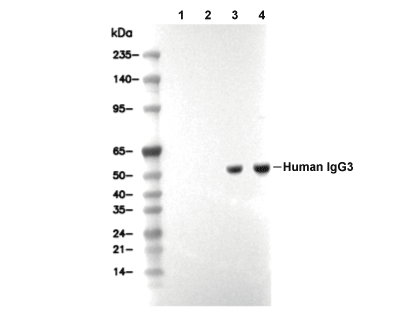 Lane 1: IgG1, Lane 2: IgG2, Lane 3: IgG3, Lane 4: Human plasma