
|
受注:045-509-1970 |
技術サポート:tech@selleck.co.jp 平日9:00〜18:00 1営業日以内にご連絡を差し上げます |
生物学的記述
| Specificity | Lipocalin-2/NGAL Antibody [N17E16] detects endogenous levels of total Lipocalin-2/NGAL protein. |
|---|---|
| Background | Lipocalin‑2, also termed neutrophil gelatinase‑associated lipocalin (NGAL), is a secreted glycoprotein of the lipocalin family that transports small hydrophobic ligands and is widely expressed in epithelial, immune, and adipose tissues where it participates in iron handling, host defense, and metabolic regulation. The protein adopts the typical lipocalin β‑barrel fold that forms a deep calyx accommodating low‑molecular‑weight ligands, including bacterial catecholate siderophores such as enterobactin and structurally related iron chelators, enabling high‑affinity binding of iron complexes and exchange with endogenous molecules like norepinephrine. Association of NGAL with iron‑loaded siderophores limits microbes' access to iron, thereby restricting bacterial proliferation, while iron transport into mammalian cells modulates the expression of iron‑responsive genes and influences oxidative balance. Interaction with specific cell‑surface receptors, including the 24p3‑type transport system described for lipocalin‑2, supports endocytosis of NGAL–ligand complexes, allowing directional iron flux that can either increase intracellular iron content or promote iron efflux when complexed forms are removed from the cytosolic pool. These iron‑dependent signaling events intersect with apoptosis pathways, as NGAL has been linked to both pro‑ and anti‑apoptotic programs depending on cellular context, with reported inhibition of apoptosis in some epithelial and endocrine tumor cells and promotion of leukemic transformation when overexpressed with oncogenic tyrosine kinase drivers. NGAL also interacts with matrix metalloproteinase‑9 (MMP‑9), stabilizing this protease by forming a complex that reduces autodegradation and supports sustained extracellular matrix remodeling, a property relevant to invasion, angiogenesis, and tissue repair. Regulation of NGAL expression integrates inflammatory and metabolic cues, with induction by pro‑inflammatory cytokines such as interleukins, tumor necrosis factor‑α, and interferons, and with recognition as an adipose‑derived cytokine that participates in systemic metabolic homeostasis and lipid handling. Inflammatory signaling places NGAL at the interface of innate immunity and tissue stress responses, where it modulates oxidative stress not only by controlling iron availability to pathogens and host cells but also by influencing antioxidant enzyme systems and redox‑sensitive gene networks described in mechanistic studies of lipocalin‑2 function. In renal and cardiovascular settings, NGAL appears in blood and urine as a sensitive marker of tubular epithelial injury and vascular stress, reflecting rapid transcriptional upregulation and secretion from injured epithelia and activated leukocytes. Dysregulated NGAL expression is reported across a range of benign and malignant conditions, including chronic inflammatory diseases, obesity‑associated metabolic disorders, and solid tumors, where altered iron trafficking, MMP‑9 stabilization, and cytokine‑driven expression link this protein to proliferation, invasion, and metastatic behavior. |
使用情報
| Application | WB, IHC | Dilution |
|
||||
|---|---|---|---|---|---|---|---|
| Reactivity | Mouse, Rat | ||||||
| Source | Rabbit Monoclonal Antibody | MW | 23 kDa | ||||
| Storage Buffer | PBS, pH 7.2+50% Glycerol+0.05% BSA+0.01% NaN3 | Storage (from the date of receipt) |
-20°C (avoid freeze-thaw cycles), 2 years | ||||
References
|
Application Data
WB
Validated by Selleck
-
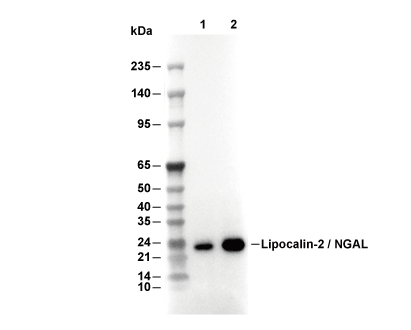 Lane 1: Mouse lung, Lane 2: Mouse spleen