
|
受注:045-509-1970 |
技術サポート:tech@selleck.co.jp 平日9:00〜18:00 1営業日以内にご連絡を差し上げます |
生物学的記述
| Specificity | LPCAT3 Antibody [H3J6] detects endogenous levels of total LPCAT3 protein. |
|---|---|
| Background | LPCAT3 (lysophosphatidylcholine acyltransferase 3), a key enzyme in the LPCAT family of lysophospholipid acyltransferases, resides primarily in the endoplasmic reticulum of metabolic tissues like liver, intestine, and adipose, where it selectively acylates lysophosphatidylcholine with polyunsaturated fatty acids such as arachidonate and linoleate to generate phosphatidylcholines prone to peroxidation. Its membrane-bound structure features multiple transmembrane domains that position active sites for lipid substrate access within ER bilayers. Activation occurs via LXR/PPARγ nuclear receptor signaling under lipid overload, driving LPCAT3 incorporation of arachidonoyl-CoA into membrane phospholipids, which primes PUFA-containing phosphatidylethanolamines (PUFA-PE) for 15-LOX oxidation in the ferroptosis execution phase; this integrates into the ACSL4-LPCAT3-15LOX axis where LPCAT3 knockdown partially rescues ferroptotic death by starving lipid peroxidation substrates, while its upregulation via YAP/TEAD-ZEB1 transcription enhances EP300-mediated H3K27 acetylation at the LPCAT3 promoter to amplify ferroptosis sensitivity in cancer cells. LPCAT3 maintains ER membrane fluidity by desaturating phospholipids, mitigating lipotoxic stress from saturated fatty acids during nutrient excess, thus balancing catabolic lipid remodeling with ferroptotic checkpoints. Physiologically, this duality governs intestinal lipid absorption, hepatic lipoprotein secretion, and macrophage efferocytosis, positioning LPCAT3 as a linchpin for researchers modeling ferroptosis kinetics in lipidomics screens or dissecting ER homeostasis in NAFLD organoids. Overexpression correlates with poor prognosis in lung adenocarcinoma and AML through ferroptosis evasion and immune suppression, while deficiency precipitates steatohepatitis. |
使用情報
| Application | WB, IHC, ELISA | Dilution |
|
||||
|---|---|---|---|---|---|---|---|
| Reactivity | Human, Pig | ||||||
| Source | Mouse Monoclonal Antibody | MW | 56 kDa | ||||
| Storage Buffer | PBS, pH 7.2+50% Glycerol+0.05% BSA+0.01% NaN3 | Storage (from the date of receipt) |
-20°C (avoid freeze-thaw cycles), 2 years | ||||
References
|
Application Data
WB
Validated by Selleck
-
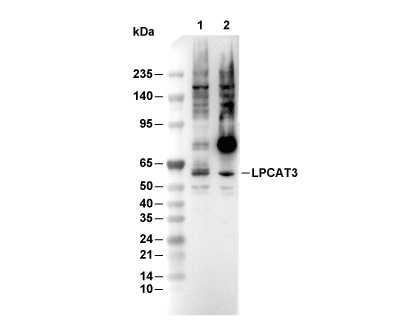 Lane 1: Karpas-299, Lane 2: HepG2