
|
受注:045-509-1970 |
技術サポート:tech@selleck.co.jp 平日9:00〜18:00 1営業日以内にご連絡を差し上げます |
生物学的記述
| Specificity | PAF1 Antibody [D19B13] detects endogenous levels of total PAF1 protein. |
|---|---|
| Background | Paf1 (RNA polymerase II–associated factor 1) is a core subunit of the conserved Paf1 complex (Paf1C), a multifunctional elongation‑associated module that physically associates with the elongating RNA polymerase II (RNAPII) machinery and functions as a platform coordinating transcription, chromatin modification, and RNA‑processing events. The Paf1 complex contains Paf1, Ctr9, Cdc73, Leo1, Rtf1, and, in higher eukaryotes, Ski8, and it travels with RNAPII across the body of actively transcribed genes, where it interacts with Spt4–Spt5, FACT, and other elongation factors to influence polymerase processivity and chromatin integrity. A key mechanistic function of the Paf1C is stimulation of histone H2B ubiquitination, which in turn promotes histone H3 methylation and modulates nucleosome dynamics around transcribed regions, thereby shaping the chromatin landscape that RNAPII must traverse. Paf1C further couples transcription elongation to mRNA 3′‑end processing by recruiting the cleavage and polyadenylation specificity factor (CPSF) and cleavage stimulation factor (CstF) complexes via the Cdc73 subunit, ensuring co‑transcriptional assembly of the 3′‑end‑processing machinery at gene termini. In addition, the Ski8 subunit of the Paf1C links the complex to the TRAMP/Ski/Exosome RNA‑surveillance network, enabling co‑transcriptional quality control and degradation of aberrant or non‑productive transcripts. |
使用情報
| Application | WB | Dilution |
|
||
|---|---|---|---|---|---|
| Reactivity | Human, Mouse, Rat, Monkey | ||||
| Source | Rabbit Monoclonal Antibody | MW | 80 kDa | ||
| Storage Buffer | PBS, pH 7.2+50% Glycerol+0.05% BSA+0.01% NaN3 | Storage (from the date of receipt) |
-20°C (avoid freeze-thaw cycles), 2 years | ||
References
|
Application Data
WB
Validated by Selleck
-
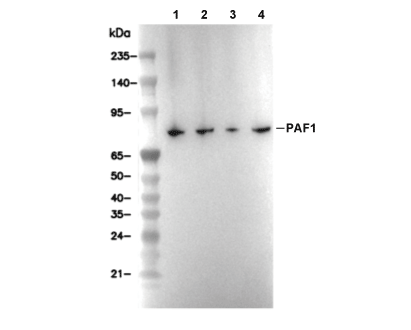 Lane 1: Hela, Lane 2: PANC-1, Lane 3: RAW264.7, Lane 4: H-4-II-E