
|
受注:045-509-1970 |
技術サポート:tech@selleck.co.jp 平日9:00〜18:00 1営業日以内にご連絡を差し上げます |
生物学的記述
| Specificity | Somatostatin Receptor 1/SSTR1 Antibody [F9M21] detects endogenous levels of total Somatostatin Receptor 1/SSTR1 protein. |
|---|---|
| Background | Somatostatin Receptor 1 (SSTR1) is a G protein-coupled receptor (GPCR) subtype belonging to the somatostatin receptor family that mediates inhibitory effects of the peptide hormone somatostatin, regulating hormone secretion, cell proliferation, and neurotransmission in the brain, kidney, and lung. SSTR1 features the GPCR hallmark of seven transmembrane α-helices, an extracellular N-terminus, and intracellular C-terminus, with conserved motifs such as the DRY motif in the third intracellular loop critical for signal transduction. Key ligand-binding residues include Q6.55 and S7.34, which form part of the extracellular loops that create the ligand-binding pocket, showing higher affinity for somatostatin-14 (SRIF-14) over SRIF-28. The SSTR1 gene is intronless and located on chromosome 14q13. It couples to pertussis toxin-sensitive Giα proteins to inhibit adenylyl cyclase, reducing intracellular cAMP levels, modulate Ca2+ and K+ channels to hyperpolarize cells, and activate protein tyrosine phosphatases that mediate antiproliferative effects via MAPK pathway modulation. SSTR1 can form homo- and heterodimers (with SSTR5), which influence receptor signaling. Regulation of SSTR1 includes agonist-induced phosphorylation, rapid desensitization, and notably, unlike other SSTRs, limited internalization leading to potential upregulation on the cell surface, affecting therapeutic outcomes. Clinically, SSTR1 is highly expressed in neuroendocrine tumors, acromegaly, and various cancers (pituitary, colorectal, breast, gliomas), where it modulates hormone secretion, tumor growth, and neuronal signaling. |
使用情報
| Application | WB, IF | Dilution |
|
||||
|---|---|---|---|---|---|---|---|
| Reactivity | Human | ||||||
| Source | Rabbit Monoclonal Antibody | MW | 43 kDa | ||||
| Storage Buffer | PBS, pH 7.2+50% Glycerol+0.05% BSA+0.01% NaN3 | Storage (from the date of receipt) |
-20°C (avoid freeze-thaw cycles), 2 years | ||||
References
|
Application Data
WB
Validated by Selleck
-
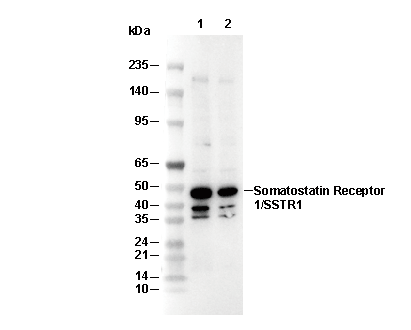 Lane 1: Human fetal lung, Lane 2: Human small intestine