
|
受注:045-509-1970 |
技術サポート:tech@selleck.co.jp 平日9:00〜18:00 1営業日以内にご連絡を差し上げます |
生物学的記述
| Specificity | SPIB Antibody [F10D9] detects endogenous levels of total SPIB protein. |
|---|---|
| Background | Spi-B (SPIB) is a lymphoid-enriched ETS family transcription factor that binds purine-rich PU-box elements with the core sequence GAGGAA and functions as a sequence-specific transcriptional activator in immune and stromal compartments of lymphoid organs. The protein contains a C‑terminal ETS DNA-binding domain that mediates high-affinity recognition of PU-box motifs and an N‑terminal transactivation region that engages the transcriptional machinery and cooperates with partner factors on composite regulatory elements in target promoters and enhancers. SPIB is expressed in B-lineage cells, including germinal center and memory B cells, in plasmacytoid dendritic cells, and in fibroblastic reticular cells (FRCs) in lymph nodes, and regulates transcriptional programs that maintain B-cell identity, support humoral memory, and organize lymphoid stromal networks. SPIB promotes expression of B-cell–related genes, maintains expression of transcription factors that preserve the memory B-cell state, and limits terminal plasma cell differentiation by sustaining regulators such as Bach2 and restraining Blimp1, thereby supporting the longevity and survival of memory B cells and maintaining the pool of antigen-experienced cells. SPIB also controls the expression of components of the B-cell receptor (BCR) signaling cascade and NF‑κB pathway, placing this factor as a link between antigen receptor signaling and transcriptional control of B-cell fate decisions, including the balance between memory maintenance and plasma cell generation. In lymph node FRCs, SPIB is required for normal organization of the reticular network in T-cell zones and regulates expression of key niche factors such as CCL21 and interleukin‑7, thereby influencing CD8⁺ T-cell positioning, survival signals, and the magnitude of antiviral effector responses during infection. SPIB participates in the development and function of mucosal M cells in intestinal Peyer’s patches, contributes to plasmacytoid dendritic cell type I interferon responses through binding to interferon gene regulatory regions, and forms part of the broader SPI1/SPIB ETS subfamily that partitions transcriptional control across B cells, dendritic cells, and stromal elements. Altered SPIB expression or activity associates with defects in memory B-cell maintenance and germinal center responses, with impaired lymph node stromal architecture and weakened CD8⁺ T-cell immunity, and with selected lymphoid malignancies in which SPIB affects proliferation, survival, and cytokine or chemokine expression profiles. |
使用情報
| Application | WB, IP, IHC, IF, FCM | Dilution |
|
|---|---|---|---|
| Reactivity | Human | ||
| Source | Rabbit Monoclonal Antibody | MW | 29 kDa |
| Storage Buffer | PBS, pH 7.2+50% Glycerol+0.05% BSA+0.01% NaN3 | Storage (from the date of receipt) |
-20°C (avoid freeze-thaw cycles), 2 years |
References
|
Application Data
WB
Validated by Selleck
-
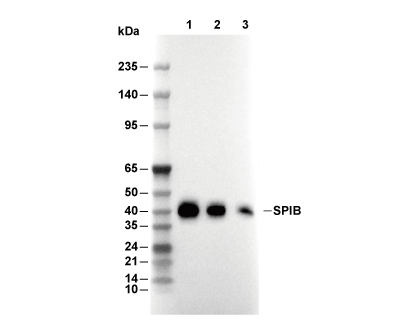 Lane 1: Raji, Lane 2: Daudi, Lane 3: HDLM-2