
|
受注:045-509-1970 |
技術サポート:tech@selleck.co.jp 平日9:00〜18:00 1営業日以内にご連絡を差し上げます |
生物学的記述
| Specificity | SREBP-2 Antibody [J5M10] detects endogenous levels of total SREBP-2 protein. |
|---|---|
| Background | SREBP‑2 (sterol regulatory element‑binding protein 2) is a basic helix–loop–helix leucine zipper transcription factor of the SREBP family that functions as a master regulator of cellular cholesterol homeostasis by controlling the expression of genes required for cholesterol biosynthesis and uptake, including HMG‑CoA reductase, HMG‑CoA synthase, mevalonate pathway enzymes, and the LDL receptor. The protein is synthesized as a membrane‑bound precursor with two transmembrane segments arranged in a hairpin that anchor it in the endoplasmic reticulum in complex with the cholesterol sensor and escort protein SCAP, while its N‑terminal domain contains the transcriptional activation region and bHLH‑Zip DNA‑binding motif, and its C‑terminal luminal and cytosolic segments participate in regulated trafficking and processing. Under cholesterol‑depleted conditions, the SCAP–SREBP‑2 complex is packaged into COPII vesicles and transported to the Golgi apparatus, where site‑1 and site‑2 proteases sequentially cleave SREBP‑2 within the luminal loop and transmembrane segment to liberate the soluble N‑terminal fragment, which then translocates to the nucleus, binds sterol regulatory elements in target promoters, and activates a coordinated transcriptional program that increases cholesterol synthesis and lipoprotein uptake until membrane sterol levels return to a set point. When cholesterol or oxysterols accumulate in ER membranes, binding of sterols to SCAP and Insig promotes formation of SCAP–SREBP‑2–Insig complexes that remain in the ER and prevent Golgi trafficking and proteolytic processing, thereby reducing levels of nuclear SREBP‑2 and lowering expression of cholesterologenic and LDLR genes as a negative feedback loop that stabilizes intracellular sterol content. Nuclear SREBP‑2 not only activates classical mevalonate pathway genes but also forms phase‑separated nuclear condensates through its intrinsically disordered N‑terminal region, and these condensates cluster on super‑enhancers together with transcriptional coactivators to drive efficient transcription of lipogenic and cholesterologenic genes, directly linking SREBP‑2 biophysical organization to transcriptional output and systemic cholesterol levels. SREBP‑2 activity is integrated with hormonal and metabolic signaling, including insulin and liver X receptor pathways, and contributes to the regulation of broader lipid metabolism, but retains a preferential role in cholesterol synthesis compared with SREBP‑1 isoforms that primarily control fatty acid biosynthesis, so SREBP‑2 serves as the principal transcriptional effector of sterol status across diverse tissues. Dysregulated SREBP‑2 signaling, through chronic activation or altered feedback control, contributes to atherosclerosis, metabolic disease, and multiple cancers by sustaining elevated mevalonate pathway flux, enhancing cholesterol and isoprenoid production, and supporting membrane biogenesis, oncogenic signaling, and survival of rapidly proliferating cells. |
使用情報
| Application | WB, IP | Dilution |
|
||||
|---|---|---|---|---|---|---|---|
| Reactivity | Human | ||||||
| Source | Mouse Monoclonal Antibody | MW | 124 kDa | ||||
| Storage Buffer | PBS, pH 7.2+50% Glycerol+0.05% BSA+0.01% NaN3 | Storage (from the date of receipt) |
-20°C (avoid freeze-thaw cycles), 2 years | ||||
References
|
Application Data
WB
Validated by Selleck
-
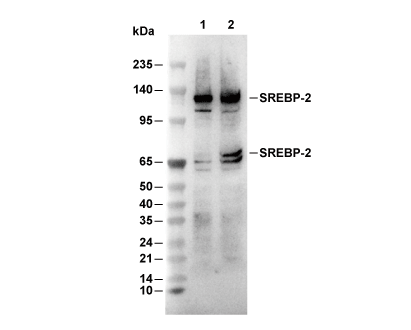 Lane 1: Jurkat, Lane 2: Jurkat (Staurosporin, 1 µM, 4 h)