| NRBF2 (nuclear receptor‑binding factor 2) is an autophagy‑related adaptor protein that associates with class III phosphatidylinositol 3‑kinase complex I (PI3KC3‑C1) and helps tune the production of phosphatidylinositol‑3‑phosphate during autophagosome formation. The protein contains an N‑terminal MIT domain and coiled‑coil region that positions it at the base of the V‑shaped PI3KC3‑C1 architecture, where it contacts Beclin 1, ATG14L, and VPS34, and alters internal protein motions that are linked to lipid kinase output. Binding of NRBF2 to PI3KC3‑C1 promotes a configuration in which the catalytic domain of VPS34 is oriented favorably toward the membrane, and engagement of two NRBF2 MIT modules stabilizes an active conformation that enhances ATG14‑linked lipid kinase activity. Through this mechanism, NRBF2 acts as a positive regulator of VPS34 in canonical autophagy pathways, supporting efficient generation of phosphatidylinositol‑3‑phosphate at nascent isolation membranes and facilitating recruitment of downstream effectors required for phagophore nucleation and expansion. NRBF2 also functions as a RAB7 effector during later stages of autophagy, where its association with RAB7‑positive compartments promotes fusion between autophagosomes and late endosomes or lysosomes and maintains interactions between membrane trafficking complexes and cargo such as APP‑derived fragments. In neuronal and glial contexts, NRBF2‑dependent control of PI3KC3‑C1 activity and autophagosome maturation contributes to proteostasis and organelle quality control, supporting survival under stress conditions and limiting accumulation of aggregation‑prone or neurotoxic proteins. Reduced NRBF2 expression and impaired NRBF2–PI3KC3‑C1 signaling have been linked to defective autophagic flux, increased amyloid precursor protein C‑terminal fragment levels, and altered amyloid‑β production, connecting this adaptor to pathways implicated in neurodegeneration. |


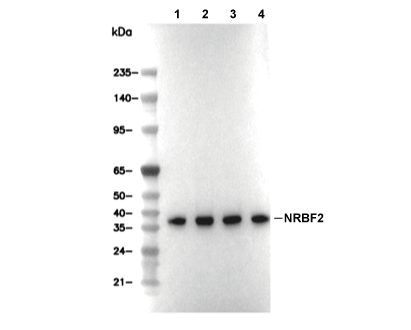 Lane 1: MCF7, Lane 2: MDA-MB-231, Lane 3: A-375, Lane 4: HepG2