
- 阻害剤
- 研究分野別
- PI3K/Akt/mTOR
- Epigenetics
- Methylation
- Immunology & Inflammation
- Protein Tyrosine Kinase
- Angiogenesis
- Apoptosis
- Autophagy
- ER stress & UPR
- JAK/STAT
- MAPK
- Cytoskeletal Signaling
- Cell Cycle
- TGF-beta/Smad
- 化合物ライブラリー
- 抗体
- 新製品
- お問い合わせ

invivo抗体
| 製品コード | 製品名 | Application | Product Validations | 製品説明 |
|---|---|---|---|---|
| A2115 | Anti-mouse PD-L1 (B7-H1)-InVivo [10F.9G2] | in vivo PD-L1 blockade,IHC (frozen),FCM |
-InVivo.gif)
|
Anti-mouse PD-L1 (B7-H1)-InVivo [10F.9G2] monoclonal antibody reacts with mouse PD-L1 (also known as B7-H1, CD274). Anti-mouse PD-L1 (B7-H1)-InVivo [10F.9G2] has been shown to block the interaction between PD-L1 and PD-1 and between PD-L1 and B7-1 (CD80). |
| A2122 | Anti-mouse PD-1 (CD279)-InVivo [RMP1-14] | in vivo blocking of PD-1/PD-L signaling |
-InVivo.gif)
|
Anti-mouse PD-1 (CD279)-InVivo [RMP1-14] reacts with mouse PD-1 (programmed death-1) also known as CD279. PD-1 is a 50-55 kDa cell surface receptor encoded by the Pdcd1 gene that belongs to the CD28 family of the Ig superfamily. |
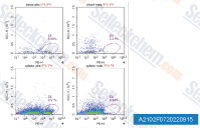
| A2102 | Anti-mouse CD8α-InVivo [2.43] | In vivo CD8+ T cell depletion,WB |
|
Anti-mouse CD8α-InVivo [2.43] reacts with mouse CD8α. CD8 is a transmembrane glycoprotein that acts as a co-receptor for the T cell receptor (TCR). It binds to class I MHC molecules displayed by antigen presenting cells (APC). |
| A2111 | Anti-human CD3-InVivo [OKT-3] | in vitro T cell stimulation/activation, FCM | Anti-human CD3-InVivo [OKT-3] reacts with human CD3ε which is a 20 kDa transmembrane cell-surface protein that belongs to the immunoglobulin superfamily.Anti-human CD3-InVivo [OKT-3] has immunosuppressive properties in vivo and has been shown to effectively treat renal, heart and liver allograft rejection. | |
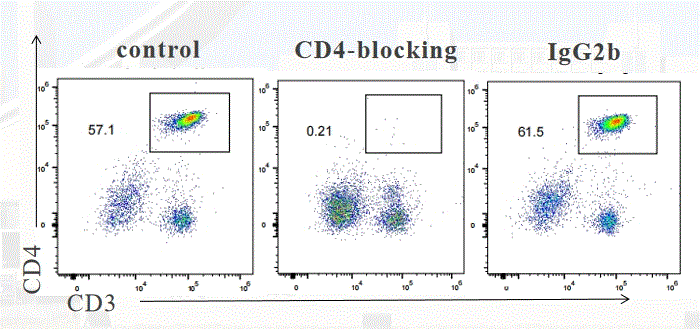
| A2101 | Anti-mouse CD4-InVivo [GK1.5] | In vivo CD4+ T cell depletion,FCM,WB |

|
Anti-mouse CD4-InVivo [GK1.5] reacts with mouse CD4, which is a 55 kDa cell surface type I membrane glycoprotein. CD4 is a co-receptor of the T cell receptor (TCR) and assists the latter in communicating with antigen-presenting cells. |
| A2116 | Rat IgG2b isotype control-InVivo [LTF-2] |
|
Rat IgG2b isotype control-InVivo [LTF-2] reacts with keyhole limpet hemocyanin (KLH). Because KLH is not expressed by mammals this antibody is ideal for use as an isotype-matched control for rat IgG2b antibodies in most in vivo and in vitro applications. | |
| A2110 | Anti-mouse CD16/CD32-InVivo [2.4G2] | in vitro/vivo Fc receptor blocking |

|
Anti-mouse CD16/CD32-InVivo [2.4G2] reacts specifically with mouse CD16 (FcγRIII) and CD32 (FcγRII). It has also been reported to react non-specifically via its Fc domain to FcγRI. Anti-mouse CD16/CD32-InVivo [2.4G2] is commonly used in flow cytometry staining experiments to prevent non-specific binding of IgG to the FcγIII and FcγII, and possibly FcγI, receptors prior to staining with antigen specific primary antibodies. For Fc receptor blocking of mouse samples in flow cytometry experiments, add 0.25 μg of anti-mouse CD16/32 antibody per 10^6 cells in a total reaction volume of 100 μL. |
| A2103 | Anti-mouse CTLA-4 (CD152)-InVivo [9H10] | in vivo/vitro CTLA-4 neutralization, FCM,WB | Anti-mouse CTLA-4 (CD152)-InVivo [9H10] reacts with mouse CTLA-4 (cytotoxic T lymphocyte antigen-4) also known as CD152. Anti-mouse CTLA-4 (CD152)-InVivo [9H10] has been shown to promote T cell co-stimulation by blocking CTLA-4 binding to the B7 co-receptors, allowing for CD28 binding. | |
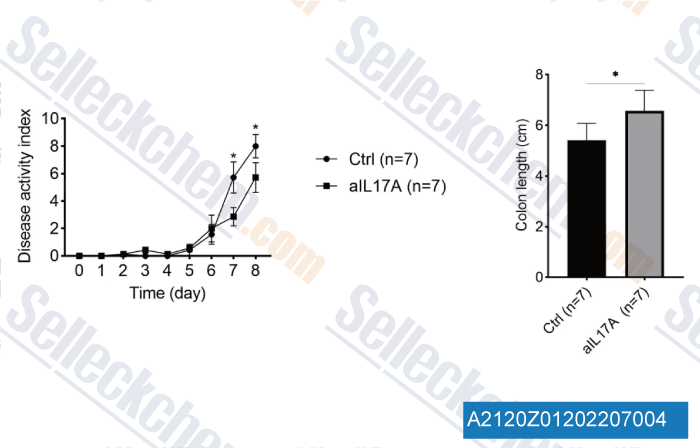
| A2120 | Anti-mouse IL-17A-InVivo [17F3] | in vivo IL-17A neutralization |
|
Anti-mouse IL-17A-InVivo [17F3] reacts with mouse IL-17A which is a 15-20 kDa cytokine expressed by Th17 cells, γδ T cells, iNKT cells, NK cells, LTi cells, neutrophils, and intestinal Paneth cells. Anti-mouse IL-17A-InVivo [17F3] has been shown to neutralize IL-17A in vivo. |
| A2113 | Anti-human/mouse TGF-β-InVivo [1D11.16.8] | in vivo/vitro TGFβ neutralization,WB | Anti-human/mouse TGF-β-InVivo [1D11.16.8] reacts with mouse, human, rat, monkey, hamster, canine and bovine TGF-β (transforming growth factor beta) isoforms 1, 2 and 3.The 1D11.16.8 monoclonal antibody is a neutralizing antibody. | |
| A2121 | Anti-mouse IFNAR-1-InVivo [MAR1-5A3] | in vivo IFNAR-1 blockade, in vitro IFNAR-1 blockade, WB |

|
Anti-mouse IFNAR-1-InVivo [MAR1-5A3] reacts with mouse IFNAR-1 (IFN alpha/beta receptor subunit 1). Anti-mouse IFNAR-1-InVivo [MAR1-5A3] has been shown to inhibit Type I IFN receptor signaling in vitro and in vivo. |
| A2117 | Mouse IgG2a isotype control-InVivo [C1.18.4] | Mouse IgG2a isotype control-InVivo [C1.18.4] is ideal for use as a non-reactive isotype-matched control for mouse IgG2a antibodies in most in vivo and in vitro applications. | ||
| A2104 | Anti-mouse CD3ε-InVivo [145-2C11] | in vitro T cell stimulation/activation, IF, FCM, WB | Anti-mouse CD3ε-InVivo [145-2C11] reacts with mouse CD3ε which is a 20 kDa transmembrane cell-surface protein that belongs to the immunoglobulin superfamily. Anti-mouse CD3ε-InVivo [145-2C11] has been shown to induce T lymphocyte activation, proliferation, and apoptosis in vitro via binding and stimulating the TCR. When used in vivo the antibody is reported to produce T cell activation, anergy, or death. | |
| A2118 | Anti-mouse IL-6-InVivo [MP5-20F3] | in vivo IL-6 neutralization |

|
Anti-mouse IL-6-InVivo [MP5-20F3] can reacts with mouse IL-6 (interleukin-6) which is a 21-28 kDa cytokine that is expressed by many cell types, including T lymphocytes, B lymphocytes, monocytes, fibroblasts, and endothelial cells. Anti-mouse IL-6-InVivo has been shown to neutralize the bioactivity of natural or recombinant IL-6. |
| A2108New | Anti-mouse CD28-InVivo [PV-1] | in vitro T cell stimulation/activation | Anti-mouse CD28-InVivo [PV-1] reacts with mouse CD28.Anti-mouse CD28-InVivo [PV-1] has been shown to stimulate the proliferation and cytokine production by activated T and NK cells. | |
| A2119 | Rat IgG1 isotype control-InVivo [HRPN] |

|
Rat IgG1 isotype control-InVivo [HRPN] reacts with horseradish peroxidase (HRP). Because HRP is not expressed by mammals this antibody is ideal for use as an isotype-matched control for rat IgG1 antibodies in most in vivo and in vitro applications. | |
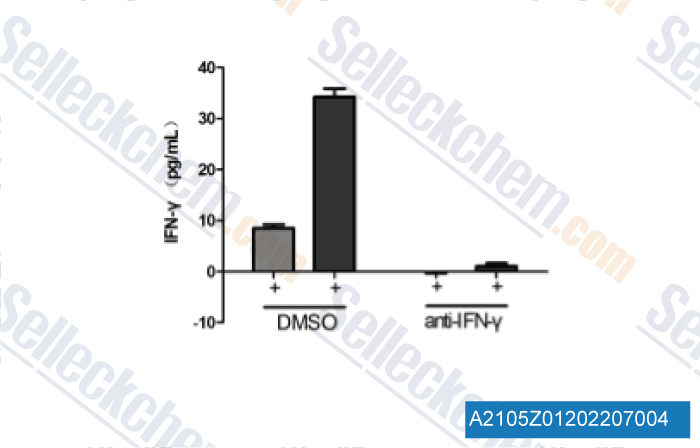
| A2105 | Anti-mouse IFNγ-InVivo [R4-6A2] | in vivo/vitro IFNγ neutralization |
|
Anti-mouse IFNγ-InVivo [R4-6A2] reacts with mouse IFNγ (interferon gamma) which is a 20 kDa soluble pleiotropic cytokine and the sole member of the type II class of interferons. Anti-mouse IFNγ-InVivo [R4-6A2] has been shown to neutralize both natural and recombinant IFNγ. |
| A2109 | Anti-mouse IL-4-InVivo [11B11] | in vivo/vitro IL-4 neutralization,FCM,WB | Anti-mouse IL-4-InVivo [11B11] reacts with mouse IL-4 (interleukin-4) which is a multifunctional 14 kDa cytokine.Anti-mouse IL-4-InVivo [11B11] has been shown to neutralize the bioactivity of natural or recombinant IL-4. | |
| A2149 | Anti-mouse CD19-InVivo [1D3] | Anti-mouse CD19-InVivo |

|
Anti-mouse CD19-InVivo [1D3] reacts with mouse CD19, a B cell-specific 95 kDa transmembrane glycoprotein of the immunoglobulin superfamily. |
| A2159 | Anti-mouse CSF1R (CD115)-InVivo [AFS98] |

|
Anti-mouse CSF1R (CD115)-InVivo [AFS98] reacts with mouse colony stimulating factor 1 receptor (CSF1R), also known as macrophage colony-stimulating factor receptor (M-CSFR), and CD115. CSF1R is a single-pass type I membrane protein and member of the platelet-derived growth factor receptor family. | |
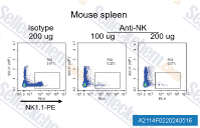
| A2114 | Anti-mouse NK1.1-InVivo [PK136] | in vivo NK cell depletion,FCM |
|
Anti-mouse NK1.1-InVivo [PK136] reacts with mouse NK1.1 also known as CD161b/CD161c, KLRB1, NKR-P1A and Ly-55. |
| A2107 | Anti-mouse CD25 (IL-2Rα)-InVivo [PC-61.5.3] | in vivo regulatory T cell depletion,FCM |
-InVivo.gif)
|
Anti-mouse CD25 (IL-2Rα)-InVivo [PC-61.5.3] reacts with mouse IL-2Rα also known as CD25, Ly-43, p55, or Tac.The PC-61.5.3 antibody has been shown to inhibit the binding of IL-2 to both the low and high affinity IL-2 receptor forms. Additionally, Anti-mouse CD25 (IL-2Rα)-InVivo [PC-61.5.3] is commonly used to deplete CD4+FoxP3+ T regulatory cells in vivo. |
| A2141 | Anti-mouse Ter-119-InVivo [TER-119] | Anti-mouse Ter-119-InVivo | Anti-mouse Ter-119-InVivo [TER-119] reacts with mouse Ter-119, a 52 kDa glycophorin A-associated protein that is expressed by erythroid cells from the early proerythroblast stage to mature erythrocytes. Anti-mouse Ter-119-InVivo [TER-119] is commonly used for identifying erythrocytes and cells in the erythroid lineage. | |
| A2168 | Anti-human CD3 (UCHT1)-InVivo [UCHT1] | Anti-human CD3 (UCHT1)-InVivo [UCHT1] reacts with human CD3ε a 20 kDa transmembrane cell-surface protein that belongs to the immunoglobulin superfamily | ||
| A2180New | Anti-Mouse δ-like protein 1 (DLL1)-Invivo [HMD1-5] | in vivo DLL1 neutralization | Anti-Mouse δ-like protein 1 (DLL1)-Invivo [HMD1-5] reacts with mouse δ-like protein 1 (DLL1) one of many Notch ligands. DLL1 is expressed by thymic and splenic stromal cells, macrophages, and dendritic cells. | |
| A2142 | Anti-mouse/rat IL-1β-InVivo [B122] | Anti-mouse/rat IL-1β-InVivo | Anti-mouse/rat IL-1β-InVivo [B122] reacts with precursor and mature secreted forms of mouse and rat IL-1β a 17 kDa pro-inflammatory cytokine produced primarily by monocytes. | |
| A2181New | Anti-mouse GITR-Invivo [DTA-1] | in vivo GITR stimulation | Anti-Mouse GITR-Invivo [DTA-1] reacts with mouse GITR (glucocorticoid-induced TNFR-related gene), a 66-70 kDa co-stimulatory immune checkpoint molecule belonging to the Tumor Necrosis Factor superfamily (TNFRSF18). Anti-Mouse GITR-Invivo [DTA-1] is an agonistic antibody that is commonly used to induce GITR signaling in vivo. | |
| A2143 | Anti-mouse 4-1BB (CD137)-InVivo [3H3] | Anti-mouse 4-1BB (CD137)-InVivo | Anti-mouse 4-1BB (CD137)-InVivo [3H3] reacts with mouse 4-1BB, a TNF receptor superfamily member also known as CD137. | |
| A2182New | Anti-mouse/human CD11b-Invivo [M1/70] | in vivo CD11b neutralization; ILC2 cell purification, Flow cytometry | Anti-mouse/human CD11b-Invivo [M1/70] reacts with mouse and human CD11b, a 170 kDa membrane glycoprotein also known as integrin alpha M (ITGAM). CD11b belongs to the integrin alpha family and is primarily expressed on granulocytes and monocytes/macrophages but also expressed on dendritic cells, NK cells, and subsets of T and B cells. | |
| A2144 | Anti-mouse TIGIT-InVivo [1G9] | Anti-mouse TIGIT-InVivo | Anti-mouse TIGIT-InVivo [1G9] reacts with mouse TIGIT (T cell immunoreceptor with Ig and ITIM domains). TIGIT is a 26 kDa, type I transmembrane protein and a member of the poliovirus receptor (PVR) family. | |
| A2183New | Anti-mouse IL-7Rα (CD127)-Invivo [A7R34] | in vivo blocking of IL-7Rα signaling, Flow cytometry | Anti-mouse IL-7Rα (CD127)-Invivo [A7R34] reacts with mouse IL-7Rα also known as CD127. IL-7Rα is a 60-90 kDa type I transmembrane glycoprotein expressed on immature B cells, thymocytes, peripheral T cells, and bone marrow stromal cells. | |
| A2145 | Mouse IgG2b isotype control-InVivo [MPC-11] | Mouse IgG2b isotype control-InVivo | Mouse IgG2b isotype control-InVivo [MPC-11] is ideal for use as a non-reactive isotype-matched control for mouse IgG2b antibodies in most in vivo and in vitro applications. | |
| A2165 | Anti-mouse PD-1 (CD279)(29F.1A12)-InVivo [29F.1A12] | in vivo blocking of PD-1/PD-L signaling in vitro PD-1 neutralization | Anti-mouse PD-1 (CD279)(29F.1A12)-InVivo [29F.1A12] reacts with mouse PD-1 (programmed death-1) also known as CD279. PD-1 is a 50-55 kDa cell surface receptor encoded by the Pdcd1 gene that belongs to the CD28 family of the Ig superfamily. | |
| A2146 | Anti-LCMV nucleoprotein-InVivo [VL-4] | Anti-LCMV nucleoprotein-InVivo | Anti-LCMV nucleoprotein-InVivo [VL-4] reacts with lymphocytic choriomeningitis virus (LCMV) nucleoprotein (NP), a 63 kDa structural protein. | |
| A2147 | Anti-mouse CXCR3 (CD183)-InVivo [CXCR3-173] | Anti-mouse CXCR3 (CD183)-InVivo | Anti-mouse CXCR3 (CD183)-InVivo [CXCR3-173] reacts with mouse CXCR3 also known as CD183, a 38 kDa chemokine receptor for CXCL9 (MIG), CXCL10 (IP-10), and CXCL11 (ITAC). | |
| A2148 | Anti-mouse GM-CSF-InVivo [MP1-22E9] | Anti-mouse GM-CSF-InVivo | Anti-mouse GM-CSF-InVivo [MP1-22E9] reacts with mouse granulocyte-macrophage colony-stimulating factor (GM-CSF), also known as colony stimulating factor 2 (CSF2). | |
| A2150 | Armenian hamster IgG isotype control-InVivo [PIP] | Armenian hamster IgG-InVivo | Armenian hamster IgG isotype control-InVivo [PIP] is ideal for use as an isotype control for Armenian hamster IgG antibodies in most in vivo and in vitro applications. | |
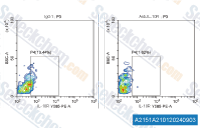
| A2151 | Anti-mouse IL-10R (CD210)-InVivo [1B1.3A] | Anti-mouse IL-10R (CD210)-InVivo |
|
Anti-mouse IL-10R (CD210)-InVivo [1B1.3A] reacts with mouse IL-10R (IL-10 receptor) also known as CD210. The IL-10R is a class II cytokine receptor and is expressed by a variety of cell types including thymocytes, T lymphocytes, B lymphocytes, NK cells, monocytes, and macrophages. |
| A2184New | Anti-mouse CD54 (ICAM-1)-Invivo [YN1/1.7.4] | in vivo ICAM-1 neutralization, Immunohistochemistry (frozen), ELISA | Anti-mouse CD54 (ICAM-1)-Invivo [YN1/1.7.4] reacts with mouse CD54 also known as Intercellular Adhesion Molecule-1 (ICAM-1). CD54 is a 90 kDa single-chain transmembrane glycoprotein and a member of the Ig superfamily. | |
| A2152 | Anti-mouse IFNγ (XMG1.2)-InVivo [XMG1.2] | Anti-mouse IFNγ (XMG1.2)-InVivo | Anti-mouse IFNγ (XMG1.2)-InVivo [XMG1.2] reacts with mouse IFNγ (interferon gamma) a 20 kDa soluble pleiotropic cytokine and the sole member of the type II class of interferons. | |
| A2185New | Anti-human/monkey CD28-Invivo [CD28.2] | in vitro T cell stimulation/activation, Immunoprecipitation, Flow cytometry, Immunohistochemistry (frozen) | Anti-human/monkey CD28-Invivo [CD28.2] reacts with human and monkey CD28, a 45 kDa costimulatory receptor and a member of the Ig superfamily. CD28 is expressed by thymocytes, most peripheral T cells, and NK cells. | |
| A2153 | Anti-mouse IL-2 (S4B6-1)-InVivo [S4B6-1] | Anti-mouse IL-2 (S4B6-1)-InVivo | Anti-mouse IL-2 (S4B6-1)-InVivo [S4B6-1] reacts with mouse IL-2, a 17 kDa cytokine that is mainly produced by T cells in response to antigenic or mitogenic stimulation. | |
| A2154 | Anti-mouse CD86 (B7-2)-InVivo [GL-1] | Anti-mouse CD86 (B7-2)-InVivo | Anti-mouse CD86 (B7-2)-InVivo [GL-1] reacts with mouse CD86 also known as B7-2. CD86 is an 80 kDa Ig superfamily member. | |
| A2156 | Anti-human PD-L1 (B7-H1)-InVivo [29E.2A3] | Anti-human PD-L1 (B7-H1)-InVivo | Anti-human PD-L1 (B7-H1)-InVivo [29E.2A3] reacts with human PD-L1 (programmed death ligand 1) also known as B7-H1 or CD274. PD-L1 is a 40 kDa type I transmembrane protein that belongs to the B7 family of the Ig superfamily. | |
| A2157 | Anti-mouse IL-6R-InVivo [15A7] | Anti-mouse IL-6R-InVivo | Anti-mouse IL-6R-InVivo [15A7] reacts with the mouse IL-6 receptor α chain also known as CD126. CD126 is an 80 kDa type I cytokine receptor and a member of the immunoglobulin superfamily. | |
| A2189New | Anti-mouse NKG2D (CD314) [CX5] | in vivo NKG2D blockade, in vitro NKG2D blockade, Flow Cytometry | Anti-mouse NKG2D (CD314) [CX5] reacts with mouse NKG2D, a type II transmembrane lectin-like glycoprotein also known as CD314. NKG2D is expressed on NK cells, NKT cells, CD8 T cells, γ/δ T cells, and macrophages. | |
| A2190New | Anti-mouse Podoplanin (gp38) [8.1.1] | in vivo/vitro PDPN blockade, Immunofluorescence, Western blot, Flow cytometry | Anti-mouse Podoplanin (gp38) [8.1.1] reacts with mouse podoplanin (PDPN) also known as glycoprotein 38 (gp38). Podoplanin is a 36 to 43 kDa mucin-type glycoprotein expressed by kidney glomerular epithelial cells (podocytes), lymphatic endothelial cells, and fibroblastic reticular cells. | |
| A2191New | Anti-mouse CD122 (IL-2Rβ) [TM-Beta 1] | in vivo NK cell depletion, in vivo CD122 blockade, in vitro IL-2R blockade | Anti-mouse CD122 (IL-2Rβ) [TM-Beta 1] reacts with mouse CD122 also known as the IL-2 receptor beta chain. CD122 is a 70-75 kDa subunit of the IL-2 receptor and the IL-15 receptor. CD122 is expressed on NK cells and at lower levels by T lymphocytes, B lymphocytes, monocytes, and macrophages. | |
| A2192New | Anti-mouse c-Kit (CD117) [ACK2] | in vivo mast cell depletion, in vivo c-Kit+ cell depletion, in vitro c-Kit neutralization | Anti-mouse c-Kit (CD117) [ACK2] reacts with mouse c-Kit also known as CD117, Steel factor receptor, stem cell factor receptor, and mast cell growth factor. c-Kit is a 145 kDa transmembrane tyrosine kinase and an immunoglobulin superfamily member. | |
| A2186New | Anti-mouse CD276 (B7-H3) [MJ18] | in vivo B7-H3 blockade, Flow cytometry | Anti-mouse CD276 (B7-H3) [MJ18] reacts with mouse CD276 also known as B7-H3. CD276 is a type I transmembrane protein and a member of the B7 family of co-stimulatory proteins. | |
| A2193New | Anti-human PD-1 (CD279) [J116] | in vitro PD-1 neutralization, in vivo PD-1 blockade in humanized mice, in vitro Organoids/Organ-on-Chip | Anti-human PD-1 (CD279) [J116] reacts with human PD-1 (programmed death-1) also known as CD279. PD-1 is a 50-55 kDa cell surface receptor encoded by the Pdcd1 gene that belongs to the CD28 family of the Ig superfamily. | |
| A2187New | Anti-mouse CD73 [TY/23] | in vivo CD73 blockade, in vitro CD73 blockade | Anti-mouse CD73 [TY/23] reacts with mouse CD73 also known as ecto-5′-nucleotidase (5′-NT), a 69 kDa GPI-anchored cell-surface protein. In mice, expression of CD73 is restricted to CD11b+ myeloid cells in the bone marrow and T cells in the spleen. | |
| A2188New | Anti-mouse IL-9 [9C1] | in vivo IL-9 neutralization | Anti-mouse IL-9 [9C1] reacts with mouse IL-9, a pleiotropic cytokine expressed by Th9 cells, Th2 cells, Th17 cells, regulatory T cells, NKT cells, ILC2s, and mast cells. | |
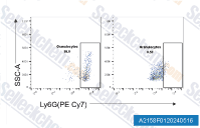
| A2158 | Anti-mouse Ly6G-InVivo [1A8] | Anti-mouse Ly6G-InVivo |
|
Anti-mouse Ly6G-InVivo [1A8] reacts with mouse Ly6G. Ly6G is a 21-25 kDa member of the Ly-6 superfamily of GPI-anchored cell surface proteins with roles in cell signaling and cell adhesion. |
| A2126 | Anti-mouse VEGFR-2-InVivo [DC101] | Anti-mouse VEGFR-2-InVivo | Anti-mouse VEGFR-2-InVivo [DC101] reacts with mouse VEGFR-2 (vascular endothelial growth factor receptor 2) also known as CD309, KDR, and Flk-1 and inhibit VEGFR-2 signaling in vivo. VEGFR-2 plays a key role in vascular development and permeability. | |
| A2127 | Anti-human CD28-InVivo [9.3] | Anti-human CD28-InVivo | Anti-human CD28-InVivo [9.3] reacts with human CD28, a 45 kDa costimulatory receptor and a member of the Ig superfamily. It stimulate the proliferation of human T cells in vitro. | |
| A2129 | Anti-mouse Thy1.2 (CD90.2)-InVivo [30H12] | Anti-mouse Thy1.2 (CD90.2)-InVivo | Anti-mouse Thy1.2 (CD90.2)-InVivo [30H12] is a monoclonal antibody reacts with mouse Thy1.2 also known as CD90.2. It induces Ca2+ flux in thymocytes and is particularly useful for depleting T lymphocytes. | |
| A2130 | Anti-mouse LFA-1α (CD11a)-InVivo [M17/4] | Anti-mouse LFA-1α (CD11a)-InVivo | Anti-mouse LFA-1α (CD11a)-InVivo [M17/4] is a monoclonal antibody reacts with mouse LFA-1α (lymphocyte function-associated antigen 1 alpha) also known as integrin alpha L chain and CD11a. It plays a central role in leukocyte intercellular adhesion through interactions with its ligands, ICAM-1 (CD54), ICAM-2 (CD102), and ICAM-3 (CD50), and also functions in lymphocyte costimulatory signaling. | |
| A2131 | Anti-mouse TIM-3 (CD366)-InVivo [B8.2C12] | Anti-mouse TIM-3 (CD366)-InVivo | Anti-mouse TIM-3 (CD366)-InVivo [B8.2C12] reacts with mouse TIM-3 (T cell immunoglobulin and mucin domain-3) also known as CD366. TIM-3 is specifically expressed at high levels on the surface of Th1 lymphocytes. Anti-mouse TIM-3 (CD366)-InVivo [B8.2C12] binds to the BALB/c allele of TIM-3 while reactivity to the C57Bl/6 allele. Inhibition of TIM-3 signaling in mice exacerbates experimental autoimmune encephalomyelitis and promotes IFNγ production and Th1 cell proliferation. | |
| A2132 | Anti-mouse/human/rat CCL2 (MCP-1)-InVivo [2H5] | in vivo CCL2 neutralization, Immunohistochemistry (frozen) | Anti-mouse/human/rat CCL2 (MCP-1)-InVivo [2H5] reacts with mouse, human, and rat CCL2, also known as monocyte chemoattractant protein 1 (MCP-1). MCP-1 is a 13 kDa chemokine produced mainly by monocytes/macrophages and is a potent monocyte-attracting chemokine. Anti-mouse/human/rat CCL2 (MCP-1)-InVivo [2H5] has been shown to neutralize the biological effects of CCL2 in vivo. | |
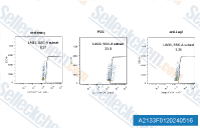
| A2133 | Anti-mouse LAG-3-InVivo [C9B7W] | in vitro &in vivo LAG-3 neutralization, Flow cytometry, Western blot |
|
Anti-mouse LAG-3-InVivo [C9B7W] reacts with mouse LAG-3 also known as CD223. LAG-3 promotes immune responses by activating antigen-presenting cells. Anti-mouse LAG-3-InVivo [C9B7W] has been reported to block the function of murine LAG-3 in vivo and in vitro. |
| A2134 | Anti-mouse IL-18-InVivo [YIGIF74-1G7] | in vitro &in vivo IL-18 neutralization | Anti-mouse IL-18-InVivo [YIGIF74-1G7] reacts with mouse IL-18. IL-18 an 18 kDa pro-inflammatory cytokine is expressed by activated macrophages, keratinocytes, Kupffer cells, intestinal epithelial cells, and osteoblasts. | |
| A2135 | Anti-mouse Ly6G/Ly6C (Gr-1)-InVivo [RB6-8C5] | in vivo depletion of Gr-1+ myeloid cells, Flow cytometry, Immunohistochemistry (paraffin), Immunohistochemistry (frozen) | Anti-mouse Ly6G/Ly6C (Gr-1)-InVivo [RB6-8C5] reacts strongly with mouse Ly6G and weakly with mouse Ly6C previously referred to as GR-1. Ly6G is a 21-25 kDa member of the Ly-6 superfamily of GPI-anchored cell surface proteins with roles in cell signaling and cell adhesion. | |
| A2173 | Anti-mouse L-Selectin (CD62L)-InVivo [Mel-14] | in vivo CD62L neutralization. | Anti-mouse L-Selectin (CD62L)-InVivo [Mel-14] reacts with mouse CD62L also known as L-selectin and MEL-14. CD62L is a 76 kDa glycoprotein and a member of the selectin family. | |
| A2194New | Anti-mouse CD24 [M1/69] | in vivo administration, Immunohistochemistry, Immunofluorescence, Flow cytometry | Anti-mouse CD24 [M1/69] reacts with mouse CD24 also known as heat stable antigen (HSA), a 35-50 kDa glycosylated membrane protein. CD24 is expressed by erythrocytes, granulocytes, monocytes, lymphocytes, and dendritic cells. | |
| A2174 | Anti-mouse/human CD44-InVivo [IM7] | in vivo/vitro CD44 neutralization. | Anti-mouse/human CD44-InVivo [IM7] reacts with human and mouse CD44 also known as Hermes, HCAM, and Pgp-1. CD44 is an 80-95 kDa glycoprotein that is expressed on all leukocytes, endothelial cells, hepatocytes, and mesenchymal cells. | |
| A2195New | Anti-mouse MHC Class I (H-2Kb) [AF6-88.5.5.3] | in vivo administration, Flow cytometry | Anti-mouse MHC Class I (H-2Kb) [AF6-88.5.5.3] reacts with the mouse H-2Kb MHC class I alloantigen. MHC class I antigens are heterodimers consisting of one alpha chain (44 kDa) associated with β2 microglobulin (11.5 kDa). The antigen is expressed by all nucleated cells at varying levels. | |
| A2196New | Anti-mouse CCR3 (CD193) [6S2-19-4] | in vivo eosinophil depletion | Anti-mouse CCR3 (CD193) [6S2-19-4] reacts with mouse CCR3 also known as CD193. CCR3 is a G protein-coupled, seven transmembrane, chemokine receptor expressed on a variety of hematopoietic cells. CCR3 is most highly expressed on eosinophils. | |
| A2160 | Anti-rat Kappa Immunoglobulin Light Chain-InVivo [MAR 18.5] | Anti-rat Kappa Immunoglobulin Light Chain-InVivo | Anti-rat Kappa Immunoglobulin Light Chain-InVivo [MAR 18.5] reacts with the kappa chain of the rat immunoglobulin light chain. The κ chain is one of two types of polypeptide subunits which make up the immunoglobulin light chain. | |
| A2197New | Anti-human CD47 [B6.H12] | in vitro CD47 neutralization, in vivo CD47 neutralization in human tumor xenograft models or humanized mice, Flow cytometry | Anti-human CD47 [B6.H12] reacts with human CD47 otherwise known as integrin-associated protein (IAP), and neurophilin. CD47 is an approximately 50 kDa glycosylated five transmembrane protein that is ubiquitously expressed by both hematopoietic cells and non-hematopoietic cells. CD47 is involved in a range of cellular processes, including apoptosis, proliferation, adhesion, and migration. | |
| A2161 | Anti-mouse ICOSL (CD275)-InVivo [HK5.3] | Anti-mouse ICOSL (CD275)-InVivo | Anti-mouse ICOSL (CD275)-InVivo [HK5.3] reacts with mouse ICOSL (inducible T cell co-stimulator ligand) also known as CD275, B7RP-1, and B7-H2. ICOSL is a 40 kDa immune checkpoint protein belonging to the Ig receptor superfamily. | |
| A2198New | Anti-mouse CD172a (SIRPα) [P84] | in vivo SIRPα blocking, in vitro SIRPα blocking, Western blot, Immunoprecipitation, Flow cytometry | Anti-mouse CD172a (SIRPα) [P84] reacts with Signal-Regulatory Protein α (SIRPα), also known as CD172a. SIRPα is a type I transmembrane glycoprotein expressed on monocytes, macrophages, and dendritic cells. | |
| A2199New | Anti-mouse CD317 (BST2, PDCA-1) [927] | in vivo pDC depletion, Immunofluorescence, Flow cytometry | Anti-mouse CD317 (BST2, PDCA-1) [927] reacts with mouse CD317 also known as BST2 and PDCA-1, a 29-33 kDa type II transmembrane glycoprotein. CD317 is expressed exclusively by plasmacytoid dendritic cells and serves as a marker for these cells. | |
| A2162 | Anti-mouse/human VLA-4 (CD49d)-InVivo [PS/2] | Anti-mouse/human VLA-4 (CD49d)-InVivo | Anti-mouse/human VLA-4 (CD49d)-InVivo [PS/2] reacts with human and mouse VLA-4 α chain also known as CD49d and integrin alpha 4. VLA-4 is a 150 kDa glycoprotein belonging to the integrin family that is expressed by many cell types including T and B lymphocytes, monocytes, eosinophils, basophils, mast cells, thymocytes, NK cells, and dendritic cells. | |
| A2166 | Anti-mouse CD28(37.51)-InVivo [37.51] | Anti-mouse CD28(37.51)-InVivo | Anti-mouse CD28(37.51)-InVivo [37.51] reacts with mouse CD28, a 45 kDa costimulatory receptor and a member of the Ig superfamily. CD28 is expressed by thymocytes, most peripheral T cells, and NK cells. | |
| A2172 | Anti-human MHC Class I (HLA-A, HLA-B, HLA-C)-InVivo [W6/32] | Anti-human MHC Class I (HLA-A, HLA-B, HLA-C)-InVivo | Anti-human MHC Class I (HLA-A, HLA-B, HLA-C)-InVivo [W6/32] reacts with the human major histocompatibility complex (MHC) class I, HLA-A, B, and C. All human nucleated cell express MHC class I antigens associated with β2-microglobulin. MHC class I plays a central role in cell-mediated immune responses and tumor surveillance. | |
| A2169 | Anti-mouse MHC Class II (I-A/I-E)-InVivo [M5/114] | Anti-mouse MHC Class II (I-A/I-E)-InVivo | Anti-mouse MHC Class II (I-A/I-E)-InVivo [M5/114] reacts with mouse MHC Class II haplotypes I-Ab, I-Ad, I-Aq, I-Ed, and I-Ek. The antibody does not react with I-Af, I-Ak, or I-As haplotypes. The M5/114 antibody is reported to inhibit I-A-restricted T cell responses. | |
| A2170 | Anti-mouse CSF1-InVivo [5A1] | Anti-mouse CSF1-InVivo | Anti-mouse CSF1-InVivo [5A1] reacts with mouse colony stimulating factor 1 (CSF1) also known as macrophage colony-stimulating factor (M-CSF). CSF1 is a hematopoietic growth factor that is expressed by many different cell types including fibroblasts, stromal cells, osteoblasts, activated T cells, macrophages, and B cells. | |
| A2106 | Mouse IgG1 isotype control-InVivo [MOPC-21] | Mouse IgG1 isotype control-InVivo FCM,IHC,IP,WB | The monoclonal mouse IgG1 K immunoglobulin is ideal for use as a non-reactive isotype-matched control for mouse IgG1 antibodies in most in vivo and in vitro applications. | |
| A2123 | Rat IgG2a isotype control-InVivo [2A3] | Rat IgG2a isotype control-InVivo [2A3] can be used as an isotype-matched control for rat IgG2a antibodies. | ||
| A2112 | Anti-mouse CD40L (CD154)-InVivo [MR-1] | in vivo/vitro blocking of CD40/CD40L,WB | Anti-mouse CD40L (CD154)-InVivo [MR-1] reacts with mouse CD154 also known as CD40 ligand. The MR-1 monoclonal antibody has been reported to inhibit in vitro activation of B lymphocytes by blocking the binding of CD154 with CD40 on T helper cells as well as inhibit the formation of germinal centers and disrupt antigen-specific T cell responses. Additionally, the MR-1 antibody blocks interactions of T cells and antigen-presenting cells in vitro and blocks the development of experimental autoimmune disease in vivo. | |
| A2167 | Anti-mouse CD3-InVivo [17A2] | Anti-mouse CD3-InVivo | Anti-mouse CD3-InVivo [17A2] reacts with mouse CD3, a transmembrane cell-surface protein that belongs to the immunoglobulin superfamily.CD3 is expressed on T lymphocytes, NK-T cells, and to varying degrees on developing thymocytes. | |
| A2163 | Anti-mouse IL-12 p40-InVivo [C17.8] | Anti-mouse IL-12 p40-InVivo | Anti-mouse IL-12 p40-InVivo [C17.8] reacts with mouse p40 also known as IL-12β. p40 is a 40 kDa subunit of IL-12 and IL-23. IL-12 is a heterodimeric cytokine composed of subunits IL-12α p35 and IL-12β p40. | |
| A2164 | Anti-mouse B220-InVivo [RA3.3A1/6.1] | Anti-mouse B220-InVivo | Anti-mouse B220-InVivo [RA3.3A1/6.1] reacts with mouse B220 also known as CD45R. B220 is a 220 kDa transmembrane protein tyrosine phosphatase expressed on B cells and some subsets of T and NK cells. | |
| A2179New | Anti-Mouse CD41-Invivo [MWReg30] | in vivo/vitro CD41 neutralization. | Anti-Mouse CD41-Invivo [MWReg30] specifically binds to CD41, which is also known as glycoprotein IIb (gpIIb, GP IIb), Integrin α IIb chain, or Integrin alpha 2b. CD41 is a transmembrane glycoprotein that is encoded by Itga2b. CD41 associates with Integrin β3 chain (gpIIIa or CD61) to form the gpIIb/IIIa (CD41/CD61) complex. | |
| A2124 | Anti-mouse TNFα-InVivo [XT3.11] | in vitro &in vivo TNFα neutralization, Western blot | Anti-mouse TNFα-InVivo [XT3.11] reacts with mouse TNFα (tumor necrosis factor-alpha), a multifunctional proinflammatory cytokine. TNFα dysregulation is been implicated in a variety of diseases, including autoimmune diseases, insulin resistance, and cancer. TNFα knockout animals display defects in response to bacterial infection, characterized by defects in forming organized follicular dendritic cell networks and germinal centers with a lack of primary B cell follicles. | |
| A2125 | Anti-mouse OX40 (CD134)-InVivo [OX-86] | in vitro &in vivo OX40 activation, Western blot | Anti-mouse OX40 (CD134)-InVivo [OX-86] reacts with mouse OX-40 also known as CD134. OX-40 plays a major role in regulating both CD4 and CD8 T cell clonal expansion. Anti-mouse OX40 (CD134)-InVivo [OX-86] treatment strongly enhances the generation of antigen-specific effector T cells, prevents the induction of T cell tolerance, and delays tumor growth in vivo. | |
| A2171 | Anti-mouse PD-L1 (B7-H1) (10F.2H11)-InVivo [10F.2H11] | Anti-mouse PD-L1 (B7-H1) (10F.2H11)-InVivo | Anti-mouse PD-L1 (B7-H1) (10F.2H11)-InVivo [10F.2H11] reacts with mouse PD-L1 (programmed death ligand 1) also known as B7-H1 or CD274. The 10F.2H11 antibody has been shown to sterically and functionally block PD-L1/CD80 (B7-1) interactions and does not block PD-L1/PD-1 interactions. | |
| A2176New | Anti-mouse CD8α (53-6.7)-Invivo [53-6.7] | in vivo CD8+ T cell depletion | Anti-mouse CD8α (53-6.7)-Invivo [53-6.7] reacts with mouse CD8α. The CD8 antigen is a transmembrane glycoprotein that acts as a co-receptor for the T cell receptor (TCR). | |
| A2136 | Anti-mouse CD40-InVivo [FGK4.5/FGK45] | Anti-mouse CD40-InVivo | Anti-mouse CD40-InVivo [FGK4.5/FGK45] reacts with mouse CD40 also known as Bp50. CD40 is a type I transmembrane glycoprotein that belongs to the tumor necrosis factor receptor (TNFR) superfamily. | |
| A2137 | Anti-mouse CD8β (Lyt 3.2)-InVivo [53-5.8] | Anti-mouse CD8β (Lyt 3.2)-InVivo | Anti-mouse CD8β (Lyt 3.2)-InVivo [53-5.8] reacts with mouse CD8β also known as Lyt 3.2. The CD8 antigen is a transmembrane glycoprotein that acts as a co-receptor for the T cell receptor (TCR). | |
| A2138 | Anti-mouse IL-2-InVivo [JES6-1A12] | Anti-mouse IL-2-InVivo | Anti-mouse IL-2-InVivo [JES6-1A12] reacts with mouse IL-2, a cytokine that is mainly produced by T cells in response to antigenic or mitogenic stimulation | |
| A2177New | Anti-mouse IFNγR (CD119)-Invivo [GR-20] | in vivo/vitro IFNγR neutralization | Anti-mouse IFNγR (CD119)-Invivo [GR-20] reacts with the mouse IFNγR (interferon gamma receptor) α chain also known as CD119 and IFNγ receptor 1. CD119 heterodimerizes with IFNγ receptor 2 (AF-1) to form the IFNγR, a Class II cytokine receptor. | |
| A2140 | Anti-mouse/human/rat CD47 (IAP)-InVivo [MIAP410] | Anti-mouse/human/rat CD47 (IAP)-InVivo | Anti-mouse/human/rat CD47 (IAP)-InVivo [MIAP410] reacts with mouse CD47 otherwise known as integrin-associated protein (IAP). CD47 is an approximately 50 kDa glycosylated five transmembrane protein that is ubiquitously expressed by both hematopoietic cells such as T and B lymphocytes, monocytes, platelets and erythrocytes and non-hematopoietic cells. | |
| A2178New | Anti-mouse/human IL-5-Invivo [TRFK5] | in vivo IL-5 neutralization, in vivo eosinophil depletion | Anti-mouse/human IL-5-Invivo [TRFK5] reacts with mouse and human interleukin-5 (IL-5), a 26 kDa homodimeric cytokine. IL-5 stimulates B lymphocyte differentiation and proliferation and increases the secretion of IgM and IgA. | |
| A2175New | Anti-mouse CD11c-Invivo [N418] | in vivo targeting of dendritic cells | Anti-mouse CD11c-Invivo [N418] reacts with mouse CD11c, the most widely used defining marker for murine dendritic cells (DCs). CD11c is also known as integrin alpha-X (Itgax) and CD11 antigen-like family member C. |

納期 国内在庫品:受注日の翌日(15時までの受注分) *北海道、九州、沖縄への配送は受注日より2日以上 を要する場合あり 海外在庫品:受注後1〜2週間