| REPS1 (RalBP1‑associated Eps domain–containing protein 1) is a multidomain endocytic and signaling adaptor that links clathrin‑mediated membrane trafficking to Ral GTPase modules, growth factor receptor signaling, and metabolic control pathways by coordinating interactions between EH‑domain ligands, SH3‑containing scaffold proteins, and the RalBP1–RalA machinery. The protein contains N‑terminal Eps15 homology (EH) domain(s) that recognize NPF motifs in endocytic cargo adaptors, followed by two central proline‑rich regions that bind SH3 domains of partners such as GRB2, intersectin‑1, and endophilin‑interacting proteins, and a C‑terminal coiled‑coil segment that associates with the Ral effector RalBP1, creating a platform that assembles Rab11‑FIP2– and intersectin‑containing complexes on clathrin‑coated pits and recycling endosomes while simultaneously engaging Ral GTPase signaling outputs. Through these modular interactions, REPS1 participates in clathrin‑mediated endocytosis and vesicle‑mediated transport pathways, influences epidermal growth factor receptor internalization and downstream signaling, and organizes an ITSN1/SGIP1/REPS1 complex at coated pits that couples cargo capture to actin and membrane remodeling, consistent with its annotation as a calcium‑ and SH3‑domain–binding adaptor that may coordinate the cellular actions of activated EGF receptors and Ral‑GTPases. Phosphoproteomic and functional analyses in human skeletal muscle identify REPS1 as a convergence point for insulin‑ and exercise‑activated signaling, with Ser709 phosphorylation induced by both acute insulin and contractile stimuli and mediated by p90 ribosomal S6 kinase, linking REPS1 phosphorylation state to the efficiency of insulin‑stimulated glucose uptake and highlighting a vesicle‑associated role for REPS1 in GLUT4 trafficking and broader metabolic regulation. Systems‑level transcriptomic analysis in Alzheimer’s disease and vascular dementia brain implicates REPS1 as a hub gene whose expression associates with activation of pyruvate metabolism pathways and inhibition of Ras signaling, and whose levels inversely correlate with plasmacytoid dendritic cell infiltration, suggesting roles in neuroenergetic adaptation and neuroimmune crosstalk and supporting REPS1 as a potential biomarker for diagnosis and treatment monitoring in neurodegenerative dementias. Recent mechanistic work further delineates a Reps1–RalBP1–RalA module that promotes cargo exocytosis by using RalBP1 to stabilize RalA in its GTP‑loaded state, thereby sustaining RalA‑dependent vesicle fusion and positioning REPS1 not only as an endocytic adaptor but also as an active regulator of secretory trafficking steps downstream of Ral GTPases. |


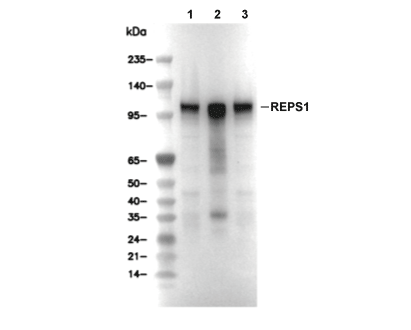 Lane 1: HT-1080, Lane 2: DLD-1, Lane 3: Jurkat