
- 阻害剤
- 研究分野別
- PI3K/Akt/mTOR
- Epigenetics
- Methylation
- Immunology & Inflammation
- Protein Tyrosine Kinase
- Angiogenesis
- Apoptosis
- Autophagy
- ER stress & UPR
- JAK/STAT
- MAPK
- Cytoskeletal Signaling
- Cell Cycle
- TGF-beta/Smad
- 化合物ライブラリー
- 抗体
- 新製品
- お問い合わせ

BIIB021
別名:CNF2024
BIIB021 (CNF2024)は、経口投与可能な完全合成の低分子HSP90阻害剤であり、Kiは1.7 nM、EC50は38 nMです。現在フェーズ2。
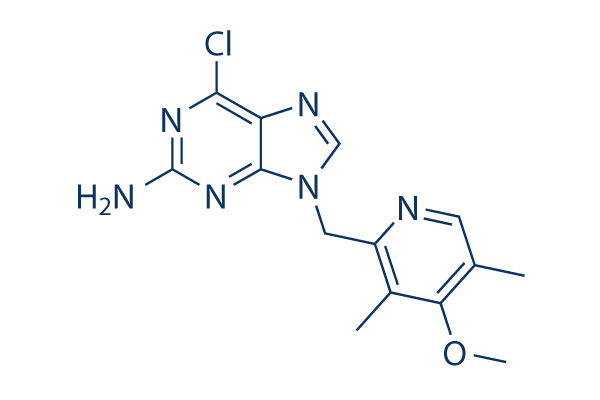
CAS No. 848695-25-0
文献中Selleckの製品使用例(30)
カスタマーフィードバック10例
製品安全説明書
現在のバッチを見る:
純度:
99.89%
99.89
BIIB021関連製品
シグナル伝達経路
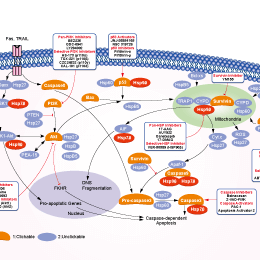
HSP阻害剤の選択性比較
Cell Data
| Cell Lines | Assay Type | Concentration | Incubation Time | 活性情報 | PMID |
|---|---|---|---|---|---|
| NCI-H295 | Cytotoxicity assay | 120 mg/kg | 5 days | Cytotoxicity against human NCI-H295 cells overexpressing PGP xenografted in athymic mouse assessed as inhibition of tumor growth at 120 mg/kg, po qd for 5 days per week for 4 weeks | 22938030 |
| HeLa | Function assay | 10 uM | 6 hrs | Inhibition of HSP90 in human HeLa cells assessed as induction of chk1 degradation at 10 uM after 6 hrs by Western blot method | 28816449 |
| HeLa | Function assay | 10 uM | 6 hrs | Inhibition of HSP90 in human HeLa cells assessed as induction of Akt degradation at 10 uM after 6 hrs by Western blot method | 28816449 |
| HeLa | Function assay | 10 uM | 6 hrs | Inhibition of HSP90 in human HeLa cells assessed as induction of HSP70 protein expression at 10 uM after 6 hrs by Western blot method | 28816449 |
| PC3 | Function assay | 10 uM | 6 hrs | Inhibition of HSP90 in human PC3 cells assessed as induction of chk1 degradation at 10 uM after 6 hrs by Western blot method | 28816449 |
| PC3 | Function assay | 10 uM | 6 hrs | Inhibition of HSP90 in human PC3 cells assessed as induction of Akt degradation at 10 uM after 6 hrs by Western blot method | 28816449 |
| PC3 | Function assay | 10 uM | 6 hrs | Inhibition of HSP90 in human PC3 cells assessed as induction of HSP70 protein expression at 10 uM after 6 hrs by Western blot method | 28816449 |
| HL60 | Function assay | 1 uM | 24 hrs | Inhibition of HSP90 in human HL60 cells assessed as induction of HSP70 expression at 1 uM after 24 hrs by Western blot analysis | 29567459 |
| HL60 | Function assay | 1 uM | 24 hrs | Inhibition of HSP90 in human HL60 cells assessed as downregulation of phosphorylated Akt expression at 1 uM after 24 hrs by Western blot analysis | 29567459 |
| HL60 | Function assay | 1 uM | 24 hrs | Inhibition of HSP90 in human HL60 cells assessed as downregulation of phosphorylated STAT3 expression at 1 uM after 24 hrs by Western blot analysis | 29567459 |
| HL60 | Function assay | 1 uM | 24 hrs | Inhibition of HDAC in human HL60 cells assessed as upregulation of acetyl-alpha-tubulin levels at 1 uM after 24 hrs by Western blot analysis | 29567459 |
| HL60 | Function assay | 1 uM | 24 hrs | Inhibition of HDAC in human HL60 cells assessed as upregulation of acetylated histone H3 levels at 1 uM after 24 hrs by Western blot analysis | 29567459 |
| Sf9 | Function assay | 3 hrs | Binding affinity to human N-terminal polyHis-tagged HSP90alpha (D9 to E236) alpha-helix conformation expressed in insect sf9 cells after 3 hrs by fluorescence polarization assay, Ki=0.002μM | 24332488 | |
| Sf9 | Function assay | 3 hrs | Binding affinity to human N-terminal polyHis-tagged HSP90beta (D9 to E236) expressed in insect sf9 cells after 3 hrs by fluorescence polarization assay, Ki=0.004μM | 24332488 | |
| NCI-H1299 | Function assay | 12 hrs | Reduction in oxygen consumption rate in human NCI-H1299 cells incubated for 12 hrs | 25383915 | |
| HCT116 | Antiproliferative assay | 48 hrs | Antiproliferative activity against human HCT116 cells after 48 hrs by sulforhodamine B assay, GI50=0.15μM | 29567459 | |
| A549 | Antiproliferative assay | 48 hrs | Antiproliferative activity against human A549 cells after 48 hrs by sulforhodamine B assay, GI50=0.33μM | 29567459 | |
| NCI-H1975 | Antiproliferative assay | 48 hrs | Antiproliferative activity against human NCI-H1975 cells after 48 hrs by sulforhodamine B assay, GI50=0.38μM | 29567459 | |
| HL60 | Antiproliferative assay | 48 hrs | Antiproliferative activity against human HL60 cells after 48 hrs by sulforhodamine B assay, GI50=0.59μM | 29567459 | |
| MCF7 | Function assay | Inhibition of HSP90alpha in human MCF7 cells assessed as degradation of Her-2, EC50=0.038μM | 22938030 | ||
| BT474 | Function assay | Binding affinity to Hsp90 nucleotide binding domain in human BT474 cells, IC50=0.14μM | 20608738 | ||
| MCF7 | Function assay | Inhibition of HSP90-mediated client protein HER2 degradation in human MCF7 cells, IC50=0.038μM | 20055425 | ||
| TC32 | qHTS assay | qHTS of pediatric cancer cell lines to identify multiple opportunities for drug repurposing: Primary screen for TC32 cells | 29435139 | ||
| SJ-GBM2 | qHTS assay | qHTS of pediatric cancer cell lines to identify multiple opportunities for drug repurposing: Primary screen for SJ-GBM2 cells | 29435139 | ||
| A673 | qHTS assay | qHTS of pediatric cancer cell lines to identify multiple opportunities for drug repurposing: Primary screen for A673 cells | 29435139 | ||
| SK-N-MC | qHTS assay | qHTS of pediatric cancer cell lines to identify multiple opportunities for drug repurposing: Primary screen for SK-N-MC cells | 29435139 | ||
| NB-EBc1 | qHTS assay | qHTS of pediatric cancer cell lines to identify multiple opportunities for drug repurposing: Primary screen for NB-EBc1 cells | 29435139 | ||
| SK-N-SH | qHTS assay | qHTS of pediatric cancer cell lines to identify multiple opportunities for drug repurposing: Primary screen for SK-N-SH cells | 29435139 | ||
| NB1643 | qHTS assay | qHTS of pediatric cancer cell lines to identify multiple opportunities for drug repurposing: Primary screen for NB1643 cells | 29435139 | ||
| LAN-5 | qHTS assay | qHTS of pediatric cancer cell lines to identify multiple opportunities for drug repurposing: Primary screen for LAN-5 cells | 29435139 | ||
| Rh18 | qHTS assay | qHTS of pediatric cancer cell lines to identify multiple opportunities for drug repurposing: Primary screen for Rh18 cells | 29435139 | ||
| OHS-50 | qHTS assay | qHTS of pediatric cancer cell lines to identify multiple opportunities for drug repurposing: Primary screen for OHS-50 cells | 29435139 | ||
| Rh41 | qHTS assay | qHTS of pediatric cancer cell lines to identify multiple opportunities for drug repurposing: Primary screen for Rh41 cells | 29435139 | ||
| MCF7 | Antiproliferative assay | Antiproliferative activity against human MCF7 cells, IC50=0.31μM | 31663736 | ||
| 他の多くの細胞株試験データをご覧になる場合はこちらをクリックして下さい | |||||
生物活性
| 製品説明 | BIIB021 (CNF2024)は、経口投与可能な完全合成の低分子HSP90阻害剤であり、Kiは1.7 nM、EC50は38 nMです。現在フェーズ2。 | ||
|---|---|---|---|
| Targets |
|
| In Vitro | ||||
| In vitro | BIIB021 binds in the ATP-binding pocket of Hsp90, interferes with Hsp90 chaperone function, and results in client protein degradation and tumor growth inhibition. This compound inhibits tumor cell (BT474, MCF-7, N87, HT29, H1650, H1299, H69 and H82) proliferation with IC50 from 0.06-0.31 μM. It induces the degradation of Hsp90 client proteins including HER-2, Akt, and Raf-1 and up-regulated expression of the heat shock proteins Hsp70 and Hsp27. This chemical inhibits Hodgkin's lymphoma cells (KM-H2, L428, L540, L540cy, L591, L1236 and DEV) with IC50 from 0.24-0.8 μM. It shows low activity in lymphocytes from healthy individuals. This compound inhibits the constitutive activity of NF-κB despite defective IκB. It induces the expression of ligands for the activating NK cell receptor NKG2D on Hodgkin's lymphoma cells resulting in an increased susceptibility to NK cell–mediated killing. This chemical enhanced the in vitro radiosensitivity of HNSCCA cell lines (UM11B and JHU12) with a corresponding reduction in the expression of key radioresponsive proteins, increased apoptotic cells and enhance G2 arrest. It is considerably more active than 17-AAG against adrenocortical carcinoma H295R, both in vitro and in vivo. The cytotoxic activity of this compound is not influenced by loss of NQO1 or Bcl-2 overexpression, molecular lesions that do not prevent client loss but are nonetheless associated with reduced cell killing by 17-AAG. It is also active in 17-AAG resistant cell lines (NIH-H69, MES SA Dx5, NCI-ADR-RES, Nalm6 and etc.). | |||
|---|---|---|---|---|
| Kinase Assay | Hsp90 Binding Assay | |||
| For fluorescence polarization competition measurements, the FITC-geldanamycin probe (20 nM) is reduced with 2 mM TCEP at room temperature for 3 hours, after which the solution is aliquoted and stored at -80 °C until used. Recombinant human Hsp90α (0.8 nM) and reduced FITC-geldanamycin (2 nM) are incubated in a 96-well microplate at room temperature for 3 hours in the presence of assay buffer containing 20 mM HEPES (pH 7.4), 50 mM KCl, 5 mM MgCl2, 20 mM Na2MoO4, 2 mM DTT, 0.1 mg/mL BGG, and 0.1% (v/v) CHAPS. Following this preincubation, this compound in 100% DMSO is then added to final concentrations of 0.2 nM to 10 μM (final volume 100 μL, 2% DMSO). The reaction is incubated for 16 hours at room temperature and fluorescence is then measured in an Analyst plate reader, excitation = 485 nm, emission = 535 nm. High and low controls contained no this chemical or no Hsp90, respectively. The data are fit to a four-parameter curve and IC50 is generated. | ||||
| 細胞実験 | 細胞株 | BT474, MCF-7, N87, HT29, H1650, H1299, H69 and H82 cells | ||
| 濃度 | 3 nM - 1 μM | |||
| 反応時間 | 5 days | |||
| 実験の流れ | A modified tetrazolium salt assay is used to measure the IC50. Tumor cells are added to 96-well plates and propagated for 24 hours before BIIB021 addition. This compound is added to the plated cells. DMSO (0.03-0.003%) is included as a vehicle control. After incubation phenazine methosulfate (stock concentration 1 mg/mL) and 3-(4,5-dimethylthiazol-2-yl)-5-(3-carboxymethoxyphenyl)-2-(4-sulfophenyl)-2H-tetrazolium, inner salt (stock concentration 2 mg/mL) are mixed at a ratio of 1:20 and added to each well of a 96-well plate. Reduction of 3-(4,5-dimethylthiazol-2-yl)-5-(3-carboxymethoxyphenyl)-2-(4-sulfophenyl)-2H-tetrazolium, inner salt gives rise to a soluble formazan product that is secreted into the culture medium. After 4 hours incubation, the formazan product is quantitated spectrophotometrically at a wavelength of 490 nm. Data are acquired using SOFTmaxPRO software, and 100% viability is defined as the A490 of DMSO-treated cells stained with 3-(4,5-dimethylthiazol-2-yl)-5-(3-carboxymethoxyphenyl)-2-(4-sulfophenyl)-2H-tetrazolium, inner salt (the mean A490 of cells treated with DMSO at a range of 0.03-0.003%). Percent viability of each sample is calculated from the A490 values as follows: % viability = (A490 nm sample / A490 nm DMSO-treated cells × 100). The IC50 is defined as the concentration that gives rise to 50% inhibition of cell viabilit | |||
| In Vivo | ||
| In Vivo | Oral administration of BIIB021 leads to tumor growth inhibition in many tumor xenograft models including N87, BT474, CWR22, U87, SKOV3 and Panc-1. This compound effectively inhibits growth of L540cy tumor at a dose of 120 mg/kg. It significantly enhances antitumor growth effect of radiation in JHU12 xenograft. | |
|---|---|---|
| 動物実験 | 動物モデル | N87, BT474, CWR22, U87, SKOV3 and Panc-1 tumor models in BALB/c and athymic mice |
| 投与量 | 31, 62.5, and 125 mg/kg | |
| 投与経路 | Orally administered once daily | |
| NCT Number | Recruitment | Conditions | Sponsor/Collaborators | Start Date | Phases |
|---|---|---|---|---|---|
| NCT01004081 | COMPLETED | Breast Cancer |
Biogen |
2009-11 | PHASE2 |
| NCT01017198 | COMPLETED | Advanced Solid Tumors |
Biogen |
2009-11 | PHASE1 |
| NCT00618735 | COMPLETED | Advanced Solid Tumors |
Biogen |
2008-02 | PHASE1 |
| NCT00618319 | COMPLETED | GIST |
Biogen |
2008-02 | PHASE2 |
| NCT01017198 | Completed | Advanced Solid Tumors |
Biogen |
2009-11 | Phase 1 |
| NCT01004081 | Completed | Breast Cancer |
Biogen |
2009-11 | Phase 2 |
|
化学情報
| 分子量 | 318.76 | 化学式 | C14H15ClN6O |
| CAS No. | 848695-25-0 | SDF | Download BIIB021 SDFをダウンロードする |
| Smiles | CC1=CN=C(C(=C1OC)C)CN2C=NC3=C2N=C(N=C3Cl)N | ||
| 保管 | |||
|
In vitro |
DMSO : 64 mg/mL ( (200.77 mM); 吸湿したDMSOは溶解度を減少させます。新しいDMSOをご使用ください。) Ethanol : 12 mg/mL Water : Insoluble |
モル濃度計算器 |
|
in vivo Add solvents to the product individually and in order. |
投与溶液組成計算機 | |||||
実験計算
投与溶液組成計算機(クリア溶液)
ステップ1:実験データを入力してください。(実験操作によるロスを考慮し、動物数を1匹分多くして計算・調製することを推奨します)
mg/kg
g
μL
匹
ステップ2:投与溶媒の組成を入力してください。(ロット毎に適した溶解組成が異なる場合があります。詳細については弊社までお問い合わせください)
% DMSO
%
% Tween 80
% ddH2O
%DMSO
%
計算結果:
投与溶媒濃度: mg/ml;
DMSOストック溶液調製方法: mg 試薬を μL DMSOに溶解する(濃度 mg/mL, 注:濃度が当該ロットのDMSO溶解度を超える場合はご連絡ください。 )
投与溶媒調製方法:Take μL DMSOストック溶液に μL PEG300,を加え、完全溶解後μL Tween 80,を加えて完全溶解させた後 μL ddH2O,を加え完全に溶解させます。
投与溶媒調製方法:μL DMSOストック溶液に μL Corn oil,を加え、完全溶解。
注意:1.ストック溶液に沈殿、混濁などがないことをご確認ください;
2.順番通りに溶剤を加えてください。次のステップに進む前に溶液に沈殿、混濁などがないことを確認してから加えてください。ボルテックス、ソニケーション、水浴加熱など物理的な方法で溶解を早めることは可能です。
技術サポート
ストックの作り方、阻害剤の保管方法、細胞実験や動物実験の際に注意すべき点など、製品を取扱う時に問い合わせが多かった質問に対しては取扱説明書でお答えしています。
他に質問がある場合は、お気軽にお問い合わせください。
* 必須

納期 国内在庫品:受注日の翌日(15時までの受注分) *北海道、九州、沖縄への配送は受注日より2日以上 を要する場合あり 海外在庫品:受注後1〜2週間