
- 阻害剤
- 研究分野別
- PI3K/Akt/mTOR
- Epigenetics
- Methylation
- Immunology & Inflammation
- Protein Tyrosine Kinase
- Angiogenesis
- Apoptosis
- Autophagy
- ER stress & UPR
- JAK/STAT
- MAPK
- Cytoskeletal Signaling
- Cell Cycle
- TGF-beta/Smad
- 化合物ライブラリー
- 抗体
- 新製品
- お問い合わせ

Ginkgolide B
別名:BN52021
Ginkgolide B (BN52021) は、IC50 が 3.6 μM の PAFR アンタゴニストです。
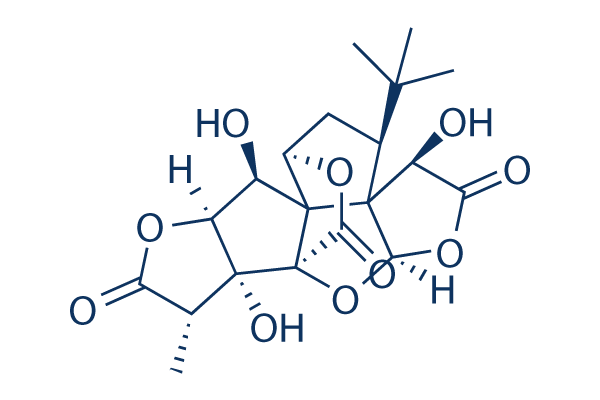
CAS No. 15291-77-7
文献中Selleckの製品使用例(5)
カスタマーフィードバック2例
製品安全説明書
現在のバッチを見る:
純度:
99.86%
99.86
Ginkgolide B関連製品
| 関連化合物ライブラリー | FDA-approved Drug Library Natural Product Library Bioactive Compound Library-I GPCR Compound Library | もっと見る |
|---|
PAFR阻害剤の選択性比較
生物活性
| 製品説明 | Ginkgolide B (BN52021) は、IC50 が 3.6 μM の PAFR アンタゴニストです。 | ||
|---|---|---|---|
| Targets |
|
| In Vitro | ||||
| In vitro | Ginkgolide B potently inhibits a platelet-activating factor (PAF) receptor. Treatment of PMN with this compound (0.5 μM -12 μM) stimulates a rapid and weak production of reactive oxygen species determined by chemiluminescence. It potentiates the CL response induced by fMet-Leu-Phe and zymosan. This chemical induces cyst cell differentiation and alteres the Ras/MAPK signaling pathway. It promotes the proliferation and endothelial gene expression, and markedly enhances vascular endothelial growth factor-induced migration response and the capability to incorporate into the vascular networks in EPCs. It protects EPCs from H2O2-induced cell death. It induces the phosphorylation of eNOS, Akt and p38, which in turn promotes cell proliferation and function. | |||
|---|---|---|---|---|
| In Vivo | ||
| In Vivo | Ginkgolide B (2 μM) significantly inhibits MDCK cyst formation dose dependently, with up to 69% reduction. This compound also significantly inhibits cyst enlargement in the MDCK cyst model, embryonic kidney cyst model, and PKD mouse model. Preischemic application of this compound (50 mg/kg p.o.) significantly reduces neuronal damage. 30 minutes of pretreatment with this chemical (100 mg/kg, s. c.) reduces the infarct area in the mouse model of focal ischemia. In primary cultures of hippocampal neurons and astrocytes from neonatal rats, this compound (1 μM) protects the neurons against damage caused by glutamate. It (100 μM) reduces apoptotic damage induced by staurosporine. In pentobarbitone or ethyl carbamate-anaesthetized animals, this compound (1 mg/kg i.v. or 10 mg/kg p.o.) inhibits bronchoconstriction, the hematocrit increase and the accompanying thrombopenia and leukopenia induced by PAF-acether (33 ng/kg–100 ng/kg). It at a dose of 3 mg/kg reduces the bronchoconstriction induced by aerosolized PAF-acether. This compound at a dose of 300 μM also inhibits the superoxide production by PAF-acether-stimulated alveolar macrophages. It blocks the formation of thromboxane-triggered by PAF-acether (100 ng) injected into perfused lung.Pretreatment of parenchyma lung strips with this chemical (100 μM) partially inhibits the contraction induced by PAF-acether (0.1 μM) and suppresses the accompanying release of thromboxane. This compound inhibits the maturation of ischemic injury. It treatment reveals marked reduction in infarction volume, brain edema and neurological deficits. This compound also inhibitsischemia/reperfusion (I/R) induced NF-κB, microglia activation and production of pro-inflammatory cytokines. It reducesBax protein levels and increases Bcl-2 protein levels in the post-ischemic brains. This chemical attenuates platelet aggregation and inhibits phosphatidylinositol 3 kinase (PI3K) activation and Akt phosphorylation in thrombin- and collagen-activated platelets.It decreases plasma PF4 and RANTES levels in ApoE−/− mice.This compound diminishes P-selectin, PF4, RANTES, and CD40L expression in aortic plaque in ApoE−/− mice.Moreover, it suppresses macrophage and vascular cell adhesion protein 1 (VCAM-1) expression in aorta lesions in ApoE−/− mice. | |
|---|---|---|
| 動物実験 | 動物モデル | Eight-week-old male ApoE−/− mice |
| 投与量 | 0.6 mg/day | |
| 投与経路 | Intragastric administration | |
| NCT Number | Recruitment | Conditions | Sponsor/Collaborators | Start Date | Phases |
|---|---|---|---|---|---|
| NCT07457008 | COMPLETED | Healthy Volunteers |
West China Second University Hospital |
2021-07-01 | PHASE1 |
|
化学情報
| 分子量 | 424.4 | 化学式 | C20H24O10 |
| CAS No. | 15291-77-7 | SDF | Download Ginkgolide B SDFをダウンロードする |
| Smiles | CC1C(=O)OC2C1(C34C(=O)OC5C3(C2O)C6(C(C5)C(C)(C)C)C(C(=O)OC6O4)O)O | ||
| 保管 | |||
|
In vitro |
DMSO : 85 mg/mL ( (200.28 mM); 吸湿したDMSOは溶解度を減少させます。新しいDMSOをご使用ください。) Water : Insoluble Ethanol : Insoluble |
モル濃度計算器 |
|
in vivo Add solvents to the product individually and in order. |
投与溶液組成計算機 | |||||
実験計算
投与溶液組成計算機(クリア溶液)
ステップ1:実験データを入力してください。(実験操作によるロスを考慮し、動物数を1匹分多くして計算・調製することを推奨します)
mg/kg
g
μL
匹
ステップ2:投与溶媒の組成を入力してください。(ロット毎に適した溶解組成が異なる場合があります。詳細については弊社までお問い合わせください)
% DMSO
%
% Tween 80
% ddH2O
%DMSO
%
計算結果:
投与溶媒濃度: mg/ml;
DMSOストック溶液調製方法: mg 試薬を μL DMSOに溶解する(濃度 mg/mL, 注:濃度が当該ロットのDMSO溶解度を超える場合はご連絡ください。 )
投与溶媒調製方法:Take μL DMSOストック溶液に μL PEG300,を加え、完全溶解後μL Tween 80,を加えて完全溶解させた後 μL ddH2O,を加え完全に溶解させます。
投与溶媒調製方法:μL DMSOストック溶液に μL Corn oil,を加え、完全溶解。
注意:1.ストック溶液に沈殿、混濁などがないことをご確認ください;
2.順番通りに溶剤を加えてください。次のステップに進む前に溶液に沈殿、混濁などがないことを確認してから加えてください。ボルテックス、ソニケーション、水浴加熱など物理的な方法で溶解を早めることは可能です。
技術サポート
ストックの作り方、阻害剤の保管方法、細胞実験や動物実験の際に注意すべき点など、製品を取扱う時に問い合わせが多かった質問に対しては取扱説明書でお答えしています。
他に質問がある場合は、お気軽にお問い合わせください。
* 必須

納期 国内在庫品:受注日の翌日(15時までの受注分) *北海道、九州、沖縄への配送は受注日より2日以上 を要する場合あり 海外在庫品:受注後1〜2週間