
- 阻害剤
- 研究分野別
- PI3K/Akt/mTOR
- Epigenetics
- Methylation
- Immunology & Inflammation
- Protein Tyrosine Kinase
- Angiogenesis
- Apoptosis
- Autophagy
- ER stress & UPR
- JAK/STAT
- MAPK
- Cytoskeletal Signaling
- Cell Cycle
- TGF-beta/Smad
- 化合物ライブラリー
- 抗体
- 新製品
- お問い合わせ

Antioxidant
Antioxidant製品
- All (30)
- Antioxidant阻害剤 (5)
- Antioxidant活性剤(1)
- Antioxidantモジュレータ(1)
- 新製品
| 製品コード | 製品名称 | 製品説明 | 文献中Selleckの製品使用例 | お客様のフィードバック |
|---|---|---|---|---|
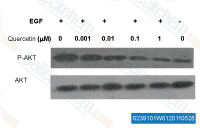
| S2391 | Quercetin (Sophoretin) | 野菜、果物、ワインに含まれる天然フラボノイドであるQuercetinは、組換えSIRT1の刺激剤であり、IC50が2.4-5.4 µMのPI3K阻害剤でもあります。Quercetinはmitophagy、apoptosis、および防御的autophagyを誘導します。フェーズ4。 |
|
|
| S2250 | EGCG ((-)-Epigallocatechin Gallate) | EGCG ((-)-Epigallocatechin Gallate)は、telomeraseとDNA methyltransferaseを阻害する緑茶の主要なカテキン抽出物です。EGCGはEGF receptorsとHER-2受容体の活性化を阻害します。ECGGはFatty Acid Synthaseとグルタミン酸脱水素酵素の活性を阻害します。 |

|
|
| S8978 | MitoQ (Mitoquinone) Mesylate | MitoQ (Mitoquinone) mesylateは、TPPベースのミトコンドリア標的型抗酸化物質で、H2O2誘発性の細胞内ROS応答を阻害し、酸化的損傷から保護します。本製品はワックス状の固体です。 | ||
| S3114 | L-Ascorbic Acid (Vitamin C) | Vitamin C(L-アスコルビン酸)は、壊血病の予防と治療に用いられる水溶性ビタミンです。 | ||
| S4606 | GSH (L-Glutathione reduced) | GSH(グルタチオン)は、抗酸化剤、フリーラジカルスカベンジャー、および解毒剤として機能します。これは、ほとんどの哺乳動物組織に存在する3つのアミノ酸(システイン、グルタミン酸、グリシン)で構成されるトリペプチドです。 | ||
| S9733 | Mito-TEMPO | ミトコンドリアを標的とするスーパーオキシドジスムターゼ模倣体であるMito-TEMPO(MT)は、ペルオキシナイトライトの形成を阻害することにより、アセトアミノフェン(APAP)肝毒性の初期段階から保護します。Mito-TEMPOによる治療は、APAP誘発性のRIP3キナーゼ発現を阻害します。 | ||
| S9803 | Elamipretide (SS-31, MTP-131) | Elamipretide (MTP-131, SS-31)はcytochrome c peroxidase阻害剤です。Elamipretideはマウスにおけるリポ多糖誘発性のミトコンドリア機能不全、シナプスおよび記憶障害を改善します。 | ||
| S1326 | Edaravone | Edaravone(MCI-186)は、虚血性脳卒中後の神経細胞損傷を軽減するために臨床的に使用されている、新しい強力なフリーラジカルスカベンジャーです。 | ||
| S2363 | Tangeretin | Tangeretin(Tangeritin)は、柑橘類の皮に多く含まれる天然のポリメトキシ化フラボンで、抗増殖、抗浸潤、抗転移、およびAntioxidant活性があることが知られています。 | ||
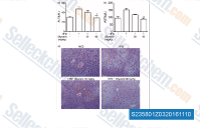
| S2358 | Silymarin | Silybum marianumまたはミルクシスルの種子から抽出されるポリフェノール性フラボノイドであるSilymarin(シリビンB)は、肝疾患および原発性肝がんの予防と治療に使用されています。 |
|
|
| S5151 | Gipsoside | Gipsosideは、カスミソウ由来のトリテルペンサポニンです。 | ||
| S4206 | Cysteamine HCl | Cysteamine(Mercaptamine)は、腎性シスチン症の治療薬であり、抗酸化剤です。Cysteamine HClは、十二指腸潰瘍の動物モデルを誘発するために使用できます。 | ||
| S4722 | (+)-Catechin | (+)-Catechin (Cianidanol, Catechinic acid, Catechuic acid) は、特に木本植物に (+)-catechin フォームと (-)-epicatechin (cis) フォームの両方で存在する抗酸化フラボノイドです。 | ||
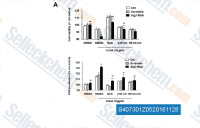
| S4073 | Sodium 4-Aminosalicylate | Sodium 4-Aminosalicylateは、NF-κB阻害とフリーラジカルスカベンジングを介して結核の治療に使用される抗生物質です。 |
|
|
| S2032 | Rebamipide | Rebamipide (OPC-12759,Proamipide) は、[125I]BH-CCK-8S を阻害するcholecystokinin type 1 (CCK1) receptor阻害剤で、IC50 は 37.7 μM です。 | ||
| S9205 | Hydroxygenkwanin | 天然のフラボノイド化合物であるHydroxygenkwanin(7-O-メチルルテオリン)は、抗酸化作用を持ち、組織因子(TF)阻害剤として血栓症を予防する可能性があります。 | ||
| E4961 | Rutin (trihydrate) | Rutin (trihydrate)は、フラボノールであるケルセチンと二糖であるルチノースから構成されるバイオフラボノイドです。抗炎症作用および抗増殖作用を示します。また、活性酸素種 (ROS)を除去することにより、抗酸化剤として機能します。ROSレベルを低下させ、ニューロンの酸化ストレスを軽減し、糖尿病患者の神経障害(聴覚神経障害を含む)を制御します。 | ||
| S4723 | (-)Epicatechin | (-)Epicatechin(L-エピカテキン、(-)-Epicatechol)は、ココア、緑茶、赤ワインに含まれるフラボノイドです。強力な抗酸化物質であり、インスリン模倣作用があり、心臓の健康を改善します。 | ||
| S3629 | Syringic acid | Syringic acid (NSC 2129, SYRA)は、伝統的な漢方薬で用いられる潜在的な抗酸化物質であり、新たな栄養補助食品です。潜在的な抗血管新生作用、抗糖化作用、抗高血糖作用、神経保護作用、および記憶増強作用を有しています。 | ||
| S4940 | Maltol | Maltol(ラリキシン酸、パラトーン、ベルトール)は、天然に存在する有機化合物で、香味増強剤および香料です。 | ||
| S9437 | Echinatin | Echinatinは、抗酸化特性と抗炎症作用を示す甘草抽出物です。 | ||
| S3626 | Sesamol | 天然有機化合物であるSesamol(1,3-ベンゾジオキソール-5-オール、3,4-メチレンジオキシフェノール)は、化学予防、抗変異原性、および抗肝毒性活性を持つオイルの主要な抗酸化成分と見なされています。これは癌細胞および心血管細胞のアポトーシスを誘導します。 | ||
| E0650 | γ-Terpinene | モノテルペンであるγ-Terpinene(γ-TPN)は、直接ラジカルを消去できる経口活性抗酸化化合物です。 | ||
| E7315 | Catalase, Aspergillus niger | Catalase, Aspergillus nigerは、過酸化水素を水と酸素に分解するヘム含有抗酸化酵素です。細胞内の過酸化水素レベルを調節し、細胞を酸化的損傷から保護する上で重要な役割を果たします。この酵素はまた、酸性および酸化的条件下で優れた安定性を示します。 | ||
| E2309New | Glucoraphanin | アブラナ科野菜に含まれる天然のグルコシノレートであるGlucoraphaninは、抗酸化作用、抗炎症作用、抗発がん作用を持つNrf2誘導体スルフォラファンの安定な前駆体です。Glucoraphaninは、レドックス感受性イベントの調節を介して、tumor necrosis factor alpha (TNFα)誘導Caco-2細胞単層の炎症と透過性を阻害します。 | ||
| E0671 | Deacetylasperulosidic acid | Deacetylasperulosidic acid(デセチルアスペルロシド酸)は、Morinda citrifolia(モリンダシトリフォリア)果実の主要な植物化学成分であり、スーパーオキシドジスムターゼ(SOD)活性を高めることによる抗酸化活性、ならびにチャイニーズハムスター卵巣細胞およびマウスにおける染色体異常の誘発を抑制することによる抗染色体損傷活性を有しています。 | ||
| E5956 | 5,6-Dihydroxyindole | 5,6-Dihydroxyindoleは、皮膚、髪、目の色素沈着に関与するユーメラニン生合成に不可欠なインドール誘導体です。2つのヒドロキシル基を持つため、強力な抗酸化物質として働き、活性酸素種(ROS)を除去し、酸化ストレスを軽減します。これは、フェントン反応を通じて酸化し、メラニンを形成し、特に炎症において色素沈着と酸化的損傷に対する保護の両方を提供します。 | ||
| S9441 | Sibiricose A5 | 伝統的な漢方薬であるPolygalae Radixから単離できるSibiricose A5は、強力な抗酸化作用を示します。 | ||
| S3679 | Flavanone | Flavanone(2,3-ジヒドロフラボン、4-フラバノン、2-フェニル-4-クロマノン、2-フェニルクロマン-4-オン)は、強力な抗酸化作用とラジカル捕捉作用を示し、特定の慢性疾患のリスク低減、一部の心血管疾患の予防、および特定の種類の癌と関連しているようです。Flavanoneはまた、抗ウイルス作用、抗菌作用、抗炎症作用、毛細血管脆弱性への有益な効果、ヒト血小板凝集を阻害する能力、抗潰瘍作用、抗アレルギー作用も示します。 | ||
| E7002 | Uric acid sodium | Uric acid sodium(尿酸一ナトリウム)は酸素ラジカルのスカベンジャーであり、血圧と抗酸化ストレスの安定性を維持するのに役立つ非常に重要な抗酸化物質です。Uric acid sodiumは一重項酸素やペルオキシナイトライトなどの活性酸素種(ROS)を除去し、脂質過酸化を阻害することで、パーキンソン病や多発性硬化症などのヒトの疾患において抗酸化物質として保護効果を持つ可能性があります。 | ||
| S9803 | Elamipretide (SS-31, MTP-131) | Elamipretide (MTP-131, SS-31)はcytochrome c peroxidase阻害剤です。Elamipretideはマウスにおけるリポ多糖誘発性のミトコンドリア機能不全、シナプスおよび記憶障害を改善します。 | ||
| S4073 | Sodium 4-Aminosalicylate | Sodium 4-Aminosalicylateは、NF-κB阻害とフリーラジカルスカベンジングを介して結核の治療に使用される抗生物質です。 |
|
|
| S2032 | Rebamipide | Rebamipide (OPC-12759,Proamipide) は、[125I]BH-CCK-8S を阻害するcholecystokinin type 1 (CCK1) receptor阻害剤で、IC50 は 37.7 μM です。 | ||
| S9205 | Hydroxygenkwanin | 天然のフラボノイド化合物であるHydroxygenkwanin(7-O-メチルルテオリン)は、抗酸化作用を持ち、組織因子(TF)阻害剤として血栓症を予防する可能性があります。 | ||
| E2309New | Glucoraphanin | アブラナ科野菜に含まれる天然のグルコシノレートであるGlucoraphaninは、抗酸化作用、抗炎症作用、抗発がん作用を持つNrf2誘導体スルフォラファンの安定な前駆体です。Glucoraphaninは、レドックス感受性イベントの調節を介して、tumor necrosis factor alpha (TNFα)誘導Caco-2細胞単層の炎症と透過性を阻害します。 | ||
| E0650 | γ-Terpinene | モノテルペンであるγ-Terpinene(γ-TPN)は、直接ラジカルを消去できる経口活性抗酸化化合物です。 | ||
| E5956 | 5,6-Dihydroxyindole | 5,6-Dihydroxyindoleは、皮膚、髪、目の色素沈着に関与するユーメラニン生合成に不可欠なインドール誘導体です。2つのヒドロキシル基を持つため、強力な抗酸化物質として働き、活性酸素種(ROS)を除去し、酸化ストレスを軽減します。これは、フェントン反応を通じて酸化し、メラニンを形成し、特に炎症において色素沈着と酸化的損傷に対する保護の両方を提供します。 | ||
| E2309New | Glucoraphanin | アブラナ科野菜に含まれる天然のグルコシノレートであるGlucoraphaninは、抗酸化作用、抗炎症作用、抗発がん作用を持つNrf2誘導体スルフォラファンの安定な前駆体です。Glucoraphaninは、レドックス感受性イベントの調節を介して、tumor necrosis factor alpha (TNFα)誘導Caco-2細胞単層の炎症と透過性を阻害します。 |

納期 国内在庫品:受注日の翌日(15時までの受注分) *北海道、九州、沖縄への配送は受注日より2日以上 を要する場合あり 海外在庫品:受注後1〜2週間