
- 阻害剤
- 研究分野別
- PI3K/Akt/mTOR
- Epigenetics
- Methylation
- Immunology & Inflammation
- Protein Tyrosine Kinase
- Angiogenesis
- Apoptosis
- Autophagy
- ER stress & UPR
- JAK/STAT
- MAPK
- Cytoskeletal Signaling
- Cell Cycle
- TGF-beta/Smad
- 化合物ライブラリー
- 抗体
- 新製品
- お問い合わせ

MLN4924 (Pevonedistat)
MLN4924は、Nedd8活性化酵素(NAE)の低分子阻害剤であり、IC50は4 nMです。
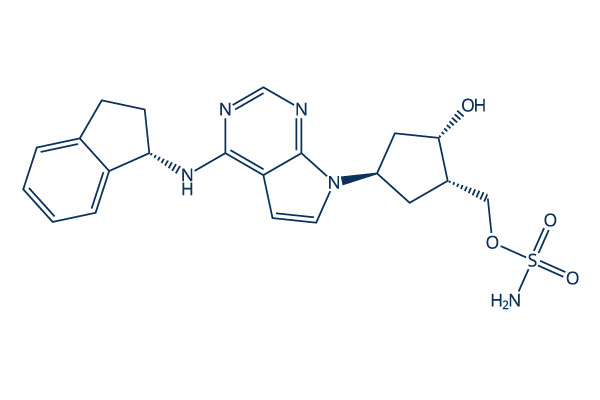
CAS No. 905579-51-3
文献中Selleckの製品使用例(152)
製品安全説明書
現在のバッチを見る:
純度:
99.99%
99.99
MLN4924 (Pevonedistat)関連製品
シグナル伝達経路
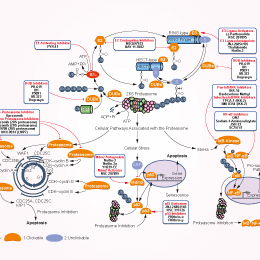
E1 Activating阻害剤の選択性比較
Cell Data
| Cell Lines | Assay Type | Concentration | Incubation Time | 活性情報 | PMID |
|---|---|---|---|---|---|
| K562 | Antiproliferative assay | 72 hrs | Antiproliferative activity against human K562 cells after 72 hrs by CellTiter-Glo assay, EC50 = 0.108 μM. | 24900352 | |
| U2OS | Antitumor assay | 72 hrs | Antitumor activity against human U2OS cells after 72 hrs by MTT assay, IC50 = 0.16 μM. | 28388520 | |
| HCT116 | Antitumor assay | 72 hrs | Antitumor activity against human HCT116 cells after 72 hrs by MTT assay, IC50 = 0.19 μM. | 28388520 | |
| Caco2 | Function assay | 16 hrs | Inhibition of NAE-mediated Ubcl2-NEDD8 conjugation in human Caco2 cells after 16 hrs by Western blot analysis, EC50 = 3.4 μM. | 29232579 | |
| Caco2 | Function assay | 16 hrs | Inhibition of NAE-mediated Ubcl2-NEDD8 conjugation in human Caco2 cells after 16 hrs by Western blot analysis, EC50 = 3.4 μM. | 29232579 | |
| Caco2 | Cytotoxicity assay | 72 hrs | Cytotoxicity against human Caco2 cells after 72 hrs by MTT assay, IC50 = 4.4 μM. | 29232579 | |
| 他の多くの細胞株試験データをご覧になる場合はこちらをクリックして下さい | |||||
生物活性
| 製品説明 | MLN4924は、Nedd8活性化酵素(NAE)の低分子阻害剤であり、IC50は4 nMです。 | ||
|---|---|---|---|
| 特性 | A mechanism-based inhibitor of NAE, and creates a covalent NEDD8-MLN4924 adduct catalyzed by the enzyme. | ||
| Targets |
|
| In Vitro | ||||
| In vitro | Pevonedistat (MLN4924) is structurally related to adenosine 59-monophosphate (AMP)—a tight binding product of the NAE reaction. It (3 μM) selectively inhibits NAE in HCT-116 cell lysates and inhibits overall protein turnover by <9% in HCT-116 cells. This compound results in a dose-dependent decrease of Ubc12–NEDD8 thioester and NEDD8–cullin conjugates with an IC50 < 0.1 μM in HCT-116 cells, resulting in a reciprocal increase in the abundance of the known CRL substrates CDT1, p27 and NRF2, but not non-CRL substrates. It (3 μM) leads cells to accumulate in S-phase as early as 8 hours and results in a significant fraction of cells contained 4N DNA content by 24 hours in HCT-116 cells. At the same concentration, it results in rapid accumulation of pIkappaBalpha, decrease in nuclear p65 content, reduction of nuclear factor-kappaB (NF-kappaB) transcriptional activity, and G(1) arrest, ultimately resulting in apoptosis induction, events consistent with potent NF-kappaB pathway inhibition in ABC DLBCL cells. At 1 μM, it triggers DNA replication and inhibits cell proliferation by stabilizing the DNA replication factor Cdt1, a substrate of cullins 1 and 4. This concentration, which is sufficient to elevate Cdt1 for 4-5 hours, is found to be sufficient to induce DNA replication and to activate apoptosis and senescence pathways. Treatment with this compound induces the characteristics of senescence phenotypes as evidenced by enlarged and flattened cellular morphology and positive staining of senescence-associated β-Gal. MLN4924-induced senescence is associated with cellular response to DNA damage, triggered by accumulation of DNA-licensing proteins CDT1 and ORC1, as a result of inactivation of CRL/SCF E3s. It is irreversible and coupled with persistent accumulation of p21 and sustained activation of DNA damage response. | |||
|---|---|---|---|---|
| Kinase Assay | In vitro E1-activating enzyme assays | |||
| A time-resolved fluorescence energy transfer assay format is used to measure the in vitro activity of NAE. The enzymatic reaction, containing 50 μL 50 mM HEPES, pH 7.5, 0.05% BSA, 5 mM MgCl2, 20 μM ATP, 250 μM glutathione, 10 nM Ubc12–GST, 75 nM NEDD8–Flag and 0.3 nM recombinant human NAE enzyme, is incubated at 24 ℃ for 90 min in a 384-well plate, before termination with 25 μL of stop/detection buffer (0.1 M HEPES, pH 7.5, 0.05% Tween20, 20 mM EDTA, 410 mM KF, 0.53 nM Europium-Cryptate-labelled monoclonal Flag-M2-specific antibody and 8.125 μg/mL PHYCOLINK allophycocyanin (XL-APC)-labelled GST-specific antibody. After incubation for 2 hours at 24 ℃, the plate is read on the LJL Analyst HT Multi-Mode instrument using a time-resolved fluorescence method. A similar assay protocol is used to measure other E1 enzymes. | ||||
| 細胞実験 | 細胞株 | HCT-116 cells | ||
| 濃度 | 3 μM | |||
| 反応時間 | 72 hours | |||
| 実験の流れ | Cell suspensions are seeded at 3,000–8,000 cells per well in 96-well culture plates and incubated overnight at 37 ℃. Pevonedistat (MLN4924) is then added to the cells in complete growth media and incubated for 72 hours at 37 ℃. Cell number is quantified using the ATPlite assay. | |||
| 実験結果図 | Methods | Biomarkers | 結果図 | PMID |
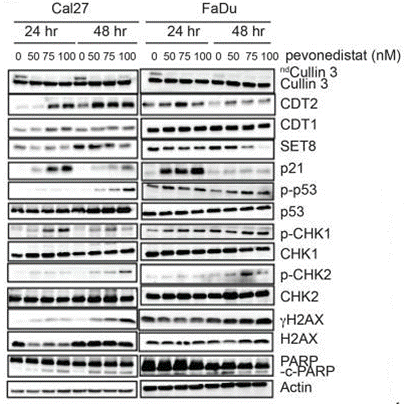
| Western blot | Culin 3 / CDT2 / CDT1 / SET8 / p21 / p-p53 / p-CHK1 / p-CHK2 / CHK2 / γH2AX / H2AX / PARP / c-PARP Culin 1 / WEE1 / p27 / p-H3 / cyclin B1 Cleaved caspase-3 / Cleaved PARP pro-apoptotic and anti-apoptotic proteins p-c-Jun / c-Jun p-H2A / p-CHK2 p-AKT / p-mTOR / p-70S6K |
|
28838998 | |
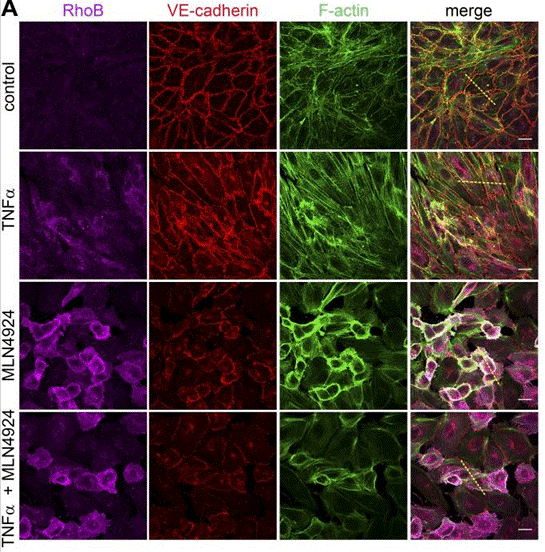
| Immunofluorescence | RhoB / VE-cadherin / F-actin |
|
29358211 | |
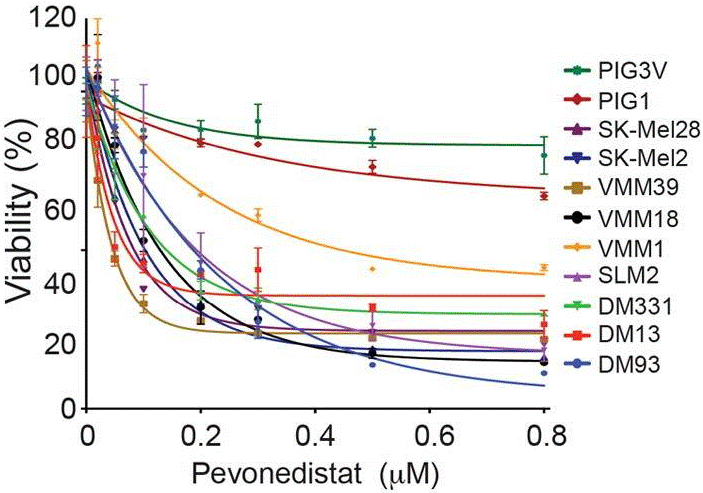
| Growth inhibition assay | Cell viability |
|
27333051 | |
| In Vivo | ||
| In Vivo | Pevonedistat (MLN4924) (60 mg/kg) results in a dose- and time-dependent decrease of NEDD8–cullin levels as early as 30 min after administration in HCT-116 tumour-bearing mice, with maximal effect 1–2 hours post-dose. It also leads to a dose- and time-dependent increase in the steady state levels of NRF2 and CDT1 in HCT-116 tumour-bearing mice. This compound leads to DNA damage in the tumour indicated by the increased levels of phosphorylated CHK1 in HCT-116 tumour-bearing mice. When administered on a BID schedule at 30 mg/kg and 60 mg/kg, it inhibits tumour growth with T/C values of 0.36 and 0.15, respectively, in mice bearing HCT-116 xenografts. It (60 mg/kg) blocks NAE pathway biomarkers and results in complete tumor growth inhibition in mice bearing human xenograft tumors of ABC- and GCB-DLBCL. This compound (60 mg/kg) results in NF-kappaB pathway inhibition accompanied by tumor regressions in primary human tumor mice models of ABC-DLBCL. | |
|---|---|---|
| 動物実験 | 動物モデル | mice bearing HCT-116 xenografts |
| 投与量 | 60 mg/kg | |
| 投与経路 | Subcutaneously injection | |
| NCT Number | Recruitment | Conditions | Sponsor/Collaborators | Start Date | Phases |
|---|---|---|---|---|---|
| NCT03013998 | RECRUITING | Previously Untreated Relapsed Refractory Acute Myeloid Leukemia |
Beat AML, LLC |
2016-11 | PHASE2; PHASE3 |
| NCT03862157 | ACTIVE_NOT_RECRUITING | Acute Myeloid Leukemia; Atypical Chronic Myeloid Leukemia, BCR-ABL1 Negative; Chronic Eosinophilic Leukemia, Not Otherwise Specified; Chronic Myelomonocytic Leukemia; Chronic Neutrophilic Leukemia; Essential Thrombocythemia; Myelodysplastic Syndrome; Myelodysplastic/Myeloproliferative Neoplasm With Ring Sideroblasts and Thrombocytosis; Myelodysplastic/Myeloproliferative Neoplasm, Unclassifiable; Myeloid Neoplasm; Myeloproliferative Neoplasm; Myeloproliferative Neoplasm, Unclassifiable; Overt Primary Myelofibrosis; Polycythemia Vera; Polycythemia Vera, Post-Polycythemic Myelofibrosis Phase; Prefibrotic/Early Primary Myelofibrosis |
M.D. Anderson Cancer Center |
2019-02-27 | PHASE1; PHASE2 |
| NCT03330821 | ACTIVE_NOT_RECRUITING | Acute Myeloid Leukemia Arising From Previous Myelodysplastic Syndrome; Acute Myeloid Leukemia With Myelodysplasia-Related Changes; Therapy-Related Acute Myeloid Leukemia |
University of Southern California |
2018-04-18 | PHASE1; PHASE2 |
| NCT03479268 | ACTIVE_NOT_RECRUITING | B-Cell Prolymphocytic Leukemia; Recurrent Chronic Lymphocytic Leukemia; Recurrent Diffuse Large B-Cell Lymphoma; Recurrent Follicular Lymphoma; Recurrent Lymphoplasmacytic Lymphoma; Recurrent Mantle Cell Lymphoma; Recurrent Marginal Zone Lymphoma; Recurrent Non-Hodgkin Lymphoma; Recurrent Small Lymphocytic Lymphoma; Refractory Chronic Lymphocytic Leukemia; Refractory Diffuse Large B-Cell Lymphoma; Refractory Follicular Lymphoma; Refractory Lymphoplasmacytic Lymphoma; Refractory Mantle Cell Lymphoma; Refractory Marginal Zone Lymphoma; Refractory Non-Hodgkin Lymphoma; Refractory Small Lymphocytic Lymphoma; Richter Syndrome |
City of Hope Medical Center |
2018-04-27 | PHASE1 |
| NCT03009240 | COMPLETED | Acute Myeloid Leukemia; Recurrent Acute Myeloid Leukemia; Refractory Acute Myeloid Leukemia; Secondary Acute Myeloid Leukemia; Therapy-Related Acute Myeloid Leukemia; Untreated Adult Acute Myeloid Leukemia |
City of Hope Medical Center |
2017-08-21 | PHASE1 |
| NCT04985656 | WITHDRAWN | Myelodysplastic Syndromes (MDS) |
Takeda |
2021-10-01 | PHASE2 |
|
化学情報
| 分子量 | 443.52 | 化学式 | C21H25N5O4S |
| CAS No. | 905579-51-3 | SDF | Download MLN4924 (Pevonedistat) SDFをダウンロードする |
| Smiles | C1CC2=CC=CC=C2C1NC3=C4C=CN(C4=NC=N3)C5CC(C(C5)O)COS(=O)(=O)N | ||
| 保管 | |||
|
In vitro |
DMSO : 89 mg/mL ( (200.66 mM); 吸湿したDMSOは溶解度を減少させます。新しいDMSOをご使用ください。) Ethanol : 89 mg/mL Water : Insoluble |
モル濃度計算器 |
|
in vivo Add solvents to the product individually and in order. |
投与溶液組成計算機 | |||||
実験計算
投与溶液組成計算機(クリア溶液)
ステップ1:実験データを入力してください。(実験操作によるロスを考慮し、動物数を1匹分多くして計算・調製することを推奨します)
mg/kg
g
μL
匹
ステップ2:投与溶媒の組成を入力してください。(ロット毎に適した溶解組成が異なる場合があります。詳細については弊社までお問い合わせください)
% DMSO
%
% Tween 80
% ddH2O
%DMSO
%
計算結果:
投与溶媒濃度: mg/ml;
DMSOストック溶液調製方法: mg 試薬を μL DMSOに溶解する(濃度 mg/mL, 注:濃度が当該ロットのDMSO溶解度を超える場合はご連絡ください。 )
投与溶媒調製方法:Take μL DMSOストック溶液に μL PEG300,を加え、完全溶解後μL Tween 80,を加えて完全溶解させた後 μL ddH2O,を加え完全に溶解させます。
投与溶媒調製方法:μL DMSOストック溶液に μL Corn oil,を加え、完全溶解。
注意:1.ストック溶液に沈殿、混濁などがないことをご確認ください;
2.順番通りに溶剤を加えてください。次のステップに進む前に溶液に沈殿、混濁などがないことを確認してから加えてください。ボルテックス、ソニケーション、水浴加熱など物理的な方法で溶解を早めることは可能です。
技術サポート
ストックの作り方、阻害剤の保管方法、細胞実験や動物実験の際に注意すべき点など、製品を取扱う時に問い合わせが多かった質問に対しては取扱説明書でお答えしています。
他に質問がある場合は、お気軽にお問い合わせください。
* 必須

納期 国内在庫品:受注日の翌日(15時までの受注分) *北海道、九州、沖縄への配送は受注日より2日以上 を要する場合あり 海外在庫品:受注後1〜2週間