
- 阻害剤
- 研究分野別
- PI3K/Akt/mTOR
- Epigenetics
- Methylation
- Immunology & Inflammation
- Protein Tyrosine Kinase
- Angiogenesis
- Apoptosis
- Autophagy
- ER stress & UPR
- JAK/STAT
- MAPK
- Cytoskeletal Signaling
- Cell Cycle
- TGF-beta/Smad
- 化合物ライブラリー
- 抗体
- 新製品
- お問い合わせ

2-DG (2-Deoxy-D-glucose)
別名:2-deoxyglucose, NSC 15193, 2-Deoxy-D-arabino-hexose, D-Arabino-2-deoxyhexose
グルコースアナログである2-DG (2-Deoxy-D-glucose)は、抗ウイルス活性を持つ解糖系阻害剤です。2-Deoxy-D-glucoseはアポトーシスを誘導し、単純ヘルペスウイルス1型(HSV-1)受容体の発現を阻害します。
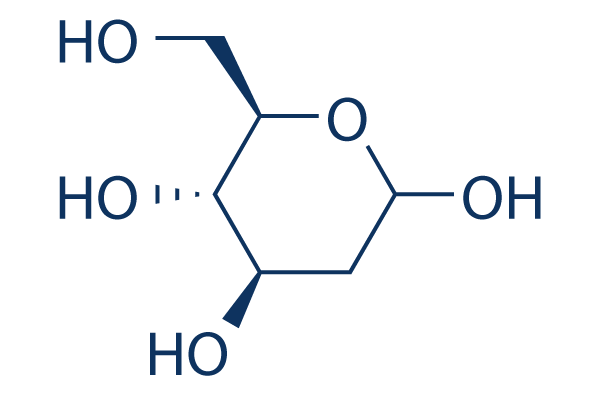
CAS No. 154-17-6
文献中Selleckの製品使用例(94)
質量管理及び製品安全説明書
現在のバッチを見る:
純度:>97%
97
2-DG (2-Deoxy-D-glucose)関連製品
Carbohydrate Metabolism阻害剤の選択性比較
生物活性
| 製品説明 | グルコースアナログである2-DG (2-Deoxy-D-glucose)は、抗ウイルス活性を持つ解糖系阻害剤です。2-Deoxy-D-glucoseはアポトーシスを誘導し、単純ヘルペスウイルス1型(HSV-1)受容体の発現を阻害します。 | |
|---|---|---|
| Targets |
|
| In Vitro | ||||
| In vitro | 2-Deoxy-D-glucose (2-DG) activates AKT function through phosphatidylinositol 3-kinase (PI3K) and is independent of glycolysis or mTOR inhibition. Its treatments disrupt the binding between insulin-like growth factor 1 (IGF-1) and IGF-binding protein 3 (IGFBP3) so that the free form of IGF-1 could be released from the IGF-1·IGFBP3 complex to activate IGF-1 receptor (IGF1R) signaling. 2-DG-induced activation of many survival pathways can be jointly attenuated through IGF1R inhibition. This compound also induces time- and dose-dependent ERK phosphorylation. It is readily transported into cells and is phosphorylated by hexokinase, but cannot be metabolized further and accumulates in the cell. This leads to ATP depletion and the induction of cell-death. 2DG significantly suppresses proliferation, causes apoptosis and reduces migration of murine endothelial cells, inhibiting formation of lamellipodia and filopodia and causing disorganization of F-actin filaments in murine endothelial cell. | |||
|---|---|---|---|---|
| 細胞実験 | 細胞株 | H460 or H157 cells | ||
| 濃度 | 5 mM | |||
| 反応時間 | 48 h | |||
| 実験の流れ | H460 or H157 cells (2×10³) are seeded in 96-well cell culture plates and treated with 5 mM 2-Deoxy-D-glucose (2-DG) only, 5 or 10 μM IGF1R inhibitor II only, or a combination of it and IGF1R inhibitor II. Cell growth inhibition is determined after 48 h by the CellTiter 96® AQueous nonradioactive cell proliferation assay. |
|||
| In Vivo | ||
| In Vivo | Treatment of cancer patients with relatively high doses of 2-Deoxy-D-glucose (2-DG) (greater than 200 mg/kg) was largely ineffective in managing tumor growth. Side effects of this compound included elevated blood glucose levels, progressive weight loss with lethargy, and behavioral symptoms of hypoglycemia. It enhances isoflurane-induced loss of righting reflex in mice. By reducing metabolism, 2-DG treatment can decrease body temperature in rodent, enhancing sensitivity to anesthetics. A diet containing it significantly increased serum ketone body level and brain expression of enzymes required for ketone body metabolism. The 2-DG-induced maintenance of mitochondrial bioenergetics was paralleled by simultaneous reduction in oxidative stress. Further, treated mice exhibited a significant reduction of both amyloid precursor protein (APP) and amyloid beta (Aβ) oligomers, which was paralleled by significantly increased α-secretase and decreased γ-secretase expression, indicating that this compound induced a shift towards a non-amyloidogenic pathway. It increased expression of genes involved in Aβ clearance pathways, degradation, sequestering, and transport. Concomitant with increased bioenergetic capacity and reduced β-amyloid burden, 2-DG significantly increased expression of neurotrophic growth factors, BDNF and NGF, thus reduces pathology in female mouse model of Alzheimer's disease. | |
|---|---|---|
| 動物実験 | 動物モデル | Adult C57BL/6J mice |
| 投与量 | 1000 mg/kg | |
| 投与経路 | i.p. | |
| NCT Number | Recruitment | Conditions | Sponsor/Collaborators | Start Date | Phases |
|---|---|---|---|---|---|
| NCT06375772 | TERMINATED | Acute Nasopharyngitis |
G.ST Antivirals GmbH |
2024-04-02 | PHASE2 |
| NCT05605301 | COMPLETED | Epilepsy; Seizure |
University of Virginia |
2022-09-02 | PHASE2 |
| NCT02489604 | TERMINATED | Neuroendocrine Tumors |
Istituto Romagnolo per lo Studio dei Tumori Dino Amadori IRST S.r.l. IRCCS |
2013-12 | PHASE2 |
| NCT05314933 | COMPLETED | Acute Nasopharyngitis |
G.ST Antivirals GmbH |
2022-03-03 | PHASE1 |
| NCT00002981 | COMPLETED | Prostate Cancer |
Memorial Sloan Kettering Cancer Center |
1997-01 | |
| NCT02469922 | COMPLETED | Malignant Neoplasm of Head and Neck; Locally Advanced Malignant Neoplasm |
Center Eugene Marquis |
2014-06 | |
|
化学情報
| 分子量 | 164.16 | 化学式 | C6H12O5 |
| CAS No. | 154-17-6 | SDF | Download 2-DG (2-Deoxy-D-glucose) SDFをダウンロードする |
| Smiles | C(C=O)C(C(C(CO)O)O)O | ||
| 保管 | |||
|
In vitro |
DMSO : 500 mg/mL ( (3045.8 mM); Warmed with 60℃ water bath; Ultrasonicated; 吸湿したDMSOは溶解度を減少させます。新しいDMSOをご使用ください。) Water : 83 mg/mL Ethanol : 8 mg/mL |
モル濃度計算器 |
|
in vivo Add solvents to the product individually and in order. |
投与溶液組成計算機 | |||||
実験計算
投与溶液組成計算機(クリア溶液)
ステップ1:実験データを入力してください。(実験操作によるロスを考慮し、動物数を1匹分多くして計算・調製することを推奨します)
mg/kg
g
μL
匹
ステップ2:投与溶媒の組成を入力してください。(ロット毎に適した溶解組成が異なる場合があります。詳細については弊社までお問い合わせください)
% DMSO
%
% Tween 80
% ddH2O
%DMSO
%
計算結果:
投与溶媒濃度: mg/ml;
DMSOストック溶液調製方法: mg 試薬を μL DMSOに溶解する(濃度 mg/mL, 注:濃度が当該ロットのDMSO溶解度を超える場合はご連絡ください。 )
投与溶媒調製方法:Take μL DMSOストック溶液に μL PEG300,を加え、完全溶解後μL Tween 80,を加えて完全溶解させた後 μL ddH2O,を加え完全に溶解させます。
投与溶媒調製方法:μL DMSOストック溶液に μL Corn oil,を加え、完全溶解。
注意:1.ストック溶液に沈殿、混濁などがないことをご確認ください;
2.順番通りに溶剤を加えてください。次のステップに進む前に溶液に沈殿、混濁などがないことを確認してから加えてください。ボルテックス、ソニケーション、水浴加熱など物理的な方法で溶解を早めることは可能です。
技術サポート
ストックの作り方、阻害剤の保管方法、細胞実験や動物実験の際に注意すべき点など、製品を取扱う時に問い合わせが多かった質問に対しては取扱説明書でお答えしています。
他に質問がある場合は、お気軽にお問い合わせください。
* 必須

納期 国内在庫品:受注日の翌日(15時までの受注分) *北海道、九州、沖縄への配送は受注日より2日以上 を要する場合あり 海外在庫品:受注後1〜2週間