
- 阻害剤
- 研究分野別
- PI3K/Akt/mTOR
- Epigenetics
- Methylation
- Immunology & Inflammation
- Protein Tyrosine Kinase
- Angiogenesis
- Apoptosis
- Autophagy
- ER stress & UPR
- JAK/STAT
- MAPK
- Cytoskeletal Signaling
- Cell Cycle
- TGF-beta/Smad
- 化合物ライブラリー
- 抗体
- 新製品
- お問い合わせ

TWS119
TWS119 は、in vitroアッセイにおいて30 nMのIC50を示すGSK-3β阻害剤であり、神経分化を誘導する能力があり、幹細胞生物学に有用である可能性があります。GSK-3β阻害はAutophagyを誘発します。
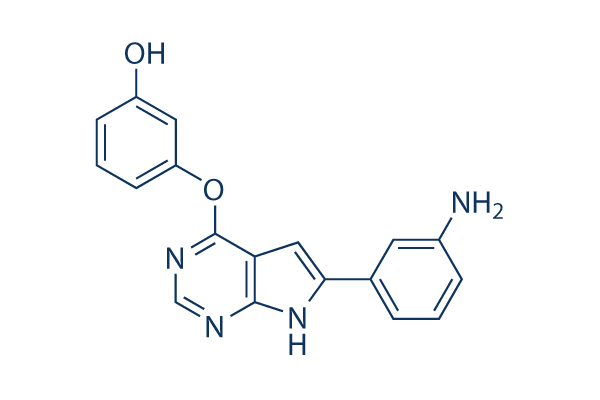
CAS No. 601514-19-6
文献中Selleckの製品使用例(57)
製品安全説明書
現在のバッチを見る:
純度:
99.06%
99.06
TWS119関連製品
シグナル伝達経路
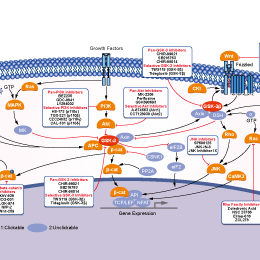
GSK-3阻害剤の選択性比較
Cell Data
| Cell Lines | Assay Type | Concentration | Incubation Time | 活性情報 | PMID |
|---|---|---|---|---|---|
| RAW 264.7 | Cytotoxicity Assay | 0-10000ng/ml | 24 h | induces cell death in a dose dependent manner | 24330853 |
| D3 | Function assay | Binding affinity to GSK-3 beta in mouse D3 cells, IC50=0.03μM. | 16408003 | ||
| D3 | Function assay | Inhibition of GSK-3 beta in mouse D3 cells, Kd=0.126μM. | 16408003 | ||
| D3 | Function assay | Inhibition of GSK-3 beta in mouse D3 cells assessed as induction of neuron specific marker neurofilament-M by immunofluorescence method, EC50=1μM. | 16408003 | ||
| D3 | Function assay | Inhibition of GSK-3 beta in mouse D3 cells assessed as induction of neuron specific marker microtubule-associated protein 2 by immunofluorescence method, EC50=1μM. | 16408003 | ||
| D3 | Function assay | Inhibition of GSK-3 beta in mouse D3 cells assessed as induction of neuron specific marker beta3-tubulin by immunofluorescence method, EC50=1μM. | 16408003 | ||
| DAOY | qHTS assay | qHTS of pediatric cancer cell lines to identify multiple opportunities for drug repurposing: Primary screen for DAOY cells | 29435139 | ||
| SJ-GBM2 | qHTS assay | qHTS of pediatric cancer cell lines to identify multiple opportunities for drug repurposing: Primary screen for SJ-GBM2 cells | 29435139 | ||
| A673 | qHTS assay | qHTS of pediatric cancer cell lines to identify multiple opportunities for drug repurposing: Primary screen for A673 cells | 29435139 | ||
| SK-N-MC | qHTS assay | qHTS of pediatric cancer cell lines to identify multiple opportunities for drug repurposing: Primary screen for SK-N-MC cells | 29435139 | ||
| NB-EBc1 | qHTS assay | qHTS of pediatric cancer cell lines to identify multiple opportunities for drug repurposing: Primary screen for NB-EBc1 cells | 29435139 | ||
| Saos-2 | qHTS assay | qHTS of pediatric cancer cell lines to identify multiple opportunities for drug repurposing: Primary screen for Saos-2 cells | 29435139 | ||
| SK-N-SH | qHTS assay | qHTS of pediatric cancer cell lines to identify multiple opportunities for drug repurposing: Primary screen for SK-N-SH cells | 29435139 | ||
| NB1643 | qHTS assay | qHTS of pediatric cancer cell lines to identify multiple opportunities for drug repurposing: Primary screen for NB1643 cells | 29435139 | ||
| LAN-5 | qHTS assay | qHTS of pediatric cancer cell lines to identify multiple opportunities for drug repurposing: Primary screen for LAN-5 cells | 29435139 | ||
| Rh18 | qHTS assay | qHTS of pediatric cancer cell lines to identify multiple opportunities for drug repurposing: Primary screen for Rh18 cells | 29435139 | ||
| RD | qHTS assay | qHTS of pediatric cancer cell lines to identify multiple opportunities for drug repurposing: Primary screen for RD cells | 29435139 | ||
| Rh41 | qHTS assay | qHTS of pediatric cancer cell lines to identify multiple opportunities for drug repurposing: Primary screen for Rh41 cells | 29435139 | ||
| 他の多くの細胞株試験データをご覧になる場合はこちらをクリックして下さい | |||||
生物活性
| 製品説明 | TWS119 は、in vitroアッセイにおいて30 nMのIC50を示すGSK-3β阻害剤であり、神経分化を誘導する能力があり、幹細胞生物学に有用である可能性があります。GSK-3β阻害はAutophagyを誘発します。 | ||
|---|---|---|---|
| Targets |
|
| In Vitro | ||||
| In vitro | Treatment of a monolayer of P19 cells with 1 μM TWS119 causes 30–40% cells to differentiate specifically into neuronal lineages based on counting of TuJ1 positive cells with correct neuronal morphology (up to 60% neuronal differentiation occurred through the standard EB formation protocol with concomitant treatment with this compound). This compound tightly binds to GSK-3β (K D = 126 nM) which is quantified by surface plasmon resonance (SPR) and further demonstrates an IC50 of 30 nM. It is found to potently induces neuronal differentiation in both mouse embryonal carcinoma and ES cells. Treatment with this chemical towards hepatic stellate cells (HSC) leads to reduced b-catenin phosphorylation, induces nuclear translocation of b-catenin, elevates glutamine synthetase production, impedes synthesis of smooth muscle actin and Wnt5a, but promotes the expression of glial fibrillary acidic protein, Wnt10b, and paired-like homeodomain transcription factor 2c. This agent triggers a rapid accumulation of β-catenin (mean 6.8 -fold increase by densitometry), augments nuclear protein interaction with oligonucleotide containing the DNA sequences to which Tcf and Lef bind and sharply up-regulates the expression of Tcf7, Lef1 and other Wnt target genes including Jun, Ezd7 (encoding Frizzled-7), Nlk (encoding Nemo-like kinase). It induces a dose-dependent decrease in T cell-specific killing and IFN-g release associated with the preservation of the ability to produce IL-2. A recent study indicates Wnt signaling is induced in polyclonally activated human T cells by treatment with this compound. These T cells preserve a native CD45RA(+)CD62L(+) phenotype compared with control-activated T cells that progresses to a CD45RO(+)CD62L(-) effector phenotype and this occurs in a dose-dependent manner of this chemical. Its-induced Wnt signaling reduces T cell expansion as a result of a block in cell division, and impairs acquisition of T cell effector function as measured by degranulation and IFN-γ production in response to T cell activation. The block in T cell division may be attributed to reduced IL-2Rα expression in T cells treated with this agent that lowers their capacity to use autocrine IL-2 for expansion. | |||
|---|---|---|---|---|
| 実験結果図 | Methods | Biomarkers | 結果図 | PMID |
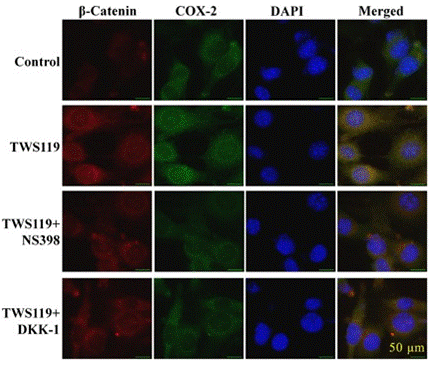
| Immunofluorescence | β-catenin / COX-2 |
|
30618773 | |
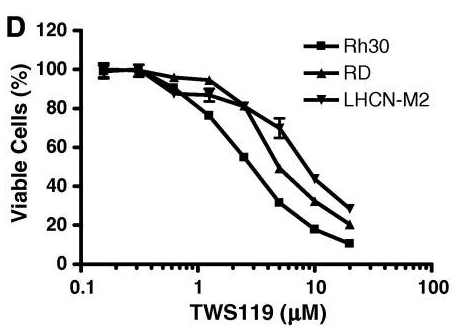
| Growth inhibition assay | Cell viability |
|
19995556 | |
| In Vivo | ||
| In Vivo | A cell population that expressed low levels of CD44 and high levels of CD62L on the cell surface when 30 mg/kg of TWS119 is administered. | |
|---|---|---|
| 動物実験 | 動物モデル | Pmel-1 TCR-transgenic mice and pmel-1 ly5.1 double-transgenic mice and pmel-1 Thy1.1 double-transgenic mice |
| 投与量 | 30 mg/kg | |
| 投与経路 | Intraperitoneal injection | |
|
化学情報
| 分子量 | 318.33 | 化学式 | C18H14N4O2 |
| CAS No. | 601514-19-6 | SDF | Download TWS119 SDFをダウンロードする |
| Smiles | C1=CC(=CC(=C1)N)C2=CC3=C(N2)N=CN=C3OC4=CC=CC(=C4)O | ||
| 保管 | |||
|
In vitro |
DMSO : 64 mg/mL ( (201.04 mM); 吸湿したDMSOは溶解度を減少させます。新しいDMSOをご使用ください。) Water : Insoluble Ethanol : Insoluble |
モル濃度計算器 |
|
in vivo Add solvents to the product individually and in order. |
投与溶液組成計算機 | |||||
実験計算
投与溶液組成計算機(クリア溶液)
ステップ1:実験データを入力してください。(実験操作によるロスを考慮し、動物数を1匹分多くして計算・調製することを推奨します)
mg/kg
g
μL
匹
ステップ2:投与溶媒の組成を入力してください。(ロット毎に適した溶解組成が異なる場合があります。詳細については弊社までお問い合わせください)
% DMSO
%
% Tween 80
% ddH2O
%DMSO
%
計算結果:
投与溶媒濃度: mg/ml;
DMSOストック溶液調製方法: mg 試薬を μL DMSOに溶解する(濃度 mg/mL, 注:濃度が当該ロットのDMSO溶解度を超える場合はご連絡ください。 )
投与溶媒調製方法:Take μL DMSOストック溶液に μL PEG300,を加え、完全溶解後μL Tween 80,を加えて完全溶解させた後 μL ddH2O,を加え完全に溶解させます。
投与溶媒調製方法:μL DMSOストック溶液に μL Corn oil,を加え、完全溶解。
注意:1.ストック溶液に沈殿、混濁などがないことをご確認ください;
2.順番通りに溶剤を加えてください。次のステップに進む前に溶液に沈殿、混濁などがないことを確認してから加えてください。ボルテックス、ソニケーション、水浴加熱など物理的な方法で溶解を早めることは可能です。
技術サポート
ストックの作り方、阻害剤の保管方法、細胞実験や動物実験の際に注意すべき点など、製品を取扱う時に問い合わせが多かった質問に対しては取扱説明書でお答えしています。
他に質問がある場合は、お気軽にお問い合わせください。
* 必須

納期 国内在庫品:受注日の翌日(15時までの受注分) *北海道、九州、沖縄への配送は受注日より2日以上 を要する場合あり 海外在庫品:受注後1〜2週間