
- 阻害剤
- 研究分野別
- PI3K/Akt/mTOR
- Epigenetics
- Methylation
- Immunology & Inflammation
- Protein Tyrosine Kinase
- Angiogenesis
- Apoptosis
- Autophagy
- ER stress & UPR
- JAK/STAT
- MAPK
- Cytoskeletal Signaling
- Cell Cycle
- TGF-beta/Smad
- 化合物ライブラリー
- 抗体
- 新製品
- お問い合わせ

ROS
ROS製品
- All (73)
- ROS阻害剤 (27)
- ROS活性剤(21)
- ROSモジュレータ(6)
- 新製品
| 製品コード | 製品名称 | 製品説明 | 文献中Selleckの製品使用例 | お客様のフィードバック |
|---|---|---|---|---|
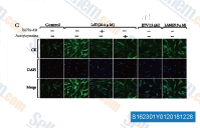
| S1623 | N-Acetylcysteine (NAC chemical, N-Acetyl-L-Cysteine) | Acetylcysteine (N-acetyl-l-cysteine, NAC,N-acetylcysteine)は、プロテアソーム阻害剤の活性を阻害するROS(活性酸素種)阻害剤です。また、腫瘍壊死因子産生阻害剤でもあります。Acetylcysteine(N-acetyl-l-cysteine)は、IκBキナーゼの阻害を介してTNF誘導性のNF-κB活性化を抑制します。Acetylcysteine(N-acetyl-l-cysteine)は、ミトコンドリア依存性経路を介してapoptosisを誘導します。Acetylcysteine(N-acetyl-l-cysteine)は、ferroptosisとvirus replicationを阻害します。溶液は不安定なので、新鮮に調製する必要があります。 |
|
|
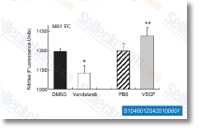
| S1046 | Vandetanib (ZD6474) | バンデタニブは、細胞フリーアッセイにおいてIC50が40 nMの強力なVEGFR2阻害剤です。また、VEGFR3とEGFRもそれぞれIC50が110 nMおよび500 nMで阻害します。PDGFRβ、Flt1、Tie-2、FGFR1には感受性がなく、IC50は1.1-3.6 μMです。MEK、CDK2、c-Kit、erbB2、FAK、PDK1、Akt、IGF-1Rに対しては10 μMを超えるIC50で活性がありません。バンデタニブ(ZD6474)は、reactive oxygen species (ROS)のレベルを上昇させることにより、apoptosisを増加させ、autophagyを誘導します。 |
|
|
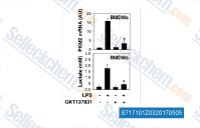
| S7171 | Setanaxib (GKT137831) | Setanaxib (GKT137831, GKT831)は、それぞれ110 nMおよび140 nMのKiを持つ、強力なデュアルNADPHオキシダーゼNOX1/NOX4阻害剤です。GKT137831による治療は、活性酸素種(ROS)の産生を抑制します。GKT137831はフェロトーシスを部分的に阻害します。 |
|
|
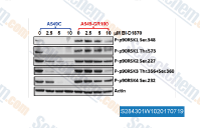
| S2843 | BI-D1870 | BI-D1870は、無細胞アッセイにおいて、S6 ribosome for RSK1/2/3/4に対するATP競合的阻害剤であり、IC50はそれぞれ31 nM/24 nM/18 nM/15 nMです。MST2、GSK-3β、MARK3、CK1、Aurora BよりもRSKに対して10〜100倍の選択性を示します。BI-D1870は、活性酸素種(ROS)の産生、小胞体(ER)ストレスの増加、オートファジーの増加など、抗がん特性を示します。 |
|
|
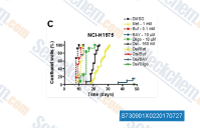
| S7309 | BAY 87-2243 | BAY 87-2243 は、強力かつ選択的な低酸素誘導因子-1 (HIF-1) 阻害剤です。BAY 87-2243 はミトコンドリア複合体 I 活性を阻害し、それによってマイトファジー依存性の ROS 増加を引き起こし、ネクロプトーシスとフェロトーシスを誘発します。BAY 87-2243 は抗腫瘍活性を発揮します。第1相。 |
|
|
| S8639 | DPI (Diphenyleneiodonium chloride) | DPI (Diphenyleneiodonium chloride) はNADPH oxidase阻害剤であり、強力で不可逆的な時間・温度依存的なiNOS/eNOS阻害剤でもあります。Diphenyleneiodonium chloride (DPI) はTRPA1活性化剤としても機能し、細胞内reactive oxygen species (ROS)を選択的に阻害します。 | ||
| S8661 | CA3 (CIL56) | CA3(CIL56)は、YAP1/Tead転写活性に対して強力な阻害効果を示し、主にYAP1高発現および治療抵抗性の食道腺がん細胞を標的とします。これらの細胞はCSC特性を備えています。CA3(CIL56)は、フェロトーシスと鉄依存性活性酸素種(ROS)を誘導します。 | ||
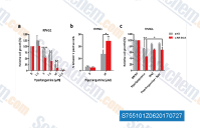
| S7551 | Piperlongumine | Piper longum L.由来の天然アルカロイドであるPiperlongumine(PPLGM、Piplartine)は、活性酸素種(ROS)のレベルを上昇させ、がん細胞を選択的に殺します。これは胃がんに対する抑制活性を持つ直接的なTrxR1阻害剤であり、CRM1の新規阻害剤でもあります。また、ヒト乳がん細胞におけるPI3K/Akt/mTORの阻害剤でもあります。 |
|
|
| S6871 | Sodium oxamate | Sodium oxamate (SO, Aminooxoacetic acid, Oxamic acid) は、LDH-A を特異的に阻害する乳酸脱水素酵素 (LDH) 阻害剤です。Sodium oxamate (SO) は、CDK1/サイクリン B1 経路のダウンレギュレーションを介して G2/M 細胞周期停止を誘導し、ミトコンドリアのROS産生を促進することでアポトーシスを促進します。 | ||
| S8978 | MitoQ (Mitoquinone) Mesylate | MitoQ (Mitoquinone) mesylateは、TPPベースのミトコンドリア標的型抗酸化物質で、H2O2誘発性の細胞内ROS応答を阻害し、酸化的損傷から保護します。本製品はワックス状の固体です。 | ||
| S2348 | Rotenone | ロテノンは、ミトコンドリア電子伝達の阻害剤である植物性殺虫剤です。ロテノンは、IC50がそれぞれ28.8 nMおよび5.1 nMで、NADH/DB酸化還元酵素およびNADH酸化酵素を阻害します。ロテノンは、ミトコンドリア活性酸素種の産生を促進することにより、アポトーシスを誘発します。ロテノンはパーキンソン病の動物モデルを誘発するために使用できます。 | ||
| S8615 | Sodium Dichloroacetate (DCA) | DCA (Sodium Dichloroacetate)は、ピルビン酸デヒドロゲナーゼキナーゼ (PDK)の特異的阻害剤であり、PDK2とPDK4に対するIC50値はそれぞれ183および80 µMです。これは、Na+-K+-2Cl-共輸送体とミトコンドリアのカリウムイオンチャネル軸の脱抑制を示すことが示されています。Sodium Dichloroacetateは、活性酸素種 (ROS)の生成を増加させ、がん細胞でアポトーシスを誘発し、腫瘍の増殖を阻害します。 | ||
| S5771 | Sulforaphane | Sulforaphaneは、ブロッコリー、キャベツ、ケールなどのアブラナ科野菜の摂取に由来する天然のイソチオシアネートです。これはNrf2の誘導剤です。Sulforaphaneはまた、ヒストンデアセチラーゼ(HDAC)およびNF-κBの阻害剤でもあります。Sulforaphaneはヘムオキシゲナーゼ-1(HO-1)を増加させ、活性酸素種(ROS)のレベルを減少させます。Sulforaphaneは細胞周期停止とアポトーシスを誘導します。 | ||
| S4606 | GSH (L-Glutathione reduced) | GSH(グルタチオン)は、抗酸化剤、フリーラジカルスカベンジャー、および解毒剤として機能します。これは、ほとんどの哺乳動物組織に存在する3つのアミノ酸(システイン、グルタミン酸、グリシン)で構成されるトリペプチドです。 | ||
| S1630 | Allopurinol | Allopurinolは、痛風や腎臓結石の治療、尿酸値の低下に使用される、酵素キサンチンオキシダーゼのプリン類似体阻害剤です。 | ||
| S5804 | N-Acetylcysteine amide (NACA) | N-acetylcysteine amide は、NF-κB および HIF-1α の活性化の調節、ならびに ROS の調節を介して抗炎症活性を示す膜透過性抗酸化物質です。 | ||
| S9687 | H2DCFDA (DCFH-DA) | H2DCFDA (DCFH-DA) は、細胞内の活性酸素種 (ROS) の産生を検出するために使用される細胞透過性プローブです。細胞内で脱エステル化され、酸化されると高蛍光性の2',7'-ジクロロフルオレセインに変化します。酸化代謝に応答する酸素反応性種の高感度かつ迅速な定量、食細胞における酸化産物を検出するためのマイクロプレートアッセイ、および定量的マルチウェル骨髄分化アッセイに使用されます。(Ex/Em=488/525 nm) | ||
| S2271 | Berberine chloride | Berberine chlorideは、イソキノリンアルカロイド群の第四級アンモニウム塩です。Berberine chlorideは、caspase 3とcaspase 8を活性化し、poly ADP-ribose polymerase (PARP)の切断とcytochrome cの放出を促進します。Berberine chlorideは、c-IAP1、Bcl-2、およびBcl-XLの発現を減少させます。Berberine chlorideは、JNKとp38 MAPKの持続的なリン酸化およびROSの生成を伴うapoptosisを誘導します。Berberine chlorideは、デュアルtopoisomerase IおよびII阻害剤です。Berberine chlorideは、潜在的なautophagyモジュレーターでもあります。 | ||
| S8674 | GO-203 TFA | GO-203は、MUC1-C二量体化、ひいてはその発がん機能を阻害するD-アミノ酸細胞透過性ペプチド阻害剤です。 | ||
| S7873 | Disodium (R)-2-Hydroxyglutarate | Disodium (R)-2-Hydroxyglutarate(D-α-ヒドロキシグルタル酸二ナトリウム)は、α-ケトグルタル酸依存性ジオキシゲナーゼの競合阻害剤であり、Kiは0.628 mMです。 | ||
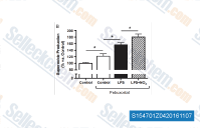
| S1547 | Febuxostat (TEI-6720) | Febuxostat (TMX 67, TEI-6720)は、キサンチンオキシダーゼを選択的に阻害する化合物であり、Ki値は0.6 nMです。 |
|
|
| S4603 | Gallic acid | 強力な抗酸化物質として知られるGallic acid(3,4,5-トリヒドロキシ安息香酸、没食子酸塩、安息香酸)は、さまざまな食品やハーブに含まれる有機酸です。 | ||
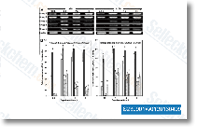
| S2399 | Dihydromyricetin | Dihydromyricetin(アンペロプシン、アンペロプチン)は、Ampelopsis grossedentata由来の天然の抗酸化フラボノイドです。 |
|
|
| S2332 | Neohesperidin | 柑橘類に含まれるフラバノングリコシドであるNeohesperidin(NSC 31048)は、抗酸化剤です。 | ||
| S1631 | Allopurinol Sodium | Allopurinol Sodium は、IC50が7.82±0.12 μMのキサンチンオキシダーゼ阻害剤です。 | ||
| S3631 | (S)-Methylisothiourea sulfate | (S)-Methylisothiourea sulfateは、誘導型NO合成酵素 (iNOS)の強力な阻害剤です。 | ||
| S8974 | GSK2795039 | GSK2795039は、HRP/Amplex RedのNOX2媒介活性化に対するpIC50が6.57のNADPHオキシダーゼ2(NOX2)阻害剤です。GSK2795039は、活性酸素種(ROS)の産生、NADPHの消費を阻害し、アポトーシスを減少させます。 | ||
| S3885 | Pyrogallol | Pyrogallol(1,2,3-トリヒドロキシベンゼン)は、フェノールファミリーに属する有機化合物であり、写真フィルム現像剤や他の化学物質の調製に使用されます。これはスーパーオキシドアニオン発生剤およびROS誘導物質として知られています。 | ||
| S2605 | Idebenone | Idebenone (CV-2619) は、コエンザイムQ10 (CoQ10) の合成アナログであり、脳刺激剤です。 | ||
| S2062 | Tiopronin | Tioproninは、シスチン沈殿と排泄の速度を制御することにより、シスチン尿症の治療に使用される抗酸化剤です。 | ||
| S3238 | Resibufogenin | 抗がん作用を持つ蟾酥の成分であるResibufogenin (Bufogenin, Recibufogenin) は、receptor-interacting protein kinase 3 (RIP3) をアップレギュレートし、Ser358でmixed lineage kinase domain-like protein をリン酸化することによりネクロトーシスを誘発します。Resibufogeninは、活性酸素種 (ROS) の蓄積を誘導することにより細胞毒性効果を発揮します。Resibufogeninはアポトーシスとカスパーゼ-3およびカスパーゼ-8活性を誘導します。ResibufogeninはBax/Bcl-2の発現を増加させ、サイクリンD1、サイクリンE、PI3K、p-AKT、p-GSK3β、およびβ-カテニンタンパク質の発現を抑制します。 | ||
| S3838 | Carnosic acid | Carnosic acid (Salvin)は、抗酸化作用と抗菌作用を持つフェノールジテルペンです。食品、栄養補助食品、化粧品業界でますます使用されています。 | ||
| S9021 | (20R)Ginsenoside Rg3 | (20R)Ginsenoside Rg3は、伝統的な漢方薬である紅参から抽出されます。これは、抗酸化剤および植物代謝物として機能します。 | ||
| S2369 | Troxerutin | ソフォラジャポニカから単離された天然のバイオフラボノイドであるTroxerutinは、多くの利点と薬効があることが報告されています。 | ||
| S5452 | Sanguinarine chloride | 植物アルカロイドであるSanguinarineは、強力かつ特異的なプロテインホスファターゼ (PP) 2C阻害剤です。 | ||
| S4580 | Hydroquinone | Hydroquinone(キノール、1,4-ベンゼンジオール、1,4-ジヒドロキシベンゼン、HQ)はメラニン合成阻害剤です。Hydroquinoneの生理作用は脱色素活性によるものです。また、いくつかの臓器、特に腎臓に毒性を引き起こす可能性のある抗酸化特性も持っています。本製品は有害化学物質(急性毒性/可燃性/皮膚腐食性)です。保護フェイスマスク、手袋、保護衣を着用してご使用ください。 | ||
| S3616 | Asiaticoside | Asiaticoside(Ba 2742、BRN0078195、CCRIS8995、NSC166062、Emdecassol、Madecassol)は、ツボクサの主要な活性成分であり、紫外線Aによって誘発される活性酸素種の産生を抑制することにより、紫外線A依存性の光老化を予防します。また、MITFによるDNA結合を減少させます。 | ||
| S6281 | Sodium Thiocyanate | チオシアン酸アニオンの主な供給源の1つであるSodium Thiocyanate(NaSCN、チオシアン酸ナトリウム、硫シアン酸ナトリウム、ロダン酸ナトリウム)は、医薬品やその他の特殊化学品の合成の前駆体として使用されます。Sodium Thiocyanate(NaSCN)はIL-6を減少させ、IL-10レベルを増加させます。Sodium ThiocyanateはROSも減少させます。 | ||
| S5709 | Norgestrel | Norgestrel(WY-3707、SH-70850、SH-850、FH 122-A)は、経口避妊薬としてエチニルエストラジオールと組み合わせて使用される合成ステロイド性プロゲスチンです。また、強力な神経保護作用も持ちます。 | ||
| E1961 | NVL-655 (Neladalkib) | NVL-655は、未分化リンパ腫キナーゼ(ALK)の選択的阻害剤であり、Ba/F3異種移植モデルにおいて潜在的な抗腫瘍活性を有しています。また、ROS1、LTK、PYK2、TRKB、およびFAKに対して顕著な阻害活性を示し、IC50はALKの10分の1以下であり、特定のALK変異に対して高い効力を示し、G1202R、G1202R/L1196M、G1202R/G1269A、およびG1202R/L1198Fに対するIC50はそれぞれ<0.73 nM、7 nM、3 nM、3 nMです。 | ||
| S3840 | Baohuoside I | Baohuoside I(Icariside II)は、イカリソウ(Epimedium koreanum Nakai)から単離されたフラボノイドで、抗炎症作用と抗がん作用を示します。これは、ROS/MAPK経路を介して細胞毒性効果を発揮する可能性があります。 | ||
| S3607 | Sarsasapogenin | Sarsasapogenin (SAR、パリゲニン) はステロイドサポゲニンの一種です。これは活性酸素種の生成を誘発し、小胞体ストレス応答 (UPR) シグナル伝達経路を活性化します。SARは、LPS刺激マクロファージにおけるIRAK1、TAK1、IκBαのリン酸化だけでなく、NF-κBおよびMAPKの活性化を強力に阻害します。 | ||
| S4419 | Ensulizole | 水溶性の紫外線防御成分であるEnsulizole(PBSA)は、強いUVB吸収と部分的なUVA吸収を特徴とするスルホン化された紫外線吸収剤です。Ensulizoleは、紫外線または日光照射により活性酸素種(ROS)を生成することでDNAに損傷を与える可能性があります。 | ||
| S3578 | Pyrroloquinoline quinone | Pyrroloquinoline quinone (PQQ, メトキサチン) は、抗酸化作用と抗老化作用を持つ天然の抗酸化物質です。Pyrroloquinoline quinoneはエストロゲン欠乏誘発性骨粗鬆症を予防します。Pyrroloquinoline quinoneは、免疫微小環境を改善し、JAK-STATシグナル伝達経路を調節することにより、マウスのアレルギー性気道炎症を軽減できます。本製品は溶解度が低く、動物実験は可能ですが、細胞実験は慎重にご選択ください! | ||
| S3205 | Perillaldehyde | Perillaldehyde(Perilladehyde、Perillal、PAE、PA)は、Perilla frutescens(伝統的な薬用抗酸化ハーブ)の主要成分であり、BaP誘発性のAHR活性化とROS産生を阻害し、BaP/AHR媒介性のCCL2ケモカイン放出を阻害し、NRF2/HO1抗酸化経路を活性化します。 | ||
| S3222 | Raspberry ketone glucoside | ラズベリー果実由来の天然物であるRaspberry ketone glucoside(RKG)は、メラニン合成を阻害する効果を持つ抗酸化物質です。 | ||
| E0224 | Chicoric acid | Chicoric acidは、抗酸化作用、抗炎症作用、抗糖尿病作用を持つ経口活性ジカフェオイル酒石酸です。これは、PI3K/AktおよびMAPK経路を介して、3T3-L1前駆脂肪細胞においてROS産生を誘導し、ミトコンドリア依存性のapoptosisを引き起こします。また、グルコース取り込みを促進し、インスリン抵抗性を改善します。 | ||
| E8271 | Sanguinarine citrate | Sanguinarine (gluconate) は、Sanguinaria canadensis の根から抽出されるベンゾフェナントリジンアルカロイドです。活性酸素種 (ROS)、c-Jun N-末端キナーゼ (JNK)、および核因子カッパーB (NF-κB) シグナル伝達経路を活性化して、頭頸部腫瘍細胞および動物モデルでアポトーシスを誘導します。また、強力な抗菌作用と抗炎症作用も示します。 | ||
| S7913 | MCB-613 | MCB-613は、強力なステロイド受容体コアクチベーター(SRC)刺激剤です。 | ||
| S4017 | Allylthiourea | Allylthiourea は、アンモニア酸化を選択的に阻害する代謝阻害剤です。 | ||
| S3590 | Triolein | Trioleinはメタロプロテイナーゼ-1 (MMP-1)の阻害剤であり、放射線照射されたケラチノサイトにおけるIL-6の発現とROSの生成の両方を減少させます。 | ||
| S3301 | Cynarin | Cynarin (Cynarine) は、フリーラジカルスカベンジング、抗酸化作用、抗ヒスタミン作用、抗ウイルス作用など、さまざまな薬理学的特性を持つアーティチョークのフィトケミカルです。Cynarin は、T細胞受容体のCD28と抗原提示細胞のCD80との相互作用を阻害します。Cynarin は、Nrf2の核内移行を誘発し、グルタチオン (GSH)と活性酸素種 (ROS)のバランスを回復させ、ミトコンドリアの脱分極を抑制します。 | ||
| S4853 | Ecabet sodium | Ecabet sodium(TA-2711、TA-2711E)は、胃潰瘍治療に広く用いられている粘膜保護剤です。 | ||
| S0947 | Cafestol | Cafestolは、コーヒー豆から抽出される天然のジテルペンです。Cafestolはアポトーシスを誘発し、さまざまな炎症メディエーターを調節して炎症を軽減します。CafestolはPI3K/Akt経路を阻害します。Cafestolはまた、白血病細胞株HL60におけるROSの産生を減少させることもできます。 | ||
| S3816 | Dehydroevodiamine | Evodia rutaecarpaの構成成分であるDehydroevodiamine(DHED)は、降圧作用、陰性変時作用、イオンチャネル抑制作用、一酸化窒素産生抑制作用、脳血流増加作用など、さまざまな生物学的効果を有しています。Dehydroevodiamineは、マウスマクロファージ細胞において、LPS誘導性のiNOS、COX-2、プロスタグランジンE2(PGE2)、および核因子カッパーB(NF-κB)の発現を阻害します。 | ||
| S4970 | Nerol | Nerol (Cis-Geraniol, Neryl alcohol) は、レモングラスやホップなどの多くの精油に含まれるモノテルペンです。 | ||
| E1508 | APG-2449 | APG-2449は、ALK/ROS1/FAKの経口活性阻害剤です。APG-2449は、ヒト非小細胞肺がん(NSCLC)および卵巣腫瘍モデルにおいて、強力で持続的な抗腫瘍活性を発揮します。 | ||
| S5314 | HTHQ (1-O-Hexyl-2,3,5-trimethylhydroquinone) | ヒドロキノンモノアルキルエーテルであるHTHQ (1-O-Hexyl-2,3,5-trimethylhydroquinone) は、強力な抗酸化および抗脂質過酸化剤です。 | ||
| S0056 | (E/Z)-BCI | (E/Z)-BCI(BCI、NSC 150117)は、細胞内のDUSP6およびDUSP1に対してそれぞれ13.3 μMおよび8.0 μMのEC50値を示す、二重特異性ホスファターゼ1/6 (DUSP1/DUSP6) およびマイトジェン活性化プロテインキナーゼの阻害剤です。(E)-BCIは、H1299肺癌細胞において活性酸素種 (ROS) の生成と内因性ミトコンドリア経路の活性化を介してアポトーシスを誘導します。 | ||
| S0770 | Camalexin | Camelina sativaおよびシロイヌナズナ(アブラナ科)から単離されたファイトアレキシンであるCamalexinは、活性酸素種(ROS)の産生を誘導する可能性があります。Camalexinには、抗菌作用、抗真菌作用、抗増殖作用、および抗がん作用があります。 | ||
| S5263 | Pyrroloquinoline Quinone Disodium Salt | ピロロキノリンキノン(メトキサチン二ナトリウム塩)は、芳香族三環式o-キノンであり、細菌のデヒドロゲナーゼのレドックス補因子です。これは、多数の有機基質から分子酸素(O2)への効率的な電子移動触媒であり、キノプロテインモデル反応を構築します。 | ||
| S3973 | L-SelenoMethionine | 天然に存在するアミノ酸であるL-SelenoMethionine(SeMet)は、セレンの主要な食品形態です。サプリメントとして使用されており、がん予防や抗酸化防御などの重要な機能を示します。 | ||
| S6920 | SEA0400 | SEA0400は、選択的かつ強力なNa+-Ca2+交換体(NCX)阻害剤であり、培養ニューロン、アストロサイト、ミクログリアにおけるNa+依存性Ca2+取り込みをそれぞれ33 nM、5.0 nM、8.3 nMのIC50で阻害します。SEA0400は、ナトリウムニトロプルシド(SNP)によるERKおよびp38 MAPKリン酸化と細胞外Ca(2+)依存的な活性酸素種(ROS)の産生増加を防ぎます。 | ||
| S9034 | Isochlorogenic acid C | イソクロロゲン酸C(3,4-ジカフェオイルキナ酸; 4,5-ジカフェオイルキナ酸)は、クロロゲン酸のジ-O-カフェオイル誘導体であり、薬用植物から得られる有名な抗酸化物質で、EV71に対する抗ウイルス作用を示します。 | ||
| S4263 | Efaproxiral Sodium | Efaproxiral Sodium(RSR13 Sodium)は、乳がん由来の脳転移に用いられる、ヘモグロビンの合成アロステリック修飾因子です。 | ||
| S3357 | Elaidic acid | Elaidic acidは、細胞の生存率を阻害し、酸化ストレスを増強することで細胞のアポトーシスを上昇させる主要なトランス脂肪酸です。Elaidic acidは医薬品溶媒として使用できます。 |
||
| S9107 | Glycitein | Glyciteinは大豆やレッドクローバーに含まれるアグリコンイソフラボンで、神経保護作用、抗酸化作用、抗がん作用、骨粗しょう症予防作用、抗アテローム性動脈硬化作用など、さまざまな有益な特性を示します。 | ||
| S9611 | ABTL-0812 | ABTL0812 (α-ヒドロキシリノール酸、LP-10218、SCLN-0812) は、TRIB3 の過剰発現を誘導し、肺扁平上皮癌細胞株でオートファジーを活性化することにより、Akt/mTOR 軸を阻害します。ABTL0812 はまた、AMPK 活性化とROS蓄積を誘導します。 | ||
| S4511 | 6-Benzylaminopurine | 6-Benzylaminopurine は、植物の抗酸化防御システムの活動を調節できる第一世代の合成サイトカイニンです。この処理は植物の成長と発達を誘発します。 | ||
| S5584 | Citronellol | ローズオイルとゼラニウムオイルの成分であるCitronellol(ジヒドロゲラニオール、(±)-β-シトロネロール)は、香水や虫よけに使用されています。Citronellolは、TNF-α、RIP1 / RIP3活性を上方制御し、caspase-3 / caspase-8活性を下方制御することにより、NCI-H1299細胞の壊死性アポトーシスを引き起こす可能性があります。また、Citronellolは、NCI-H1299細胞において、1時間および12時間でROS産生の二相性増加をもたらします。 | ||
| E7174 | D-α-Tocopherol Succinate | D-α-Tocopherol Succinate (ビタミンEコハク酸) は、抗酸化作用を持つトコフェロールであり、ビタミンEの塩形態です。これは、シスプラチン誘発性のROS増加を著しく抑制し、細胞の壊死および後期アポトーシスを減少させることで、HEIOC1細胞におけるシスプラチン誘発性細胞毒性を阻害します。また、抗アポトーシス効果も示します。 | ||
| S9925 | Imeglimin (EMD 387008) Hydrochloride | Imeglimin (EMD 387008, IMEG, PXL 008, RVT-1501) Hydrochlorideは、新しいクラスの経口血糖降下薬です。Imegliminは、酸化的ストレスからミトコンドリア機能を保護し、HFHSDマウスの肝臓における脂質酸化を促進することで、糖耐性とインスリン感受性を正常化します。 | ||
| S4425 | Rifamycin S | キノン系抗生物質であり、グラム陽性菌(MRSAを含む)に対する抗生物質であるRifamycin Sは、結核やハンセン病の治療に用いられる臨床薬です。Rifamycin Sは活性酸素種(ROS)を生成し、ミクロソーム脂質過酸化を阻害します。 | ||
| S1623 | N-Acetylcysteine (NAC chemical, N-Acetyl-L-Cysteine) | Acetylcysteine (N-acetyl-l-cysteine, NAC,N-acetylcysteine)は、プロテアソーム阻害剤の活性を阻害するROS(活性酸素種)阻害剤です。また、腫瘍壊死因子産生阻害剤でもあります。Acetylcysteine(N-acetyl-l-cysteine)は、IκBキナーゼの阻害を介してTNF誘導性のNF-κB活性化を抑制します。Acetylcysteine(N-acetyl-l-cysteine)は、ミトコンドリア依存性経路を介してapoptosisを誘導します。Acetylcysteine(N-acetyl-l-cysteine)は、ferroptosisとvirus replicationを阻害します。溶液は不安定なので、新鮮に調製する必要があります。 |
|
|
| S7171 | Setanaxib (GKT137831) | Setanaxib (GKT137831, GKT831)は、それぞれ110 nMおよび140 nMのKiを持つ、強力なデュアルNADPHオキシダーゼNOX1/NOX4阻害剤です。GKT137831による治療は、活性酸素種(ROS)の産生を抑制します。GKT137831はフェロトーシスを部分的に阻害します。 |
|
|
| S8639 | DPI (Diphenyleneiodonium chloride) | DPI (Diphenyleneiodonium chloride) はNADPH oxidase阻害剤であり、強力で不可逆的な時間・温度依存的なiNOS/eNOS阻害剤でもあります。Diphenyleneiodonium chloride (DPI) はTRPA1活性化剤としても機能し、細胞内reactive oxygen species (ROS)を選択的に阻害します。 | ||
| S8978 | MitoQ (Mitoquinone) Mesylate | MitoQ (Mitoquinone) mesylateは、TPPベースのミトコンドリア標的型抗酸化物質で、H2O2誘発性の細胞内ROS応答を阻害し、酸化的損傷から保護します。本製品はワックス状の固体です。 | ||
| S5771 | Sulforaphane | Sulforaphaneは、ブロッコリー、キャベツ、ケールなどのアブラナ科野菜の摂取に由来する天然のイソチオシアネートです。これはNrf2の誘導剤です。Sulforaphaneはまた、ヒストンデアセチラーゼ(HDAC)およびNF-κBの阻害剤でもあります。Sulforaphaneはヘムオキシゲナーゼ-1(HO-1)を増加させ、活性酸素種(ROS)のレベルを減少させます。Sulforaphaneは細胞周期停止とアポトーシスを誘導します。 | ||
| S4606 | GSH (L-Glutathione reduced) | GSH(グルタチオン)は、抗酸化剤、フリーラジカルスカベンジャー、および解毒剤として機能します。これは、ほとんどの哺乳動物組織に存在する3つのアミノ酸(システイン、グルタミン酸、グリシン)で構成されるトリペプチドです。 | ||
| S1630 | Allopurinol | Allopurinolは、痛風や腎臓結石の治療、尿酸値の低下に使用される、酵素キサンチンオキシダーゼのプリン類似体阻害剤です。 | ||
| S1547 | Febuxostat (TEI-6720) | Febuxostat (TMX 67, TEI-6720)は、キサンチンオキシダーゼを選択的に阻害する化合物であり、Ki値は0.6 nMです。 |
|
|
| S4603 | Gallic acid | 強力な抗酸化物質として知られるGallic acid(3,4,5-トリヒドロキシ安息香酸、没食子酸塩、安息香酸)は、さまざまな食品やハーブに含まれる有機酸です。 | ||
| S1631 | Allopurinol Sodium | Allopurinol Sodium は、IC50が7.82±0.12 μMのキサンチンオキシダーゼ阻害剤です。 | ||
| S3631 | (S)-Methylisothiourea sulfate | (S)-Methylisothiourea sulfateは、誘導型NO合成酵素 (iNOS)の強力な阻害剤です。 | ||
| S8974 | GSK2795039 | GSK2795039は、HRP/Amplex RedのNOX2媒介活性化に対するpIC50が6.57のNADPHオキシダーゼ2(NOX2)阻害剤です。GSK2795039は、活性酸素種(ROS)の産生、NADPHの消費を阻害し、アポトーシスを減少させます。 | ||
| S2369 | Troxerutin | ソフォラジャポニカから単離された天然のバイオフラボノイドであるTroxerutinは、多くの利点と薬効があることが報告されています。 | ||
| S3616 | Asiaticoside | Asiaticoside(Ba 2742、BRN0078195、CCRIS8995、NSC166062、Emdecassol、Madecassol)は、ツボクサの主要な活性成分であり、紫外線Aによって誘発される活性酸素種の産生を抑制することにより、紫外線A依存性の光老化を予防します。また、MITFによるDNA結合を減少させます。 | ||
| S6281 | Sodium Thiocyanate | チオシアン酸アニオンの主な供給源の1つであるSodium Thiocyanate(NaSCN、チオシアン酸ナトリウム、硫シアン酸ナトリウム、ロダン酸ナトリウム)は、医薬品やその他の特殊化学品の合成の前駆体として使用されます。Sodium Thiocyanate(NaSCN)はIL-6を減少させ、IL-10レベルを増加させます。Sodium ThiocyanateはROSも減少させます。 | ||
| E1961 | NVL-655 (Neladalkib) | NVL-655は、未分化リンパ腫キナーゼ(ALK)の選択的阻害剤であり、Ba/F3異種移植モデルにおいて潜在的な抗腫瘍活性を有しています。また、ROS1、LTK、PYK2、TRKB、およびFAKに対して顕著な阻害活性を示し、IC50はALKの10分の1以下であり、特定のALK変異に対して高い効力を示し、G1202R、G1202R/L1196M、G1202R/G1269A、およびG1202R/L1198Fに対するIC50はそれぞれ<0.73 nM、7 nM、3 nM、3 nMです。 | ||
| S3578 | Pyrroloquinoline quinone | Pyrroloquinoline quinone (PQQ, メトキサチン) は、抗酸化作用と抗老化作用を持つ天然の抗酸化物質です。Pyrroloquinoline quinoneはエストロゲン欠乏誘発性骨粗鬆症を予防します。Pyrroloquinoline quinoneは、免疫微小環境を改善し、JAK-STATシグナル伝達経路を調節することにより、マウスのアレルギー性気道炎症を軽減できます。本製品は溶解度が低く、動物実験は可能ですが、細胞実験は慎重にご選択ください! | ||
| S3205 | Perillaldehyde | Perillaldehyde(Perilladehyde、Perillal、PAE、PA)は、Perilla frutescens(伝統的な薬用抗酸化ハーブ)の主要成分であり、BaP誘発性のAHR活性化とROS産生を阻害し、BaP/AHR媒介性のCCL2ケモカイン放出を阻害し、NRF2/HO1抗酸化経路を活性化します。 | ||
| S4017 | Allylthiourea | Allylthiourea は、アンモニア酸化を選択的に阻害する代謝阻害剤です。 | ||
| S3590 | Triolein | Trioleinはメタロプロテイナーゼ-1 (MMP-1)の阻害剤であり、放射線照射されたケラチノサイトにおけるIL-6の発現とROSの生成の両方を減少させます。 | ||
| S4853 | Ecabet sodium | Ecabet sodium(TA-2711、TA-2711E)は、胃潰瘍治療に広く用いられている粘膜保護剤です。 | ||
| S0947 | Cafestol | Cafestolは、コーヒー豆から抽出される天然のジテルペンです。Cafestolはアポトーシスを誘発し、さまざまな炎症メディエーターを調節して炎症を軽減します。CafestolはPI3K/Akt経路を阻害します。Cafestolはまた、白血病細胞株HL60におけるROSの産生を減少させることもできます。 | ||
| S3816 | Dehydroevodiamine | Evodia rutaecarpaの構成成分であるDehydroevodiamine(DHED)は、降圧作用、陰性変時作用、イオンチャネル抑制作用、一酸化窒素産生抑制作用、脳血流増加作用など、さまざまな生物学的効果を有しています。Dehydroevodiamineは、マウスマクロファージ細胞において、LPS誘導性のiNOS、COX-2、プロスタグランジンE2(PGE2)、および核因子カッパーB(NF-κB)の発現を阻害します。 | ||
| E1508 | APG-2449 | APG-2449は、ALK/ROS1/FAKの経口活性阻害剤です。APG-2449は、ヒト非小細胞肺がん(NSCLC)および卵巣腫瘍モデルにおいて、強力で持続的な抗腫瘍活性を発揮します。 | ||
| S3973 | L-SelenoMethionine | 天然に存在するアミノ酸であるL-SelenoMethionine(SeMet)は、セレンの主要な食品形態です。サプリメントとして使用されており、がん予防や抗酸化防御などの重要な機能を示します。 | ||
| S6920 | SEA0400 | SEA0400は、選択的かつ強力なNa+-Ca2+交換体(NCX)阻害剤であり、培養ニューロン、アストロサイト、ミクログリアにおけるNa+依存性Ca2+取り込みをそれぞれ33 nM、5.0 nM、8.3 nMのIC50で阻害します。SEA0400は、ナトリウムニトロプルシド(SNP)によるERKおよびp38 MAPKリン酸化と細胞外Ca(2+)依存的な活性酸素種(ROS)の産生増加を防ぎます。 | ||
| S9107 | Glycitein | Glyciteinは大豆やレッドクローバーに含まれるアグリコンイソフラボンで、神経保護作用、抗酸化作用、抗がん作用、骨粗しょう症予防作用、抗アテローム性動脈硬化作用など、さまざまな有益な特性を示します。 | ||
| S1046 | Vandetanib (ZD6474) | バンデタニブは、細胞フリーアッセイにおいてIC50が40 nMの強力なVEGFR2阻害剤です。また、VEGFR3とEGFRもそれぞれIC50が110 nMおよび500 nMで阻害します。PDGFRβ、Flt1、Tie-2、FGFR1には感受性がなく、IC50は1.1-3.6 μMです。MEK、CDK2、c-Kit、erbB2、FAK、PDK1、Akt、IGF-1Rに対しては10 μMを超えるIC50で活性がありません。バンデタニブ(ZD6474)は、reactive oxygen species (ROS)のレベルを上昇させることにより、apoptosisを増加させ、autophagyを誘導します。 |
|
|
| S2843 | BI-D1870 | BI-D1870は、無細胞アッセイにおいて、S6 ribosome for RSK1/2/3/4に対するATP競合的阻害剤であり、IC50はそれぞれ31 nM/24 nM/18 nM/15 nMです。MST2、GSK-3β、MARK3、CK1、Aurora BよりもRSKに対して10〜100倍の選択性を示します。BI-D1870は、活性酸素種(ROS)の産生、小胞体(ER)ストレスの増加、オートファジーの増加など、抗がん特性を示します。 |
|
|
| S7309 | BAY 87-2243 | BAY 87-2243 は、強力かつ選択的な低酸素誘導因子-1 (HIF-1) 阻害剤です。BAY 87-2243 はミトコンドリア複合体 I 活性を阻害し、それによってマイトファジー依存性の ROS 増加を引き起こし、ネクロプトーシスとフェロトーシスを誘発します。BAY 87-2243 は抗腫瘍活性を発揮します。第1相。 |
|
|
| S8661 | CA3 (CIL56) | CA3(CIL56)は、YAP1/Tead転写活性に対して強力な阻害効果を示し、主にYAP1高発現および治療抵抗性の食道腺がん細胞を標的とします。これらの細胞はCSC特性を備えています。CA3(CIL56)は、フェロトーシスと鉄依存性活性酸素種(ROS)を誘導します。 | ||
| S6871 | Sodium oxamate | Sodium oxamate (SO, Aminooxoacetic acid, Oxamic acid) は、LDH-A を特異的に阻害する乳酸脱水素酵素 (LDH) 阻害剤です。Sodium oxamate (SO) は、CDK1/サイクリン B1 経路のダウンレギュレーションを介して G2/M 細胞周期停止を誘導し、ミトコンドリアのROS産生を促進することでアポトーシスを促進します。 | ||
| S2348 | Rotenone | ロテノンは、ミトコンドリア電子伝達の阻害剤である植物性殺虫剤です。ロテノンは、IC50がそれぞれ28.8 nMおよび5.1 nMで、NADH/DB酸化還元酵素およびNADH酸化酵素を阻害します。ロテノンは、ミトコンドリア活性酸素種の産生を促進することにより、アポトーシスを誘発します。ロテノンはパーキンソン病の動物モデルを誘発するために使用できます。 | ||
| S8615 | Sodium Dichloroacetate (DCA) | DCA (Sodium Dichloroacetate)は、ピルビン酸デヒドロゲナーゼキナーゼ (PDK)の特異的阻害剤であり、PDK2とPDK4に対するIC50値はそれぞれ183および80 µMです。これは、Na+-K+-2Cl-共輸送体とミトコンドリアのカリウムイオンチャネル軸の脱抑制を示すことが示されています。Sodium Dichloroacetateは、活性酸素種 (ROS)の生成を増加させ、がん細胞でアポトーシスを誘発し、腫瘍の増殖を阻害します。 | ||
| S2271 | Berberine chloride | Berberine chlorideは、イソキノリンアルカロイド群の第四級アンモニウム塩です。Berberine chlorideは、caspase 3とcaspase 8を活性化し、poly ADP-ribose polymerase (PARP)の切断とcytochrome cの放出を促進します。Berberine chlorideは、c-IAP1、Bcl-2、およびBcl-XLの発現を減少させます。Berberine chlorideは、JNKとp38 MAPKの持続的なリン酸化およびROSの生成を伴うapoptosisを誘導します。Berberine chlorideは、デュアルtopoisomerase IおよびII阻害剤です。Berberine chlorideは、潜在的なautophagyモジュレーターでもあります。 | ||
| S7873 | Disodium (R)-2-Hydroxyglutarate | Disodium (R)-2-Hydroxyglutarate(D-α-ヒドロキシグルタル酸二ナトリウム)は、α-ケトグルタル酸依存性ジオキシゲナーゼの競合阻害剤であり、Kiは0.628 mMです。 | ||
| S3238 | Resibufogenin | 抗がん作用を持つ蟾酥の成分であるResibufogenin (Bufogenin, Recibufogenin) は、receptor-interacting protein kinase 3 (RIP3) をアップレギュレートし、Ser358でmixed lineage kinase domain-like protein をリン酸化することによりネクロトーシスを誘発します。Resibufogeninは、活性酸素種 (ROS) の蓄積を誘導することにより細胞毒性効果を発揮します。Resibufogeninはアポトーシスとカスパーゼ-3およびカスパーゼ-8活性を誘導します。ResibufogeninはBax/Bcl-2の発現を増加させ、サイクリンD1、サイクリンE、PI3K、p-AKT、p-GSK3β、およびβ-カテニンタンパク質の発現を抑制します。 | ||
| S5452 | Sanguinarine chloride | 植物アルカロイドであるSanguinarineは、強力かつ特異的なプロテインホスファターゼ (PP) 2C阻害剤です。 | ||
| S3607 | Sarsasapogenin | Sarsasapogenin (SAR、パリゲニン) はステロイドサポゲニンの一種です。これは活性酸素種の生成を誘発し、小胞体ストレス応答 (UPR) シグナル伝達経路を活性化します。SARは、LPS刺激マクロファージにおけるIRAK1、TAK1、IκBαのリン酸化だけでなく、NF-κBおよびMAPKの活性化を強力に阻害します。 | ||
| E8271 | Sanguinarine citrate | Sanguinarine (gluconate) は、Sanguinaria canadensis の根から抽出されるベンゾフェナントリジンアルカロイドです。活性酸素種 (ROS)、c-Jun N-末端キナーゼ (JNK)、および核因子カッパーB (NF-κB) シグナル伝達経路を活性化して、頭頸部腫瘍細胞および動物モデルでアポトーシスを誘導します。また、強力な抗菌作用と抗炎症作用も示します。 | ||
| S7913 | MCB-613 | MCB-613は、強力なステロイド受容体コアクチベーター(SRC)刺激剤です。 | ||
| S0056 | (E/Z)-BCI | (E/Z)-BCI(BCI、NSC 150117)は、細胞内のDUSP6およびDUSP1に対してそれぞれ13.3 μMおよび8.0 μMのEC50値を示す、二重特異性ホスファターゼ1/6 (DUSP1/DUSP6) およびマイトジェン活性化プロテインキナーゼの阻害剤です。(E)-BCIは、H1299肺癌細胞において活性酸素種 (ROS) の生成と内因性ミトコンドリア経路の活性化を介してアポトーシスを誘導します。 | ||
| S0770 | Camalexin | Camelina sativaおよびシロイヌナズナ(アブラナ科)から単離されたファイトアレキシンであるCamalexinは、活性酸素種(ROS)の産生を誘導する可能性があります。Camalexinには、抗菌作用、抗真菌作用、抗増殖作用、および抗がん作用があります。 | ||
| S5263 | Pyrroloquinoline Quinone Disodium Salt | ピロロキノリンキノン(メトキサチン二ナトリウム塩)は、芳香族三環式o-キノンであり、細菌のデヒドロゲナーゼのレドックス補因子です。これは、多数の有機基質から分子酸素(O2)への効率的な電子移動触媒であり、キノプロテインモデル反応を構築します。 | ||
| S3357 | Elaidic acid | Elaidic acidは、細胞の生存率を阻害し、酸化ストレスを増強することで細胞のアポトーシスを上昇させる主要なトランス脂肪酸です。Elaidic acidは医薬品溶媒として使用できます。 |
||
| S9611 | ABTL-0812 | ABTL0812 (α-ヒドロキシリノール酸、LP-10218、SCLN-0812) は、TRIB3 の過剰発現を誘導し、肺扁平上皮癌細胞株でオートファジーを活性化することにより、Akt/mTOR 軸を阻害します。ABTL0812 はまた、AMPK 活性化とROS蓄積を誘導します。 | ||
| S5584 | Citronellol | ローズオイルとゼラニウムオイルの成分であるCitronellol(ジヒドロゲラニオール、(±)-β-シトロネロール)は、香水や虫よけに使用されています。Citronellolは、TNF-α、RIP1 / RIP3活性を上方制御し、caspase-3 / caspase-8活性を下方制御することにより、NCI-H1299細胞の壊死性アポトーシスを引き起こす可能性があります。また、Citronellolは、NCI-H1299細胞において、1時間および12時間でROS産生の二相性増加をもたらします。 | ||
| S4425 | Rifamycin S | キノン系抗生物質であり、グラム陽性菌(MRSAを含む)に対する抗生物質であるRifamycin Sは、結核やハンセン病の治療に用いられる臨床薬です。Rifamycin Sは活性酸素種(ROS)を生成し、ミクロソーム脂質過酸化を阻害します。 | ||
| S5804 | N-Acetylcysteine amide (NACA) | N-acetylcysteine amide は、NF-κB および HIF-1α の活性化の調節、ならびに ROS の調節を介して抗炎症活性を示す膜透過性抗酸化物質です。 | ||
| S2399 | Dihydromyricetin | Dihydromyricetin(アンペロプシン、アンペロプチン)は、Ampelopsis grossedentata由来の天然の抗酸化フラボノイドです。 |
|
|
| S4419 | Ensulizole | 水溶性の紫外線防御成分であるEnsulizole(PBSA)は、強いUVB吸収と部分的なUVA吸収を特徴とするスルホン化された紫外線吸収剤です。Ensulizoleは、紫外線または日光照射により活性酸素種(ROS)を生成することでDNAに損傷を与える可能性があります。 | ||
| S3301 | Cynarin | Cynarin (Cynarine) は、フリーラジカルスカベンジング、抗酸化作用、抗ヒスタミン作用、抗ウイルス作用など、さまざまな薬理学的特性を持つアーティチョークのフィトケミカルです。Cynarin は、T細胞受容体のCD28と抗原提示細胞のCD80との相互作用を阻害します。Cynarin は、Nrf2の核内移行を誘発し、グルタチオン (GSH)と活性酸素種 (ROS)のバランスを回復させ、ミトコンドリアの脱分極を抑制します。 | ||
| S4263 | Efaproxiral Sodium | Efaproxiral Sodium(RSR13 Sodium)は、乳がん由来の脳転移に用いられる、ヘモグロビンの合成アロステリック修飾因子です。 | ||
| E7174 | D-α-Tocopherol Succinate | D-α-Tocopherol Succinate (ビタミンEコハク酸) は、抗酸化作用を持つトコフェロールであり、ビタミンEの塩形態です。これは、シスプラチン誘発性のROS増加を著しく抑制し、細胞の壊死および後期アポトーシスを減少させることで、HEIOC1細胞におけるシスプラチン誘発性細胞毒性を阻害します。また、抗アポトーシス効果も示します。 |

納期 国内在庫品:受注日の翌日(15時までの受注分) *北海道、九州、沖縄への配送は受注日より2日以上 を要する場合あり 海外在庫品:受注後1〜2週間